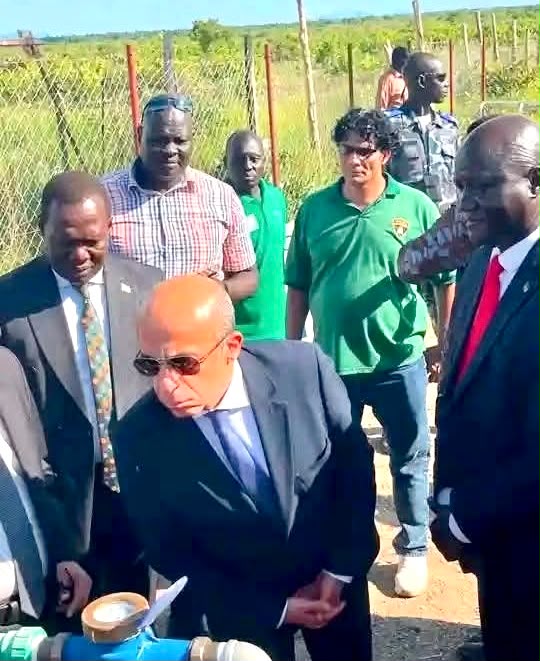
With Egyptian support, a water station serving 40,000 people was inaugurated at the University of Juba.
The project provides safe drinking water to approximately 40,000 university students.
Written by: Mohammed Omran
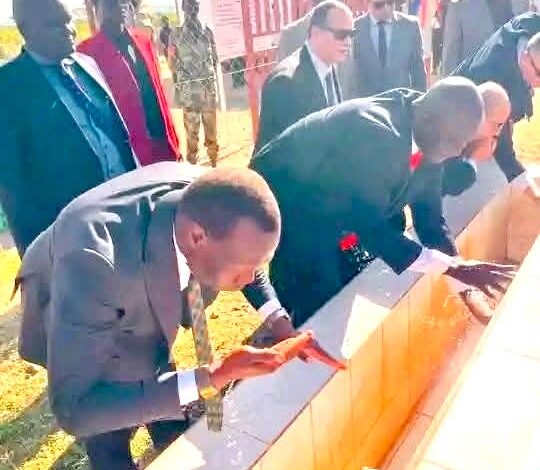
The Minister of Water Resources and Irrigation, James Mawiec Makwaj, inaugurated the Sumba Groundwater Station at the University of Juba, in a move aimed at expanding access to safe drinking water and strengthening bilateral cooperation between South Sudan and the Arab Republic of Egypt in the water sector.
The project provides safe drinking water to approximately 40,000 university students.
The inauguration ceremony was attended by a number of government officials, the Ambassador of the Arab Republic of Egypt to South Sudan, representatives of the University of Juba and development partners.
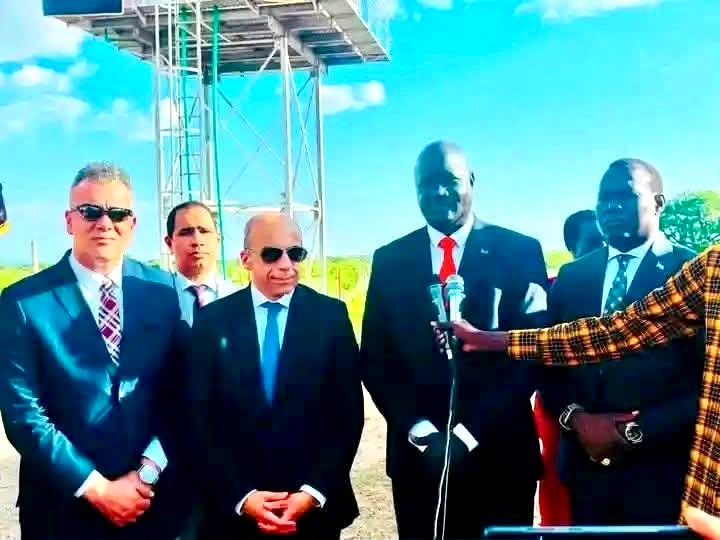
In his opening remarks, the Undersecretary of the Ministry of Water Resources and Irrigation, Sultan Lam Tongwar Kuigong, affirmed that the project will contribute to improving water supply services, supporting education and scientific research, as well as improving the livelihoods of communities surrounding the University of Juba, praising the ongoing partnership between South Sudan and Egypt in developing the infrastructure of the water sector.

For his part, the Ambassador of the Arab Republic of Egypt to South Sudan, Hazem Mamdouh Fawzy, renewed his country’s commitment to continue supporting the water sector in South Sudan through technical cooperation and development projects, stressing that the Sumba station reflects the depth of bilateral relations between the two countries and their keenness to achieve sustainable development.
Minister of Water Resources and Irrigation, James Mawech Makwaj, expressed his appreciation to the Government of Egypt for its continued support for efforts to expand safe drinking water services. He also praised the role of the President of the Republic, Lieutenant General Salva Kiir Mayardit, in strengthening bilateral relations with Egypt and encouraging investments in the water sector.
The minister explained that the Sumba station comes within the framework of the joint cooperation program between South Sudan and Egypt, which has seen the implementation of a number of solar-powered groundwater stations throughout the country.
He added that the station will provide safe and sustainable drinking water to the University of Juba and neighboring communities, with a production capacity of 32,000 cubic meters, and is expected to benefit about 40,000 people, including students, university staff, and residents of the surrounding areas.
The minister called on the administration of the University of Juba and local communities to maintain the station and carry out regular maintenance work to ensure the sustainability of its services and to maximize its benefits.