The Sacred Duty of the Art of Governance: Why True Governance Must Start with Listening – The Case of Zambia
The government that stops listening to its citizens loses its moral authority to rule them, as the government exists for the people, not the people for the government. The government is a servant to the people, while the people are the source of authority over the government.
Therefore, true political power does not lie in state apparatuses, executive decrees, or the luxury of high office; rather, it lies with the people, and when political parties and elected leaders replace the reality of people's lives with rigid economic numbers and defensive rhetoric, democracy begins to erode.
As Zambia approaches the crucial general elections on August 13, 2026, a dangerous disconnect has emerged between the government and its citizens, underscoring a fundamental truth: the primary measure of good governance is its ability to listen, adapt, and serve.
History offers an eternal lesson in this type of statesmanship through Zambia's founder and United National Independence Party (UNIP) President, Dr. Kenneth Kaunda. By 1990, after nearly two decades of a centralized one-party system under the UNIP, the political climate was fraught with immense internal pressures and widespread public discontent.
Insecure leaders would cling to power, using state apparatus to violently suppress dissent and maintain absolute authority. But President Kaunda, instead, showed the highest degree of leadership by listening to the changing aspirations of the Zambian people.
Upon realizing the nation's demand for a return to political pluralism, President Kaunda chose a path of humility and peace instead of preserving his personal power. He signed the repeal of Article Four of the constitution to legally pave the way for opposition parties. He also facilitated the general elections of 1991 to ensure a smooth transition to multi-party democracy by moving up the election date by two years. The elections were originally scheduled for 1993, but Kaunda changed the date to October 31, 1991. He then accepted the election results with great dignity when he lost after 27 years in power, as the people voted for change.
President Kaunda proved that listening is not weakness; rather, subordinating leadership ego to the collective will of the nation is the highest mark of a true statesman.
This historical lesson stands in stark contrast to the current political environment under the United Party for National Development (UPND) administration, While the ruling government consistently emphasizes macroeconomic stability—such as bringing annual inflation down to the target range of 6–6.6%— and the completion of major international debt restructuring agreements, it has largely failed to listen to the day-to-day concerns of ordinary Zambians.
There is now a deep divide between the government’s official optimism and the grim reality on the ground. Despite positive growth forecasts, more than 70% of the population remains trapped in poverty. Furthermore, the administration remains insufficiently aware of the pressures resulting from the rising cost of living, the sharp increase in food prices, and the severe energy crisis affecting families.
The legitimate concerns raised by civil society institutions, the church, and local communities regarding mismanagement are often ignored or met with defensive political rhetoric. By treating governance as a one-way lecture rather than an ongoing dialogue, the UPND party is repeating the same mistakes that have historically led to the swift downfall of previous ruling parties.
To close this gap, the government, which listens to its people, must move beyond the rigid framework of austerity imposed by the IMF's policies and implement specific human-centered economic alternatives, which are:
First: Urgent measures for food and energy security
Instead of letting market forces dictate people's ability to survive, the state should implement targeted support for essential agricultural inputs and cornmeal, while investing heavily in decentralized solar energy grids to shield communities from the devastating effects of hydroelectric power failures.
Second: Fiscal and tax reforms for the benefit of the poor
Burdens can be immediately eased by raising the PAYE income tax threshold to protect low-income workers, and expanding VAT exemptions on essential consumer goods to effectively lower the cost of living.
Third: Local Manufacturing and Equality in the Mining Sector
Instead of celebrating raw copper export figures that enrich foreign entities, policies should be enacted to add value to the metal domestically, which will directly lead to industrial job creation for Zambian youth.
Fourth: Restructuring public servant debt
Instead of allowing high-interest commercial debt to strangle the government workforce, the government should establish transparent, state-backed mechanisms for debt swapping and restructuring, aiming to provide civil servants with financial breathing room.
But achieving this alternative vision requires a significant shift in the political landscape. The upcoming elections represent a direct referendum on the government's economic performance, yet the division within the opposition directly serves the current administration. The current fragmentation among various political forces and newly formed alliances only serves to weaken the collective voice of disgruntled citizens.
This is an urgent call to unite the opposition. Opposition leaders must put personal ambitions aside, shed their pride, and unite under one cohesive democratic front. A fragmented vote only serves to entrench the status quo, whereas a united, values-based alliance offers Zambians a clear and credible alternative to misgovernance.
Leaders who refuse to hear the silent despair of the people will inevitably be forced to hear their resounding rejection at the ballot box. It is time for all democratic forces to unite, to demand a government that truly listens, and to return the destiny of Zambia into the hands of its people.
Author Biography:
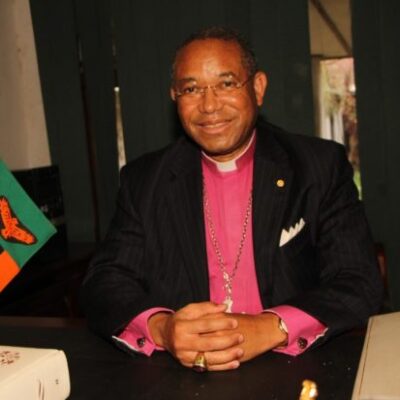
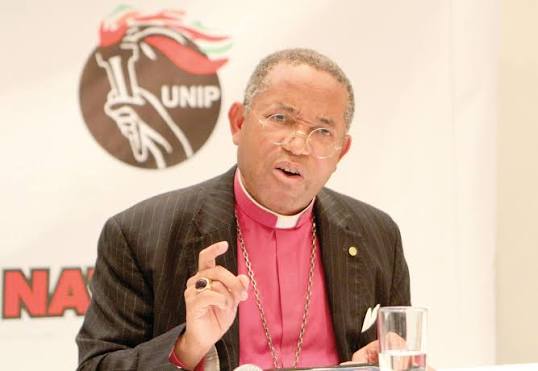
His Eminence Bishop Dr. Musonda Trevor Selwyn MWAMBA is an Anglican Bishop and President of the United National Independence Party (UNIP). By bridging the spheres of faith and governance, he leads Zambia's historic liberation party with a vision centered on ethical leadership, economic justice, and national reconciliation, aiming to restore the dignity of all Zambians.