Written by: Mohammed Omran
In the heart of the Moroccan city of Essaouira, it transforms festival Gnawa and world music have become more than just an artistic event, becoming a vibrant space for cultural dialogue between Africa and the world. Twenty-seven years after its launch, the festival continues to consolidate its position as a platform that brings together ancient African heritage and modern global musical expressions, in an experience that embodies the convergence of spirit, identity and openness to the other.
The Gnaoua Festival in Essaouira is becoming an African platform for global cultural dialogue.
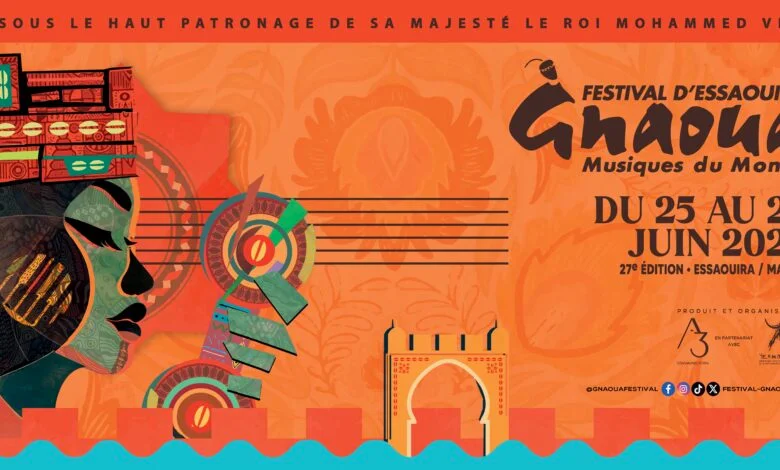
When the Gnaoua and World Music Festival was launched in Essaouira in 1998, few expected it to become one of the most prominent cultural events in Africa. After 27 editions, the festival attracts artists, researchers, producers and music lovers from all over the world. The 2026 edition is scheduled to take place from June 25 to 27 in the Moroccan coastal city, according to the organizers.
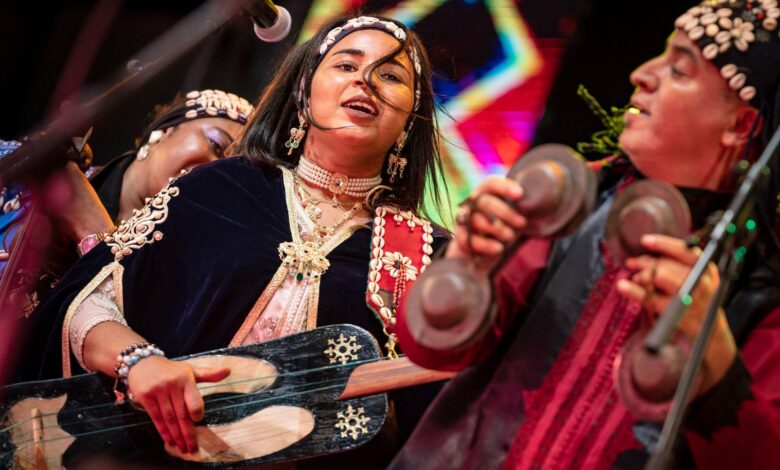
Gnawa music forms the core of this cultural project. It is an art form that draws its inspiration from the spiritual and musical traditions of sub-Saharan African communities that settled in Morocco over many centuries. This music, played on instruments such as the guembri and the qarqab, has become a powerful symbol of the fusion of African, Berber, and Arab-Islamic influences.
International recognition of Gnawa culture reached a significant milestone on December 12, 2019, when UNESCO included it in the Representative List of the Intangible Cultural Heritage of Humanity, as a set of musical, ritual and cultural practices passed down from generation to generation.
This recognition has strengthened the heritage dimension of the festival, and at the same time raised its level of responsibility, as the challenge is no longer limited to preserving traditions, but to keeping them alive in a rapidly changing world.
Festival producer Nila Tazi embraces this vision, describing the festival in the opening of the 2026 edition as “much more than just a musical event,” but rather a “community project” capable of linking heritage with imagination and generations, and she affirms that the ambition is to “bring Gnawa culture into the modern era without compromising its essence.”.
This vision explains the festival's continuity over the years, as it differs from many festivals that focus only on performances. The Essaouira model is based on encounter and interaction. In each edition, Gnawa masters collaborate with artists from jazz, blues, African music, flamenco, and electronic music.
This artistic fusion has contributed to enhancing the festival's global reputation, and the 2026 edition continues this approach with the participation of artists including Boyka, Saint Levant, CK, and Senegalese bassist Alon Wade, along with leading Gnawa music masters.

The festival's impact extends beyond music; since 2012, it has hosted the Human Rights Forum, which has become a recognized platform for discussion. Its thirteenth edition focuses on the theme "Youth of the World: Freedom, Identity, Future," reflecting the organizers' desire to make the festival a space for dialogue on contemporary issues.
This development reflects a broader trend in Africa, where cultural and creative industries are increasingly becoming engines of growth, employment and international influence. In this context, the Gnawa Festival stands out as a model of how African cultural heritage can be economically utilized while preserving its authenticity.

Nearly three decades after its founding, the festival has become more than just a musical gathering; it represents an African identity open to the world, capable of transforming its rich heritage into a cultural, economic, and diplomatic asset. In Essaouira, Gnawa music is no longer just a memory; it has become a universal language.