The energy and food security sectors in Africa are undergoing major transformations.
Kenya and Tanzania compete for one of the world's largest oil refineries.
Written by Ziad Abdel Fattah:
Recent reports have identified major economic shifts in Africa, related to various issues. EnergyClean energy and refining activities, along with food security, are crucial to avoid the volatility of global crises and disruptions to supply chains.
Kenya and Tanzania compete for one of the world's largest oil refineries.
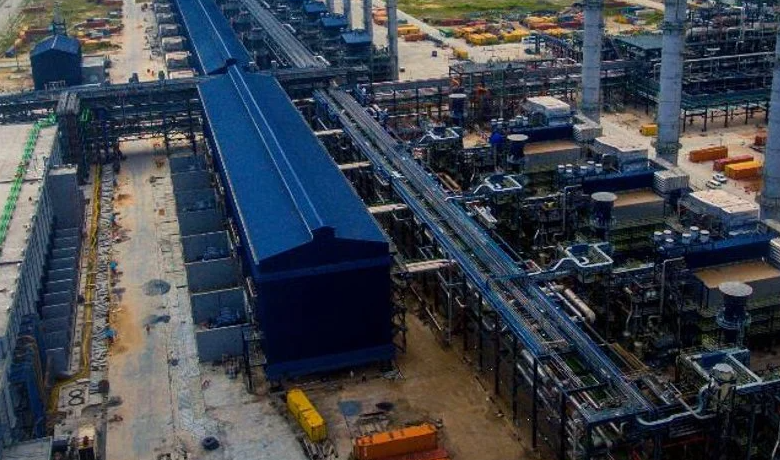
East Africa is witnessing fierce economic competition between Kenya and Tanzania to win the right to host a giant oil refinery project backed by prominent Nigerian billionaire and industrialist Aliko Dangote.
This is the richest man in Africa, and the project is described as one of the most transformative and attractive energy investments in the history of the African continent.
Recent reports have revealed that the refinery, which is still in the planning and expansion stages, represents a qualitative leap and a historic turning point for the East African region, as its countries suffer from almost complete dependence on imported refined fuels, despite possessing huge reserves of untapped crude oil.
The horrific redraws the map of fuel supply chains
If the project comes to fruition, it will radically redraw the map of fuel supply chains, ending dependence on foreign sources, with an unprecedented surge in the region’s industrial capabilities.
In a televised statement, the Nigerian billionaire confirmed that the refining capacity of the proposed project could reach 2.1 million barrels per day by 2030, placing the refinery among the world's largest.
He added: “From East Africa, we will be able to serve the entire continent… This refinery has tremendous economic viability given the targeted production volume.”.
On another front, escalating global geopolitical tensions, particularly the US-Israeli conflict with Iran, have cast a dark shadow over African energy markets, causing record jumps in fuel prices in many countries across the continent.
Uganda is accelerating its move towards alternative energy solutions.
This intense financial and economic pressure has prompted countries like Uganda to accelerate their move towards alternative and sustainable energy solutions.
In a revolutionary move, the Ugandan government launched an ambitious initiative to manufacture electric buses locally, to provide a clean and economical alternative to the transport crisis, which puts the country at the forefront of the drive towards sustainable transport on the continent.
A historic agreement between Morocco and the African Development Bank to enhance food security
As part of the continent’s efforts to achieve sovereignty and protect itself against international crises, the Moroccan capital, Rabat, witnessed the signing of a historic agreement between the African Development Bank and the OCP Group, with a huge value of nearly one billion euros.
The main objective of the project is to enhance African food security and build a sustainable green fertilizer corridor, while the economic feasibility lies in protecting the continent's agricultural systems from aftershocks and disruptions to global supply chains.
The benefit to farmers is that the agreement will ensure access to sustainable fertilizers for African farmers at fair prices, and will block the fluctuations of international markets that have recently threatened the continent’s food security.