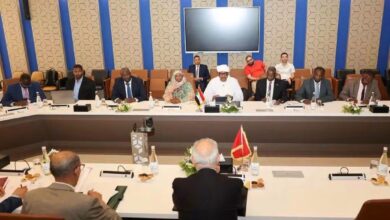
20 countries discuss combating corruption in Africa
Combating corruption in Africa
Written by: Ayman Ragab
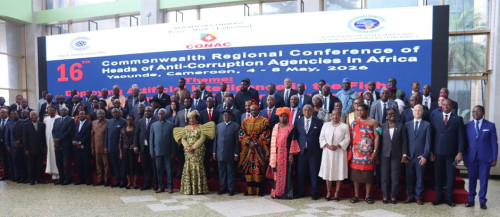
Twenty African Commonwealth countries met in the Cameroonian capital, Yaoundé, for the 16th annual conference of heads of anti-corruption bodies in Africa, while new figures revealed that corruption practices cost Cameroon alone more than four billion African francs in 2024.
This week-long gathering, which began on April 4, 2026, is being held under the theme: “Employing artificial intelligence in combating corruption in African Commonwealth countries.”.
National Anti-Corruption Authority of Cameroon CONAC
The conference, hosted by Cameroon’s National Anti-Corruption Authority (CONAC) at the Yaoundé Conference Centre, brought together heads of anti-corruption bodies, government officials, diplomats, and representatives of international organizations.
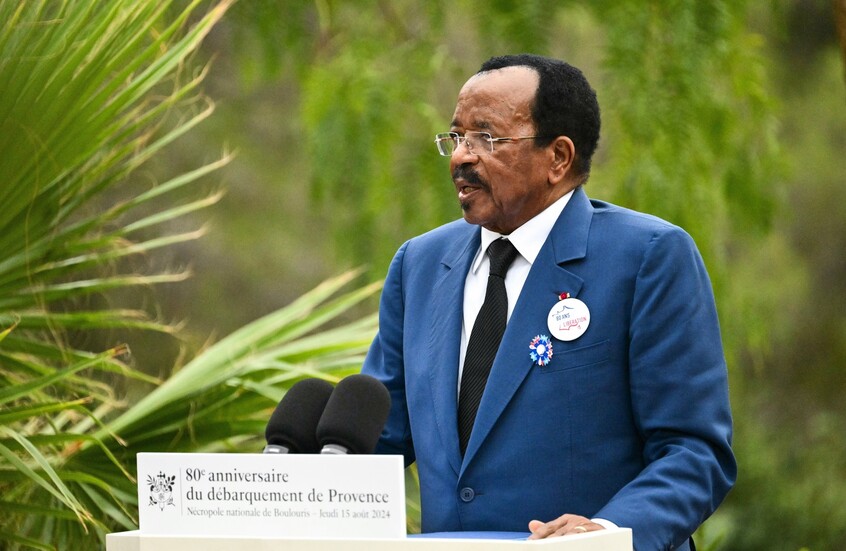
The conference was opened on behalf of President Paul Biya by the Minister Delegate to the Presidency of the Republic in charge of the Supreme Audit Office, Mbah Atcha Rose Fomondam.
The head of the National Anti-Corruption Commission, Dr. Dieudonné Massé-Gamès, revealed the extent of the problem, stating that his commission received 10,520 reports of corruption practices in 2024 alone.
The financial losses incurred by the Cameroonian state were officially estimated at approximately 4,061,806,711 CFA francs.
Dr. Massi Gamse told the delegates: “Cameroon places great hopes on this conference. We hope that its results will yield innovative and practical solutions to strengthen our capacity to combat corruption, thereby ensuring the development of our country and the well-being of our people.”.
The head of the National Anti-Corruption Commission explained that the Yaoundé meeting falls within a broader institutional framework that Cameroon has built over decades, which includes the Supreme Audit Office, the Special Criminal Court, the Public Procurement Regulatory Authority, and the National Financial Investigations Agency.
The spread of corruption and similar crimes
He noted that CONAC is a founding member of the Commonwealth Anti-Corruption League, which was formed in Gaborone, Botswana, in 2011, and currently serves as its vice president.
Dr. Massey-Gams explained that institutional structures alone were not enough. He acknowledged, “Despite tangible efforts, corruption and similar crimes continue to plague our society,” citing the 2024 statistics as evidence that the battle was far from over.
From deterrence to detection: The AI gamble
The core idea of the conference revolves around the ability of artificial intelligence to provide capabilities that were not available with traditional enforcement tools.
Dr. Roger Curranting, Head of Public Sector Governance at the Commonwealth Secretariat, confirmed that technology is reshaping governance and public accountability across the continent.
He added that artificial intelligence provides new tools, insights and opportunities to identify and combat corrupt transactions on a large scale.
Success and failure in confronting corruption
Dr. Curanting told the participants: “We are on the same continent, and we face the same challenges in fighting corruption. Countries have different experiences; some are very successful, some are lagging behind, and some are in the middle. The best way to learn quickly is through cooperation.”.
For his part, Dr. Windfred Mfouh Fwai Kenji, National Coordinator of the Digital Transformation Acceleration Project in Cameroon (PATNUC), explained the practical framework that this collaboration could produce. He emphasized that artificial intelligence systems require massive databases to function efficiently, and that data consolidation among Commonwealth countries would establish a robust analytical foundation. He called for the creation of a shared AI platform, on which each country would maintain its own presence, with intelligence sharing to enable the level of analysis required to build cross-border predictive and preventative capabilities.
Minister Mbah Atcha emphasized the importance of governance, explaining that Cameroon has prioritized digitalization as a strategy to enhance transparency, efficiency, and accountability in public administration. She stated that the government has pursued digital transformation to modernize public services and strengthen anti-corruption mechanisms, while acknowledging that more needs to be done.
The minister stated: “Corruption is a transnational phenomenon that requires collective and coordinated responses. This conference provides a valuable platform for exchanging best practices and innovative solutions.”.
She added that Cameroon is “fully prepared to learn from others and contribute to this collective endeavor,” indicating the country’s position as both a recipient and contributor of knowledge related to governance within the Commonwealth framework.
The conference, which runs throughout the week, includes plenary sessions, technical working groups, and knowledge exchanges among delegations. Its outcomes are expected to contribute to the development of policies and operational frameworks for anti-corruption institutions in member states, whose collective mandate encompasses the economies of some of the continent's most populous and resource-rich countries.