Egyptian diplomacy reaches the heart of local communities in Sierra Leone
New partnerships for development, education and agriculture
Amnia Hassan
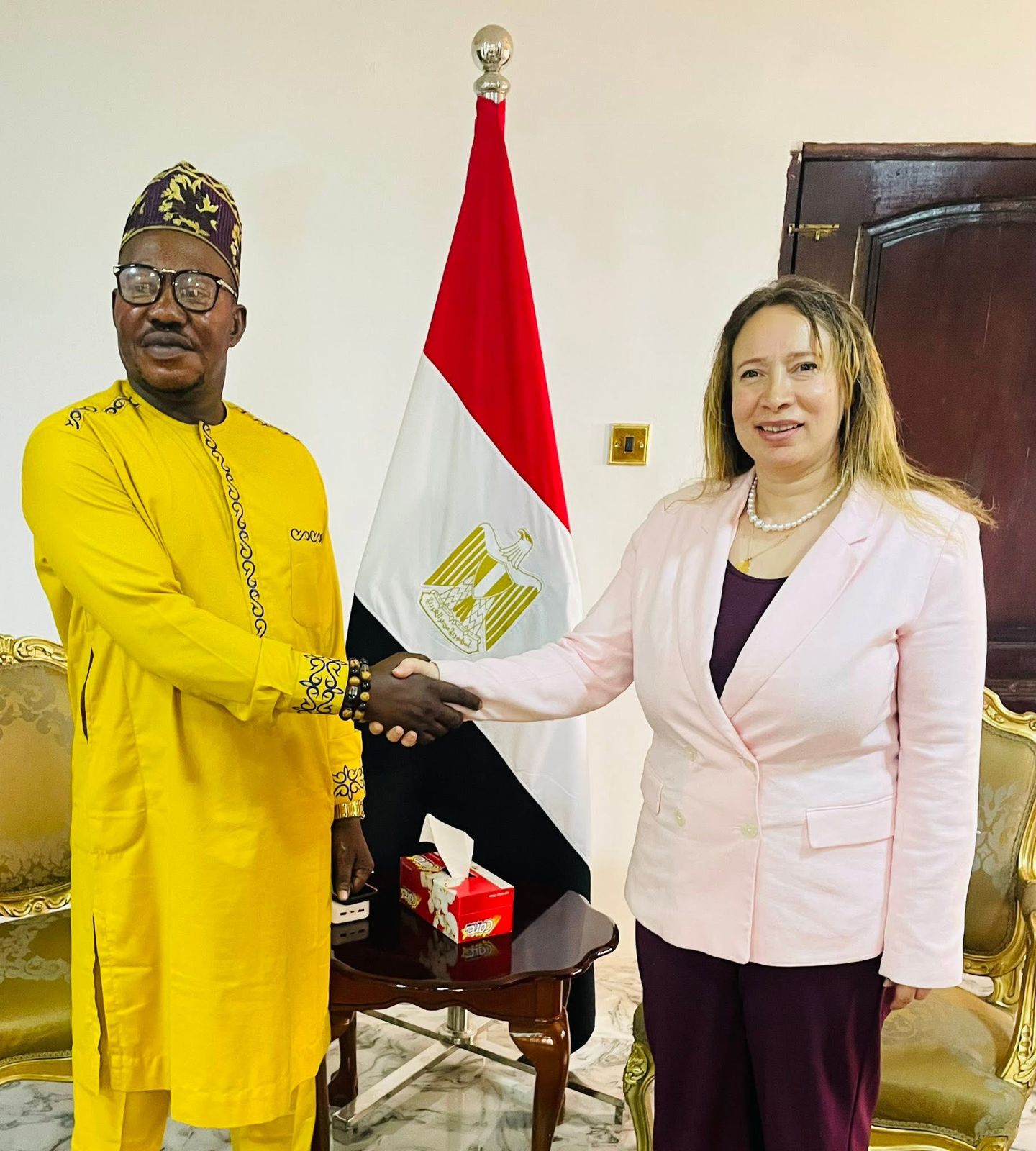
In a move reflecting Egypt's keenness to expand cooperation with various components of Sierra Leonean society, the Embassy of the Arab Republic of Egypt in the capital, Freetown, received a delegation. Sierra Leone The traditional leader of the Valaba region, Honorable Thor Thor Chico Terinah Tungus Nea Konkoruba Vanko Lai Marah III, made a visit described as an important milestone in strengthening communication between the two sides.
This visit comes within the framework of the active diplomatic moves led by the Egyptian Embassy, with the aim of consolidating bilateral relations between Egypt and Sierra Leone, and not being satisfied with cooperation at the governmental level only, but expanding it to include local communities and traditional leaders who represent a fundamental pillar in the process of development and stability within the country.
Direct cooperation with local communities
The meeting included extensive discussions on ways to support local communities in the Valaba region, with a focus on strengthening sustainable development programs and improving the level of services provided to citizens.
Both sides emphasized the importance of exchanging experiences and benefiting from the Egyptian experience in implementing development projects aimed at raising the standard of living and achieving comprehensive rural development.
Agriculture is at the forefront of attention
The agricultural sector occupied an important part of the discussions, where opportunities for cooperation in the areas of developing agricultural production and exchanging technical expertise were explored, in order to increase the efficiency of the agricultural sector and achieve food security.
The discussions also addressed the possibility of building future partnerships that would benefit from Egypt’s accumulated expertise in the fields of modern irrigation and sustainable agricultural management.
Educational opportunities and empowerment for youth
The two sides also discussed mechanisms to support young people in the Valaba region by providing specialized educational and training opportunities that enable them to acquire the skills necessary to meet the demands of the labor market.
Building qualified personnel
The discussions included the possibility of utilizing the educational and technical programs offered by Egyptian institutions, which would contribute to building qualified personnel capable of leading development efforts in the region.
A model for development diplomacy
This visit reflects a growing Egyptian trend towards strengthening development diplomacy in the African continent, through building bridges of communication with local leaders and different communities, in order to support common interests and enhance opportunities for cooperation in the fields of development, education and agriculture, and to emphasize the depth of the historical relations that unite Egypt with the countries of the African continent.