Juba International Airport introduces new buses to improve passenger services
A new step to develop transportation services within Juba International Airport
Written by: Mohammed Omran
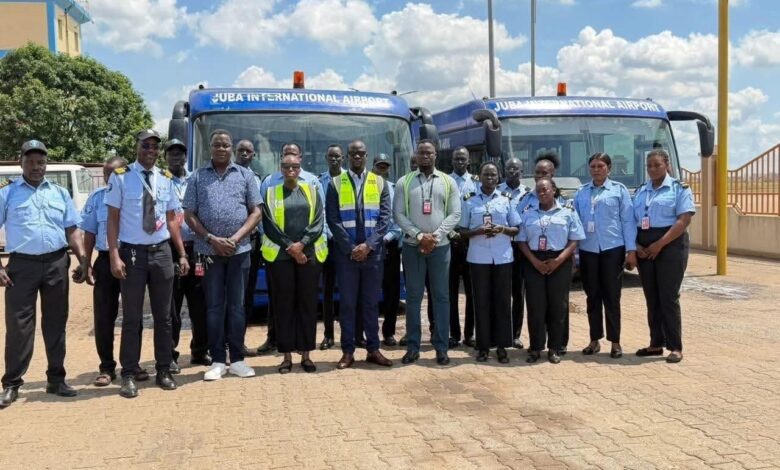
The administration announced Juba International Airport The introduction of dedicated buses for transporting passengers within the airport is a step aimed at improving passenger services and facilitating their movement between the passenger terminal and the aircraft.
The airport administration said the new buses will provide a safe, comfortable and efficient means of transportation for passengers, contributing to enhancing comfort levels, speeding up movement procedures within the airport premises and improving the overall travel experience.
She added that this step comes as part of ongoing efforts to modernize airport services and develop its operational infrastructure in order to raise the level of passenger satisfaction and enhance the quality of services provided.
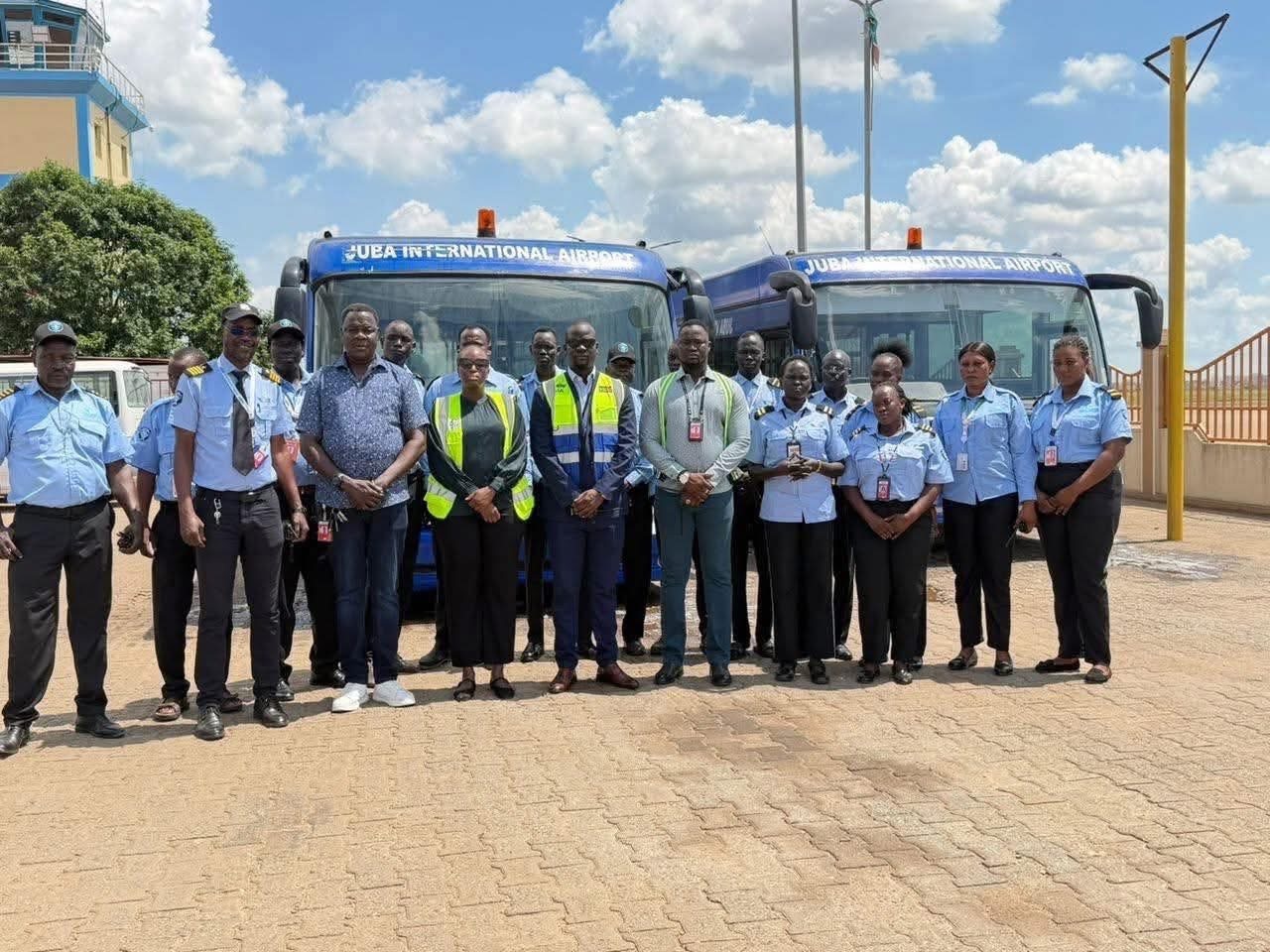
The administration explained that operating the new buses would organize passenger traffic more efficiently and contribute to aligning airport operations with international standards adopted in the civil aviation sector.
Juba International Airport is the main air gateway to South Sudan, and its facilities have witnessed a series of measures in recent years aimed at developing services and improving the airport's infrastructure.
Congo's main airport reopens after being closed due to Ebola
In a separate development, the government of the Democratic Republic of Congo announced the reopening of the main airport in Ituri province, the epicenter of the Ebola outbreak, after a ten-day closure for public safety reasons.
Ebola in Congo
The Ministry of Transport explained in an official statement that the authorities concluded that “the conditions are now ripe for a gradual and safe resumption of air travel,” following an assessment of the mechanisms for monitoring the spread of the disease, according to what was reported by the French Press Agency.
For his part, Health Minister Samuel Roger Kamba indicated that the authorities had previously been forced to take precautionary measures in order to protect travelers and limit the spread of infection.
Ebola outbreak in Congo
The country is experiencing a widespread outbreak of Ebola, a highly contagious hemorrhagic fever disease suspected of having killed at least 246 people in both the Democratic Republic of Congo and Uganda, according to the Africa Centres for Disease Control and Prevention.
On May 23, Congolese authorities suspended all commercial flights to and from Bunia airport, the capital of the conflict-ridden eastern Ituri province, allowing only medical and humanitarian flights to arrive.
As the Ebola outbreak intensifies within the Democratic Republic of Congo with a rapidly rising number of confirmed cases, more complex dimensions of the crisis are emerging, not only in terms of the spread of the disease, but also in terms of the groups most affected by it.
Women are most at risk as the Ebola outbreak escalates.
As the health system continues to face increasing pressure, women stand at the heart of the epidemic scene, as they are the most vulnerable to infection and the most present on the lines of care within homes and health facilities, in a pattern that is repeated with almost every outbreak, amid a clear lack of means of prevention and a widening scope of danger.