Al-Azhar Observatory: Terrorism in West Africa is declining quantitatively but becoming more lethal
Indicators of terrorism in West Africa
Written by Ziad Abdel Fattah:
The Al-Azhar Observatory for Combating Extremism issued a detailed analytical report on the security situation in West Africa during April 2026, based on a precise statistical comparison with March indicators the past.
The reading reveals remarkable tactical shifts in the pattern of terrorist operations and, conversely, in military confrontation strategies, highlighting the overlap of security and geographical dimensions in determining the features of regional stability.
Al-Azhar Observatory monitors a quantitative shift in violence indicators
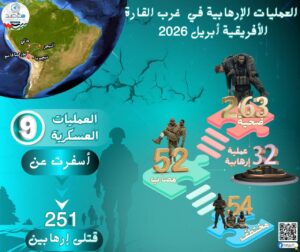
The Observatory’s data indicates a significant decline in the overall quantitative assessment of terrorist activity in West Africa during April, with the number of terrorist operations decreasing by 23.8% (recording 32 operations compared to 42 in March).
This decrease was reflected positively in the human toll, as the number of victims decreased by 43.7% (from 467 to 263 victims), and the number of injured by 63.1% (from 141 to 52 injured).
Kidnappings decreased by approximately 82.4% (from 308 to only 54 cases), reflecting a relative tightening of financing and extortion networks and an improvement in rapid security response.
On the opposing military side, statistics recorded a decrease in the number of terrorist elements killed by 28.5% (from 351 to 251 elements), with a complete absence of any indications of arrest or surrender.
The observatory analyzes this data as a shift in field combat doctrine towards “rapid preemptive strikes and direct clashes,” instead of long dismantling and containment operations, which proves that the security landscape is still fluid and does not reflect complete stability.
Operations in Nigeria remain stable, but attacks are escalating in bloodshed.
According to statistical analysis, Nigeria continued to lead the tragic scene in the region, with the number of operations remaining steady at 26 during the months of March and April.
Despite this numerical stability, the level of lethality and violence witnessed a qualitative leap; the number of victims increased by 28.8% (228 dead instead of 177 in March), while the number of injured decreased to 34 injured.
The Observatory believes that these figures clearly indicate that the armed groups there have adopted a strategy of “the deadliest attacks” to inflict the greatest number of deaths in the shortest possible time in order to create a political and psychological shock.
In contrast, security approaches succeeded in reducing kidnappings by more than 84% (to settle at 48 cases), indicating a decline in extortion networks, while the decrease in terrorist deaths (from 216 to 99) indicates that militants have shifted to hit-and-run tactics and avoided direct frontal confrontation with the Nigerian army.
Mali is witnessing attempts at geographical expansion.
At the same time, Mali witnessed a worrying escalation reflecting the return of armed groups to act more boldly; terrorist operations jumped from one operation in March to five operations in April, accompanied by an increase in the number of victims to seven dead and 18 wounded.
The Al-Azhar Observatory warns of the danger of current indicators that confirm the efforts of terrorist organizations in Mali to exploit security gaps in border areas, and their attempts to build understandings and tactical alliances with some “separatist groups”.
These worrying alliances aim to impose a new reality on the ground based on territorial control and the weakening of the central government's authority and prestige. However, the Malian army's military pressure has not ceased, with the number of militants killed rising from 52 to 60 in an effort to thwart their expansion plans.
The success of preemptive strikes in Burkina Faso and Niger
In contrast to the situation in Mali and Nigeria, Burkina Faso recorded a sharp and decisive decline in terrorist activity of 85.7% (down from 7 operations to only one), and the number of victims decreased from 203 to 28 dead.
The Observatory attributes this notable decline to the escalation of concentrated military pressure and the elimination of 57 armed elements from organizations linked to al-Qaeda and ISIS, which represents a tremendous success for preemptive strikes and a reduction in the enemy's offensive capabilities.
In Niger, a remarkable strategic shift has occurred with the complete disappearance of terrorist operations and casualties (zero operations and zero deaths compared to seven in March). This is attributed to the success of intelligence and security services in containing threats and dismantling cells before they could act. However, the six kidnappings that were recorded confirm the terrorists' shift towards low-contact tactics to ensure their survival. This also explains the low number of casualties among the groups (35 members compared to 83 in March), a consequence of the absence of direct confrontations.
The developments on the ground between March and April 2026 confirm that the terrorist landscape in the West Africa region is characterized by high fluidity and rapid tactical shifts. The quantitative decline in the number of operations does not necessarily mean a decrease in the danger or a decline in the organizations. Rather, these groups have resorted to reducing their attacks quantitatively in exchange for focusing qualitatively on raising the level of lethality and psychological and field impact.
In contrast, the Al-Azhar Observatory for Combating Extremism appreciates the remarkable development in the performance of the security and military apparatuses of the countries of the region, especially in the areas of preemptive strikes and intelligence containment.
The Observatory emphasizes that the battle in West Africa is no longer a traditional military confrontation, but has become a complex battle in which security, intelligence, political, developmental and social dimensions are intertwined, which requires sustaining regional coordination and drying up the sources of extremist thought in parallel with military resolution.