Ahmed Salem
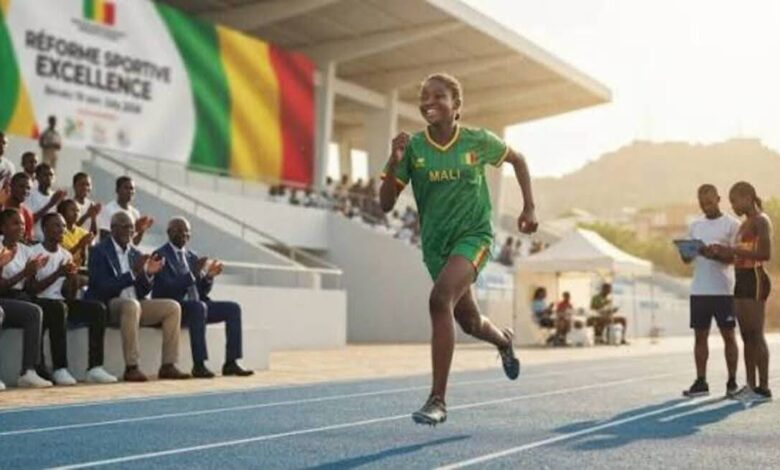
Bamako will host its first independent sports biennial since 1983, from August 7 to 16, in which 19 regions plus the Bamako province will compete in five sports.
The Independent Sports Biennial in Bamako was initially scheduled to be revived in September 2025, before being postponed due to scheduling and preparation constraints.
Reviving the competition once again
About a year later, the government set a new ten-day period, from August 7 to 16, 2026, to revive this competition between regions.
The delegations will participate in athletics, basketball, football, traditional wrestling, and chess. This event will, for the first time, bring together representatives from Mali's current administrative map, which, since the 2023 regional reform, comprises 19 regions in addition to the Bamako province.
The origins of the Sports Biennale can be traced back to the national youth gatherings held at the beginning of independence. The first National Youth Week was held in 1962, before the event was transformed in 1980 into an arts, culture and sports biennale held every two years.
A purely mathematical formula was then developed, alternating between the two. Ségou hosted the first tournament in 1979, Mopti the second in 1981, and Sikasso the third in 1983.
The 1986 and 1988 editions again combined sporting competitions with artistic and cultural activities.
Thus, the 2026 edition marks the return of the Biennale in its independent sporting format, four decades after the last edition in Sikasso. Unlike the first three editions, which were hosted by regional capitals in succession, the new edition will be held in Bamako.
The government presents this event as a platform for young people from different regions to meet and as a tool for national integration.
These goals embody the role assigned to previous youth weeks, which combined sports competitions, cultural expression, and regional representation.
Youth issues in Mali
Youth issues are of paramount importance in a country whose population is expected to reach 25.2 million by 2025.
It is estimated that around 46 million of Mali’s population is under the age of 15, according to United Nations demographic data cited by the World Bank.
The detailed schedule of competitions, the selected venues, the number of athletes, the participation criteria, and the budget for this event have not yet been announced.
This information will also help clarify the role of the women's categories, young athletes from new regions, and the selection processes that precede the national stage.