Sudan in turmoil: Fourth year of war entrenches the largest displacement and famine crisis in history
The war in Sudan
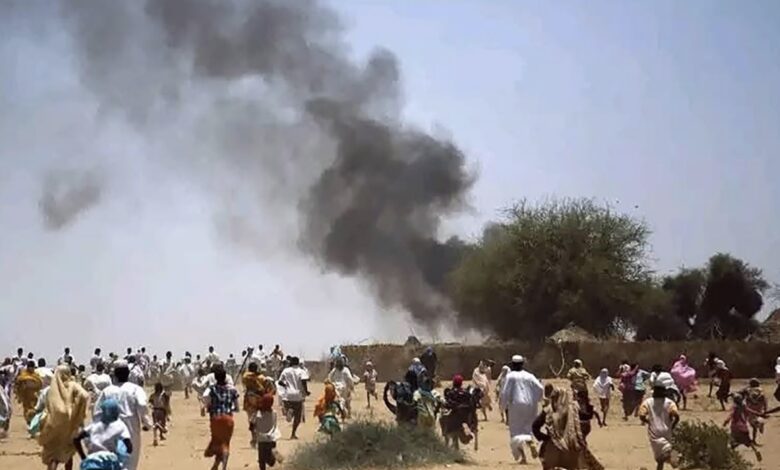
Sudan has become the scene of the biggest crisis protection International displacement is occurring as the Sudanese crisis enters its fourth year, where words are no longer sufficient to describe the magnitude of the tragedy that is ravaging a country that was once known as the “breadbasket of the world.”.
A UN report explained that battles are still raging in large parts of the country, consuming everything in their path, leaving behind endless waves of displacement and a daily tragedy for millions, in the complete absence of any political horizon to end this bloody conflict.
Alarming figures
In a shocking media briefing from Geneva, Marie-Hélène Verney, representative of the United Nations High Commissioner for Refugees, painted a grim picture of the situation on the ground.
Since the outbreak of war in April 2023, some 14 million people have been forced to flee their homes; 9 million of them are living the bitterness of internal displacement, while 4.4 million have crossed borders into the unknown in neighboring countries.
These figures simply mean that one in four Sudanese has become displaced, an unprecedented rate globally that places Sudan at the forefront of the list of the most urgent and neglected humanitarian crises.
Death from Darfur to Khartoum
The fires of war continue to burn in Darfur, Kordofan, and Blue Nile State, with the introduction of new military tactics that have further complicated the situation, such as intensive aerial bombardment and the use of drones, prompting thousands of families to flee in fear of death coming from the sky.
It is not limited to bullets and shells, but extends to systematic sexual violence against women and girls, forced recruitment of young men, and arbitrary arrests that take place under the shadow of the absence of the law, creating a climate of impunity in which the logic of power prevails over the logic of justice.
The lost generation amidst the conflict
Children are the most vulnerable group in this war. Millions have spent three crucial years of their childhood moving between displacement camps, deprived of their fundamental right to education and healthy development. Reports indicate that more than 58,000 children have arrived in neighboring countries alone, separated from their families on perilous journeys, bearing deep physical wounds and psychological trauma that may not heal for many years. This interruption of education threatens to create a “lost generation” that will face immense difficulties in rebuilding Sudan in the future.
The specter of famine
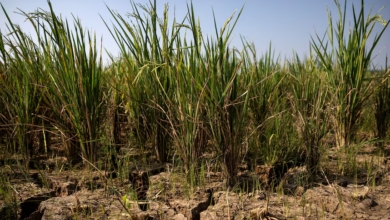
On another front, Hongjie Yang, representative of the Food and Agriculture Organization (FAO), warned of catastrophic consequences for food security. Cereal production has plummeted by 221 TP3T compared to last year, leaving 21 million Sudanese facing starvation, including 6.3 million in dire circumstances.
The biggest shock was the destruction of agricultural and veterinary infrastructure in Khartoum, including the destruction of the National Veterinary Laboratory, which provided vaccines for livestock, threatening the complete disintegration of the animal production sector.
The health system is under attack.
Dr. Shibl Sahbani, representative of the World Health Organization, revealed another terrifying aspect, which is the targeting of healthcare; the organization has documented more than 200 attacks on hospitals and medical personnel.
This direct targeting, coupled with the collapse of logistical supply chains affected by regional tensions in the Middle East, has made obtaining a pill or a simple medical service a miracle.
In Khartoum, despite some people trying to return to their homes, they are confronted with destroyed hospitals and exhausted medical staff who lack even the minimum of life-saving equipment.
Migration towards Europe
Faced with this complete impasse, Sudanese find themselves forced to embark on perilous journeys across Libya to the Mediterranean. Data indicates a staggering increase of 2,321,000 in the number of arrivals in Europe, a figure the UNHCR confirms is a direct consequence of the despair and the international community's failure to provide sufficient funding for relief programs in neighboring countries whose capacity has reached a breaking point, such as Chad, Egypt, and South Sudan.