The bride wears black... Mauritanian customs that might surprise you for the first time
The land of a million poets... Mauritanian traditions you won't find anywhere else
Written by: Badr Ahmed
Mauritania is known in the Arab world as the country of a million poets, in reference to the status of poetry and literature in the lives of its people. Mauritanians also jokingly call their country the country of a million politicians.
Mauritania represents a link between North and West Africa. It is the furthest Arab country in the African continent and is characterized by its ethnic and cultural diversity, where Arabs, Berbers, and Black Africans live, which has created a cultural mix that is reflected in customs, traditions, music, fashion, and popular cuisine.
The Mauritanian constitution recognizes four national languages: Arabic, which is the official language, along with Pulaar, Wolof, and Soninke, while Zenaga, an Amazigh language, is still present in some regions despite its declining use.
Mauritania is a country that celebrates poetry and safeguards its heritage from generation to generation.
Cultural heritage holds a special place for Mauritanians, as poetry is part of the national identity, and folk poems and tales are passed down orally through generations, while traditional music has a prominent place, as it combines traditional and modern instruments and reflects the country’s history and cultural diversity.
In 2020, the government established a National Council for Cultural Heritage with the aim of protecting and preserving cultural heritage.
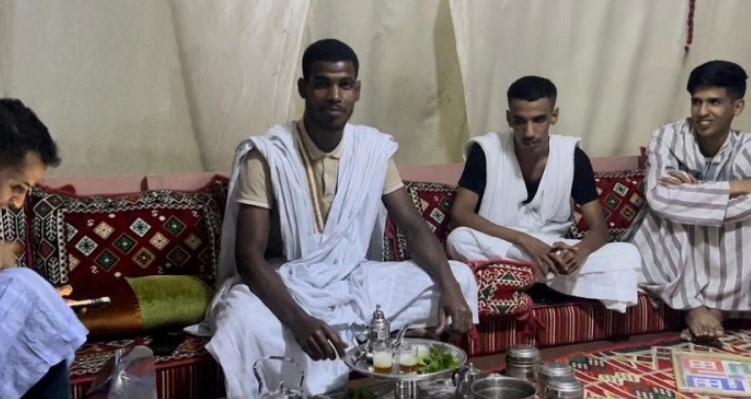
The Mauritanian people are known for their strong adherence to their inherited customs, and this is clearly evident in the traditional clothing that is still present in daily life despite the manifestations of modernity.
Men wear the dara’a, a loose-fitting embroidered cloak made of light fabric suitable for the desert climate, while women wear the melhfa, a loose-fitting garment with bright colors and distinctive patterns, which is the official dress for Mauritanian women after the age of fifteen.
The bride wears black as an expression of joy
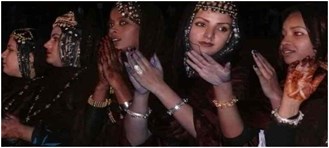
One of the more unusual customs is the association of the color black with happy occasions. The bride wears a black dress on her wedding night, and this color is seen as a symbol of joy, while white is associated with sadness and pessimism in some regions. The bride also makes a point of wearing black during the first few days after her marriage, according to inherited traditions.
Marriage ceremonies in Mauritania are characterized by special rituals that differ from many Arab countries. The marriage contract is often concluded in the presence of the family only, without the bride and groom. The custom of hiding the bride is also widespread, where her friends hide her after the wedding, and the groom has to search for her before taking her to the marital home.
The bride's family also bears a large part of the wedding costs, and presents gifts and clothes to the groom's family as an expression of affection.
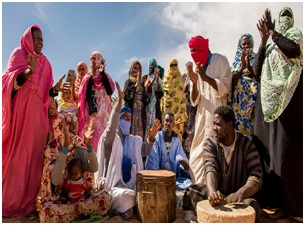
During the month of Ramadan, Mauritanians maintain inherited customs, most notably shaving the heads of children in the first days of the month in what is known as Ramadan hair, in the belief that new hair grows by the end of the blessed month.
Expatriates are keen to return to their families to spend Eid al-Fitr, and children roam the neighborhoods on Eid morning in their new clothes to get Eid gifts, which are known locally as Diyouna. .
As for traditional dwellings, cotton tents are still widespread in desert areas, and are characterized by their light colors on the outside to reduce the heat of the sun, while they are decorated on the inside with bright fabrics and woven mats, while cement houses are widespread in cities.
Customs and traditions of the people of Mauritania
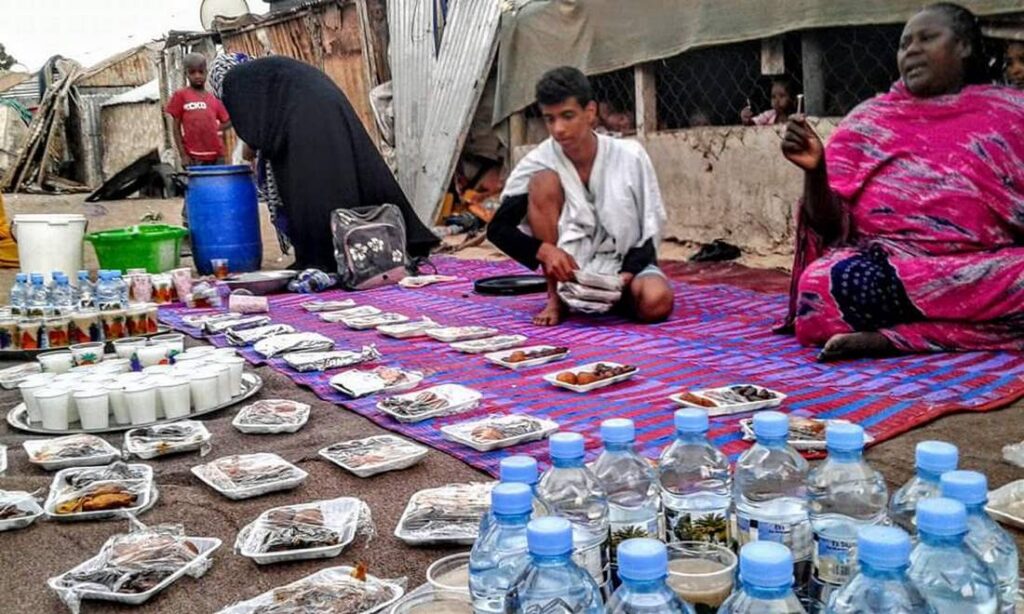
Food holds a special place in Mauritanian culture, where eating is a social ritual governed by established rules and customs. Couscous is a staple dish, prepared in various ways with meat, fish, chicken, or milk. It is distinguished by the addition of powdered jute leaves and local spices, giving it a flavor different from its counterparts in other North African countries.
Marou El Hout is another popular traditional dish, consisting of steamed rice with fried fish, vegetables, and spices, often served at family gatherings and on Fridays. Mauritanians are also known for their Zrig drink, made from goat's milk, water, and sugar, as well as tea, which holds a special place in daily gatherings and is considered a symbol of generosity and hospitality.
Despite the developments that the country has witnessed in recent decades, Mauritanian society remains committed to its heritage and authentic customs, so that Mauritania remains a unique model that combines Arab authenticity and African depth, and preserves a rich cultural identity that has been passed down through generations for hundreds of years.