Tunisia expects to cover its wheat needs by 65% after years of decline
Ahmed Salem
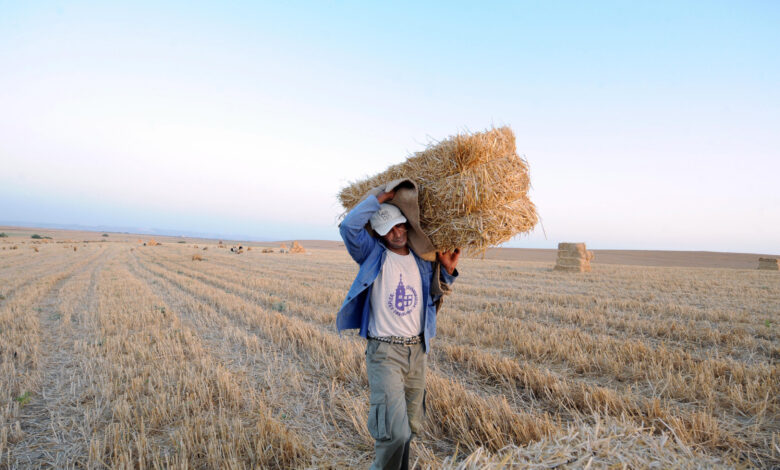
The head of the Tunisian Farmers' Union, Al-Midani Al-Dhawi, stated on Wednesday that grain production during the 2025/2026 agricultural season is expected to cover about 65% of national needs.
The Ministry of Agriculture was in TunisiaThe total grain harvest for this season has been estimated at about 2.2 million tons, the best performance recorded in six seasons, after five consecutive years of drought.
Previous seasons witnessed a decline in the percentage of domestic production covering internal needs, as it did not exceed 30%, before the improvement in rainfall during the 2024/2025 season contributed to strengthening the water reserves in dams, and reducing grain imports by about 20%, according to data reported by the German Press Agency (dpa).
According to the Farmers' Union, the harvest season progressed to about 20% by mid-June, with expectations that high-quality grains will represent about 70% of the total crop.
Egypt and Tunisia discuss the situation in Libya
In a separate context, Dr. Badr Abdel-Aty, Minister of Foreign Affairs, International Cooperation and Egyptians Abroad, met with Mohamed Ali Nafti, Minister of Foreign Affairs, Immigration and Tunisians Abroad of the Republic of Tunisia, on the sidelines of the meeting of the Council of the League of Arab States in its resumed 165th regular session held in the Jordanian capital, Amman.
During the meeting, Minister Abdel-Aati emphasized the special and distinctive nature of the bilateral relations and the historical and popular ties that unite Egypt and Tunisia, praising the remarkable development witnessed in relations between the two countries.
He also praised the convening of the eighteenth session of the Egyptian-Tunisian Joint Higher Committee in Cairo last September, and the results it produced, which reflected the keenness of both sides to advance the paths of bilateral cooperation in various fields, stressing the importance of following up on the implementation of the outputs of the Joint Higher Committee and building on the agreements achieved during it, which contribute to strengthening economic, trade and investment cooperation between the two countries.
Supporting bilateral relations in various fields
Both sides also stressed the importance of continuing to support bilateral relations in various fields and enhancing economic and trade cooperation between the two countries. Minister Abdel-Aati expressed his hope for active participation in the investment forum hosted by Tunisia, which would contribute to strengthening communication between the business communities and opening new horizons for cooperation and joint investment.