Led by Egypt, new regional moves are underway to support the political roadmap in Libya.
Egypt, Algeria, and Tunisia affirm their full support for the efforts of the UN mission in Libya.
Written by: Badr Ahmed
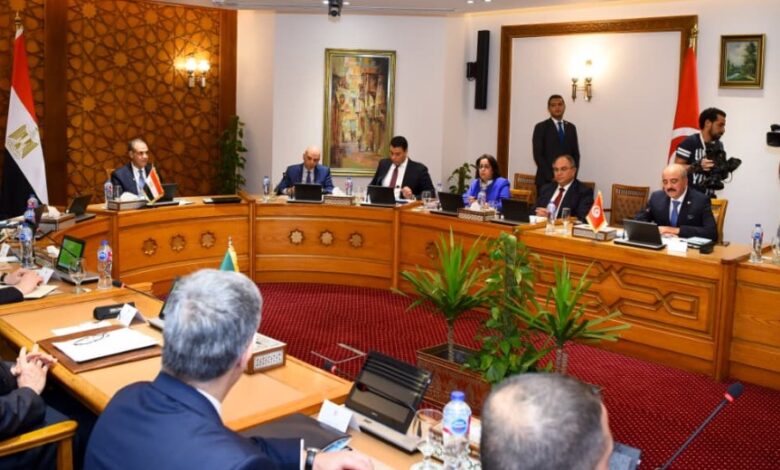
Dr. Badr Abdel-Aati received Foreign Minister International Cooperation and Egyptians Abroad, Hanna Tetteh, Special Representative of the Secretary-General of the United Nations in Libya and Head of the United Nations Support Mission in Libya, on Thursday, May 21.
The meeting included an assessment of the results of contacts aimed at resolving the Libyan crisis, with Minister Abdel-Aati stressing Egypt’s support for the steps taken by the UN mission, pointing to the importance of completing the presidential and legislative elections simultaneously, and the immediate withdrawal of foreign forces, mercenaries and foreign fighters from Libya to ensure the state’s restoration of its sovereignty.
During the meeting, the Foreign Minister highlighted the utmost importance that Egypt attaches to the stability of Libya, stressing that Libya’s security is an integral part of Egyptian national security. He reiterated Egypt’s firm position in support of the unity and integrity of Libyan territory, and the importance of any political settlement being based on the principle of pure Libyan ownership to enable national state institutions to play their role and meet the aspirations of the brotherly Libyan people for stability and development.
For her part, the UN envoy praised the close cooperation between Egypt and the UN mission, commending Cairo's hosting of the tripartite neighboring countries mechanism meetings and the regional support it provides for stability. She affirmed the UN's commitment to continuing coordination with Egypt to ensure the success of the political process and to consolidate peace and security throughout Libya.
Egypt, Algeria, and Tunisia affirm their full support for the efforts of the UN mission in Libya.
Dr. Badr Abdel-Aty, Minister of Foreign Affairs, International Cooperation and Egyptians Abroad, Mr. Ahmed Attaf, Minister of Foreign Affairs and the National Community Abroad of the People’s Democratic Republic of Algeria, and Mr. Mohamed Ali Nafti, Minister of Foreign Affairs, Migration and Tunisians Abroad, also met with Ms. Hanna Tetteh, Special Envoy of the Secretary-General of the United Nations to Libya.
The parties engaged in extensive discussions regarding the latest developments in Libya and ways to overcome obstacles hindering the political settlement process, exchanging views and assessments on the matter. The discussions also addressed mechanisms for strengthening close coordination between neighboring countries and the UN mission to ensure the integration of regional and international efforts supporting Libya's stability and overcoming the security and political challenges it faces.
The meeting witnessed an affirmation of support for the UN envoy’s mission and the commendable efforts undertaken by the UN mission to address the current situation in Libya, as Minister Abdel-Aati stressed the commitment to providing all means of support to ensure the success of UN mediation efforts and to facilitate dialogue between the Libyan parties to implement the roadmap and complete the political process.
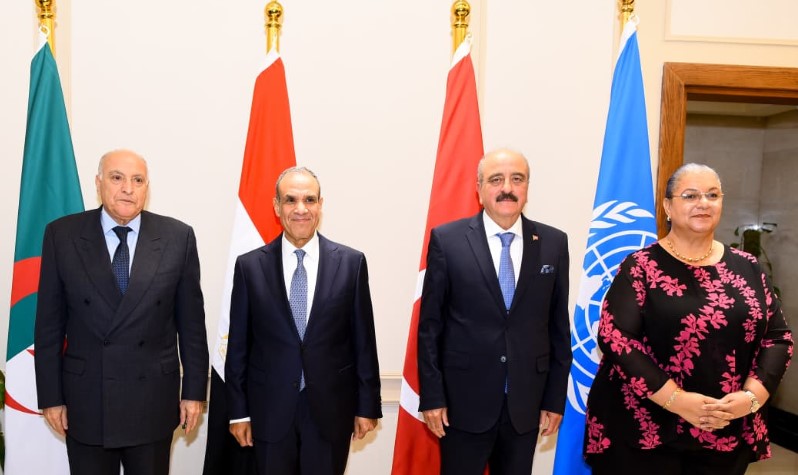
During the meeting, the Foreign Minister reviewed the parameters of Egypt's firm position, emphasizing the necessity of reaching a comprehensive political settlement based on the principle of Libyan sovereignty. He stressed the need for concerted efforts to end the institutional division by expediting simultaneous presidential and parliamentary elections as soon as possible. The Foreign Minister also emphasized the necessity of the immediate and simultaneous withdrawal of all foreign forces, mercenaries, and foreign fighters from all Libyan territory, considering this a fundamental condition for restoring Libyan sovereignty and safeguarding Arab national security.
For her part, the UN envoy expressed her appreciation for the pivotal role played by Libya’s neighboring countries, praising the joint coordination and continuous consultation within the tripartite mechanism, and affirming the United Nations’ commitment to continuing to work closely with regional partners and all Libyan parties to advance the settlement process and facilitate a comprehensive political process that meets the aspirations of the Libyan people and establishes a phase of sustainable stability.