European tariffs on Chinese electric cars: Protection for the industry or a threat to the green transition?
A poll reveals the extent of the controversy.
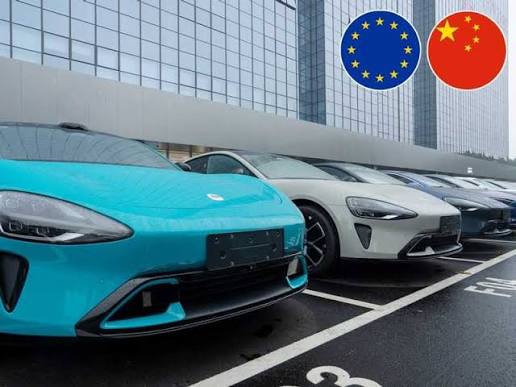
The tariffs imposed by the European Union on Chinese electric cars have reignited the debate about the future of the green transition in Europe, amid growing questions about whether these measures will support the local industry or hinder efforts to reduce carbon emissions and accelerate the transition to clean transportation.
CGTN highlighted this issue through a special episode of “The Global Debate: Who Shapes the Future”, which discussed the impact of European tariffs on the electric vehicle market, and their implications for international competition and sustainable development goals.
Former Italian Undersecretary of State
The discussion included a number of prominent experts and academics, including former Italian Undersecretary of State Michele Geracci and Professor of International Relations at Peking University Zhao Daojun, along with academic and media officials from China and the United States, where the discussions focused on the relationship between protecting local markets and the requirements of the transition to a green economy.
The team in favor of abolishing the tariffs argued that imposing further burdens on electric cars imported from China leads to higher prices and reduces consumers' opportunities to obtain low-emission vehicles, considering that these policies could negatively affect the European Union's goals related to carbon neutrality.
Participants described this trend as potentially amounting to “green suicide” if it slows down the pace of the transition to clean energy.
A means to protect local industries
In contrast, proponents of the tariffs defended the European measures as a way to protect domestic industries from unfair competition, asserting that giving European companies more room to grow and develop would help them enhance their technological capabilities, invest in research and development, and build stronger and more sustainable supply chains.
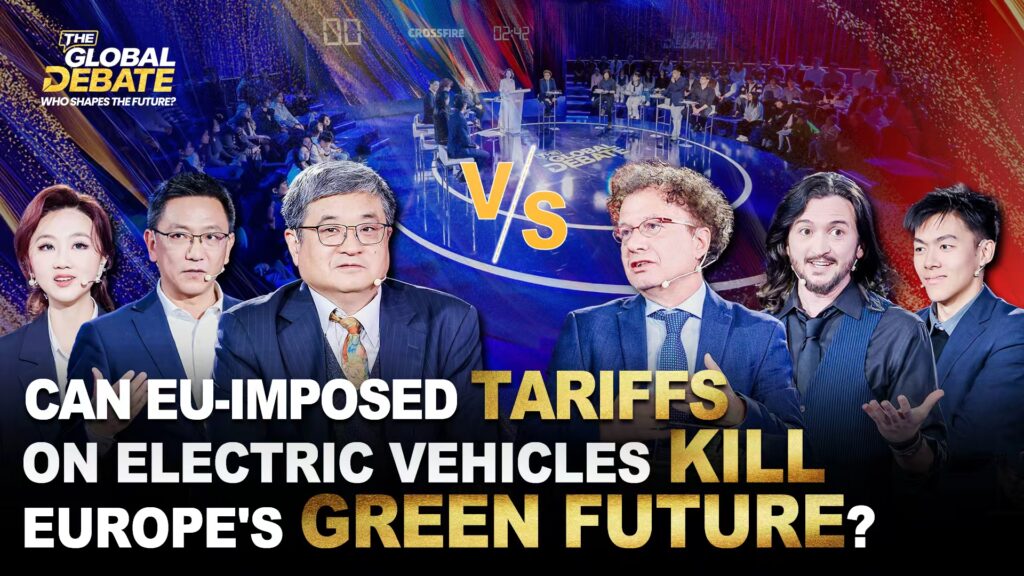
Michel Geracci pointed out that Europe risks losing a large part of its industrial base if it does not take action to protect its companies, while Professor Chao Dao-jeong stressed the need to strike a balance between supporting local industries and maintaining the momentum of the global green transition, warning that trade barriers should not become permanent obstacles to international cooperation in the new energy sector.
In a CGTN survey conducted across its international platforms in five languages, with nearly 7,500 participants in 24 hours, 84.1% of respondents considered European tariffs on foreign electric vehicles to be a form of trade protectionism.
Meanwhile, 82.6% argued that these policies could negatively affect the competitiveness of European car companies in global markets.
This controversy comes at a time when Europe is striving to achieve its ambitious climate goals, making the issue of tariffs on electric cars one of the most complex files in the economic relationship between China and the European Union, amid growing calls to find a formula that balances fair competition with the requirements of the green transition.