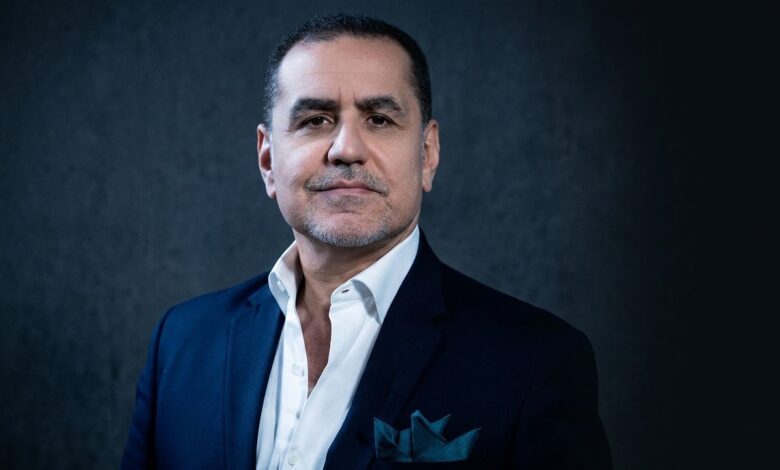
Banker Hani Aboul-Fotouh told Zoom Africa News: I expect the interest rate to remain unchanged during the Central Bank meeting.
Goldman Sachs expects a 1% increase
Written by Ziad Abdel Fattah:
While most Egyptian analysts expect the interest rate to remain unchanged during the meeting Monetary Policy Committee of the Central Bank The Egyptian, the multinational American financial and investment services institution, Goldman Sachs, which is one of the most famous banking institutions in America, is adopting an interest rate hike of 1% during today’s meeting, which makes all scenarios on the table today, Thursday, until the decision is issued.
Prominent Egyptian banker Hani Abu El-Fotouh said that after the interest rate was fixed at 19% for deposits and 20% for lending at the meeting on April 2, the April 2026 data came in less alarming than many expected. Monthly headline inflation fell to just 1.1% compared to 3.2% in March, the slowest monthly pace in more than a year. Annual headline inflation also fell to 14.9% from 15.2% and core inflation to 13.8% from 14.0%.
The banking expert told Zoom Africa News that these figures confirm the continuation of the downward trend, yet they are still far from the official target of the Central Bank (7% ±2), noting that the gap is no less than 6%, and this means that monetary policy is still in the area of mandatory waiting and not in the area of comfort.
Lower inflation gives the central bank room to maneuver.

The banking expert believes that the decline in monthly inflation gives the Central Bank of Egypt room to maneuver before the May meeting, and that the data is improving in its direction, but the gap between reality and the Central Bank’s target is still large and does not allow for any new interest rate cut before the third quarter of 2026. .
He explained that what is striking about the current data is that inflation The core inflation rate remains close to the overall inflation rate, indicating that pressures have shifted from volatile goods to services, rents, and transportation, suggesting that previous exchange rate and energy price accumulations need more time to absorb the shock.
He said: From my point of view, the gap between headline and core inflation of just one percentage point proves that any new inflationary wave coming from abroad will quickly find fertile ground here.
While the situation regarding dollar liquidity is relatively better, as reserves remain strong at $53 billion, net foreign assets are positive at $21.36 billion, and remittances from Egyptians abroad recorded $22.1 billion in the first half alone.
He pointed out that the outflow of $8-10 billion in hot money since the beginning of the year is putting pressure on the exchange rate, which is trading around 53.16 Egyptian pounds to the dollar. Similarly, Suez Canal revenues of $2.2 billion (first half) do not reflect any surge, and the external debt of $163.9 billion remains a heavy burden, as rising global interest rates increase debt installments in dollars. As for the Purchasing Managers' Index at 46.6, it confirms that the private sector is still contracting for the eighteenth consecutive month.
He explained that in contrast to these pressures there are optimistic signs, as the International Monetary Fund expects inflation to decline to 13.2% by the end of June 2026 and then to 11.1% in the next fiscal year, with the aim of returning to single digits in the medium term. This means that the downward trend is in place, but it requires time.
Currently, it is highly likely that the central bank will hold interest rates steady again at the next meeting, because annual inflation is still significantly above the target and any hasty reduction would be misinterpreted as a sign of falling into the inflation trap. The central bank needs to test the sustainability of the monthly decline in inflation – is it a real improvement or just a seasonal lull? The impact of geopolitical tensions and energy prices is undeniable and could reignite imported inflation at any moment.
Furthermore, the banker believes that the biggest risk is that continued high interest rates stifle any chance of recovery for the private sector, which has been suffering from a contraction as evidenced by the Purchasing Managers’ Index for more than a year and a half.
On the other hand, any cut before the right time could drive out the remaining hot money and weaken the pound again, and then the central bank might be forced to raise interest rates later in a double-loss scenario.
Therefore, he expected the interest rate to remain unchanged at the next meeting with cautious signals, and that the first opportunity to cut interest rates would be in the third quarter of 2026, if inflation continued to decline and external risks subsided, because the scenario of an immediate cut now seems very unlikely and the scenario of a forced increase remains a very weak possibility, but it is not out of the question in the event of a sudden collapse of the pound or a significant and unexpected rise in inflation.
In short, keeping the interest rate unchanged is the most likely outcome.
In short, given the decline in monthly inflation while annual inflation remains far from the target and the balance of risks between stifling the private sector and losing control over prices, he believes that holding the interest rate steady at the next Monetary Policy Committee meeting is the most likely option.
In the same context, Goldman Sachs, one of the global American banks, predicted that the Central Bank of Egypt would raise the interest rate on deposits and loans today, with the aim of countering potential inflationary pressures.
According to the bank's forecasts circulating today, Thursday, the interest rate on the Egyptian pound will rise to 20% for deposits and 21% for lending, instead of 19% and 20% respectively, if the central bank raises the interest rate.
Goldman Sachs' forecast contradicts the expectations of analysts, bankers, and economists who unanimously predicted that the interest rate would be held steady for the second time in a row at today's central bank meeting.