Written by: Badr Ahmed
She wrote Niger China took a further step towards strengthening their cooperation in the field of energy by signing a number of strategic memoranda of understanding in the oil sector.
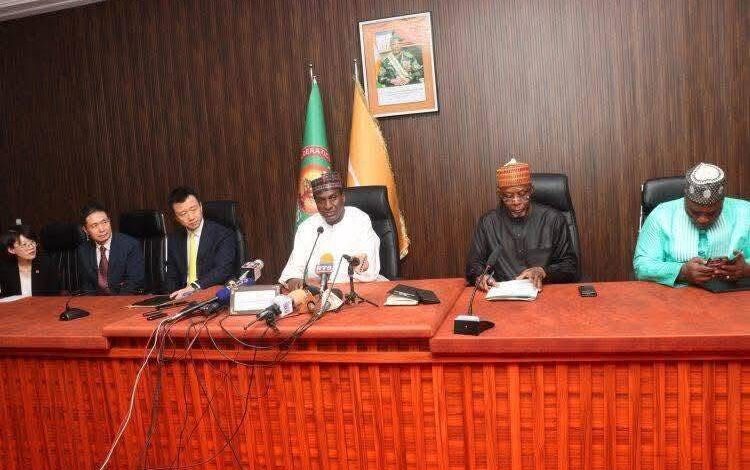
The official signing ceremony took place on Monday, May 16, 2026 in Niamey, presided over by Prime Minister Ali Mahamane Lamine Zene, marking the relaunch and intensification of the partnership between the two countries in the hydrocarbons sector.
Niger aims to strengthen its energy independence through an expanded partnership with China.
In his speech, the Prime Minister described the signing as a landmark moment in strengthening strategic relations between Niger and China.
He noted that the negotiations were conducted by an institutional committee formed by the President of the Republic, the Head of State, Lieutenant General Abdul Rahman Tiani.
According to the Prime Minister, this committee, chaired by the Minister of Foreign Affairs, Bakary Yao Sangare, conducted intensive consultations to reach agreements that are considered favorable to Niger's strategic interests.
In his speech, the Nigerien Foreign Minister explained that the negotiation process began on June 11, 2025 in China, following talks with the Chinese authorities.
After nearly a year of negotiations and compromises, the two sides reached important agreements, particularly regarding local content, the Nigerian state’s participation in oil companies, and the rationalization of oil revenues.
One of the most notable achievements announced was the reduction of oil pipeline transportation fees from $27 to $15 per barrel.
This measure will allow Niger to save more than $106 million over twelve months.
Minister Sangaré also announced a preliminary agreement for the Nigerien state to acquire 45% shares of WAPCO, a company that Niger did not previously own.
The new agreements also stipulate the return of crude oil export revenues to Niger, a provision intended to strengthen the country’s national economy and financial institutions.
Regarding employment and local content, both parties agreed on a significant increase in the proportion of Nigerians employed by oil companies and their subcontractors. As a result, 452 new jobs are expected to be created for Nigerians by 2030.
At CNPCNP, Nigerians will occupy 60% of management positions and 90% of the total workforce.
At WAPCO, Nigerians will represent 60% of management positions and 80% of operational positions.
Niger announces plan to increase localization of jobs within Chinese oil companies
As for SORAZ, the goal is to reach a ratio of 85% of Nigerian employees in the refinery.
The agreements also include standardizing the salaries of expatriate and Nigerian employees, restructuring mutual debts between oil companies, and reviving the Dinga Deep and Apollo-Yogo oil projects, with a total investment estimated at $1 billion.
According to official forecasts, these investments are expected to increase national oil production from 110,000 to 145,000 barrels per day by 2029.
Furthermore, a feasibility study will be launched within six months on Niger’s gas potential, estimated at around 23 billion cubic meters, to explore prospects for local electricity, fertilizer and gas production.
The Nigerien authorities welcomed the agreements, which they consider crucial for the future of the national energy sector, while emphasizing the need for a precise monitoring mechanism to ensure the effective implementation of the commitments made.
For his part, Zhang Yu affirmed that oil cooperation between China and Niger is a cornerstone of the strategic partnership between the two countries. He explained that this cooperation has contributed over the years to the development of an integrated value chain for Niger's oil industry, thereby enhancing energy independence, economic growth, job creation, and strengthening bilateral relations.
The Chinese official reaffirmed his group’s commitment to strengthening cooperation in the areas of oil exploration, energy transition, industrial capacity building, local employment, and skills training for Nigeriens, while also pledging a sustainable dialogue mechanism aimed at improving the quality and performance of oil projects in Niger.