A financial and political analyst told Zoom Africa News: "Coordinated attacks are putting pressure on the country and aim to destabilize it."
Mali is under pressure with coordinated attacks
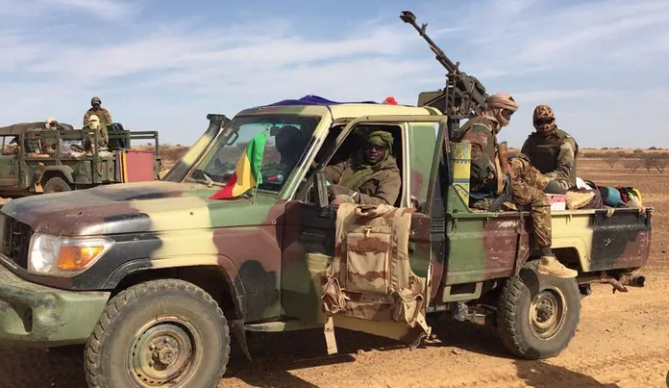
Bamako - Mamadou Sar
Mali is facing increasing pressure amid coordinated attacks targeting major cities, relying on covert infiltration tactics, along with coordination between rival armed groups, according to political analyst Josiah Assimon.
Asimon explained to Zoom Africa News that the aim of these attacks is to weaken the current government, reverse the gains it has made in the past period, and regain control of some strategic areas.
Mali is under pressure with coordinated attacks
He noted that the simultaneous attacks targeted a number of cities and vital sites, including Gao and Kidal, in a swift attempt to destabilize the authorities and impose a new security reality on the ground.
Reports indicate that many participants wore Malian army uniforms and spent weeks preparing and planning.
According to the analysis, some elements had already infiltrated the community and were waiting for orders to begin attacks.
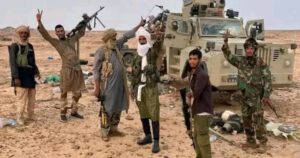
In response, the Malian army launched a counter-attack, while reports indicate the involvement of some civilians, particularly in efforts to recover bodies following the army's airstrikes.
Mali is currently facing groups that have chosen to fight together despite their differing goals. The FLA presents itself as an independence movement seeking to regain territory, while the Al-Qaeda-linked Jama'at Nusrat al-Islam wal-Muslimin seeks to expand its territorial control and establish what it calls a caliphate.
Despite these differences, these groups appear to have formed a field alliance to launch joint attacks against the Malian state.
In the same context, the Chief of Staff of the Armed Forces, Lieutenant General Omar Diarra, announced the neutralization of more than 200 armed men, following the targeting of sites in Kidal, Gao, Mopti and Sévaré, in addition to Bamako and Kati.
Diarra noted that the military leadership had begun a reassessment of the deployment in the Kidal region, which included repositioning forces in Anefis, while maintaining the Malian army's presence in the area.
Russian withdrawal
In contrast, the Russian Legion in Africa announced its withdrawal from Kidal in coordination with the Malian army, based on a joint decision with the authorities, giving priority to the evacuation of the wounded and heavy equipment.
The Malian Prime Minister called on citizens to unite in the face of security challenges and to reject any foreign interference, stressing that the struggle for Mali’s dignity and sovereignty will continue until terrorism is completely eradicated and a new, stable state is built. .
Earlier, the Malian government announced the death of Defense Minister Sadio Camara, following coordinated attacks targeting various military sites across the country, in what was described as the most widespread security escalation in several months.