At 42 years old, the President of Congo-Brazzaville is among the longest-serving African leaders in power (Profile)
Written by Ziad Abdel Fattah:
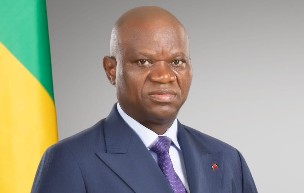
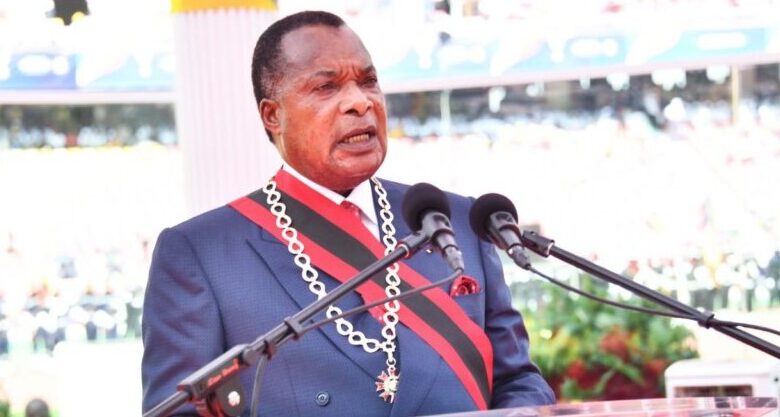
In April 2026, he led Denis Sassou NguessoThe constitutional oath was sworn in for a new five-year term as President of the Republic of Congo-Brazzaville. The inauguration ceremony took place in the city of Kintele, north of the capital Brazzaville, making him one of the longest-serving African leaders in power. He was re-elected in March with 94.8% of the votes, extending his 42-year rule over the oil-rich Central African nation.
Third longest-serving African leader
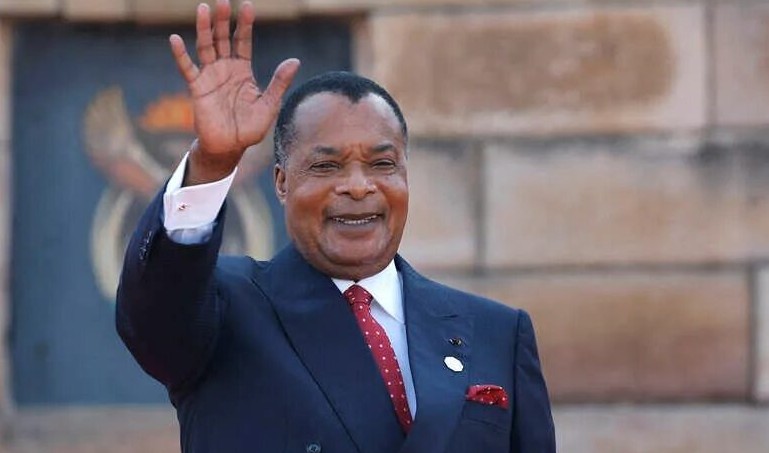
Sassou Nguesso is the third longest-serving African leader, after Cameroon's President Paul Biya and Equatorial Guinea's President Teodoro Obiang Nguema Mbasogo.
Nguesso is nicknamed ”the strongman” in Congo-Brazzaville, where he first took power in 1979 and remained in power until he lost the 1992 elections. He then returned to power after a short civil war in 1997, and has continued uninterrupted ever since.
Sassou Nguesso relied on a wide network of political and military alliances, and on amending the constitution more than once to allow him to run again. He also benefited from the weakness and division of the opposition, and from tight control over state institutions and the media.
Born in 1943
Nguesso was born in 1943 in Kofit province, northern Congo, into a large rural family.
He joined the army in 1961, marking the beginning of a long career for the man in the violent political turmoil of his country, where, between 1963 and his rise to power in 1979, he participated in the overthrow of more than one head of state.
General Nguesso led his country between 1979 and 1992, then returned to power after his forces’ victory in the civil war in 1997. He gained considerable experience in power and sufficient political skill, and he also became a professional in politics and diplomacy. He headed the Organization of African Unity in 1986 and 1987, and he is known for his extensive knowledge and interest in African issues.
He is usually described as an autocratic ruler who deliberately mixes humor with sarcasm, loves gold jewelry, and prefers a smart suit and tie to the military uniform he took off long ago.
Nguesso is known for his pragmatism, despite having co-founded the Marxist-Leninist Labour Party of Congo in 1969. Upon assuming the presidency, he implemented a regional development plan that provided Congo with nearly a thousand kilometers of roads and bridges.
On the African level, Nguesso maintained special relations with the leaders of many national liberation movements and with the Marxist government in Angola, while at the same time establishing close ties with France, for which he remains an important leader in Africa.
He benefited from his presidency of the Organization of African Unity in bringing Congo out of the diplomatic isolation it was suffering from due to its Marxist orientation, as well as in contributing to the establishment of regional economic groups in the African continent, and he made several tours in Western countries to demand the cancellation of its debts.
In 1988, Nguesso succeeded in bringing together, for the first time in Brazzaville, representatives of Angola and the apartheid regime in South Africa, which at that time strongly supported the Angolan UNITA rebels, to seek peace in southern Africa.
He established a series of relationships with Francophone African leaders, and in particular with Gabon’s President Omar Bongo Ondimba, whose daughter Edith Lucie he married in 1990.
In the first multi-party elections held in Congo in 1992, Nguesso relinquished power to Pasca Lissouba. Following protests against several elections, Congo subsequently experienced a period of violence.
In 1997, Nguesso regained power after a five-month civil war that allowed his militias, heavily supported by the Angolan army, to defeat the Lisoba militias. His forces also prevailed in the 1998 conflict, during which abuses against the population occurred, with support from Angola.
In 2002, he was able to legitimize his rule by winning a presidential election boycotted by the main opposition leaders, and he set about improving his country's image through tireless diplomatic work.
Nguesso has chaired the Economic Community of East African States since 2004, and Congo became a non-permanent member of the Security Council for a two-year term this January.