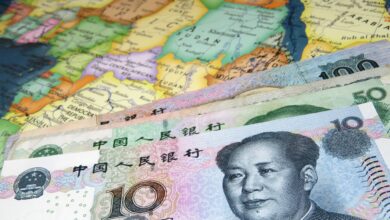
To reduce reliance on the dollar, Angola includes the Chinese yuan in its banks' reserves.
تصاعد توجه تقليل الاعتماد على الدولار
Written by Ziad Abdel Fattah:
In a move that reflects Transformations Amidst the acceleration in the global financial system, the Central Bank of Angola decided to include the Chinese Yuan in the list of foreign currencies that local banks are allowed to use to meet mandatory reserve requirements, alongside the US dollar, Euro, and South African Rand.
The decision came in accordance with a directive issued by the Bank of Angola on July 2, and was officially published on its website, as part of efforts to strengthen financial stability and diversify liquidity management tools within the banking sector.
Mandatory reserves are one of the main tools that central banks rely on, as they oblige commercial banks to keep a portion of their funds with the central bank to ensure the stability of the financial system and limit risks.
The growing role of the Chinese Yuan in Africa
The inclusion of the Chinese yuan reflects its growing role on the African continent, driven by strengthened economic relations with China, which is Africa's largest trading partner and a prominent financier of infrastructure projects.
Despite the continued dominance of the US dollar as the global reserve currency, recent years have seen an escalation in the trend of developing countries reducing their reliance on it, amid concerns related to US sanctions, rising transaction costs, and shifts in global economic power balances.
Angola is a leading oil supplier to China
Angola is one of China's top crude oil suppliers, and it has also received billions of dollars in loans and financing from China to support infrastructure projects, which strengthens the justifications for expanding the use of the yuan within its financial system.