South Sudan and IFAD launch a $41.8 million agricultural program to boost food security
Written by: Ayman Ragab
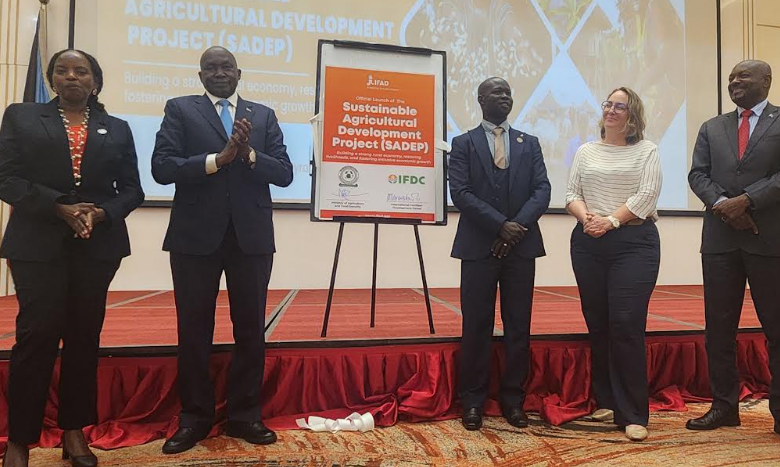
On Tuesday, the Government of South Sudan, in collaboration with the International Fund for Agricultural Development (IFAD), launched a $41.8 million agricultural program aimed at enhancing food security and improving the livelihoods of more than 100,000 people in four counties across the country.
The program includes the implementation of the “Sustainable Agriculture Development” project, along with the “Enhancing Adaptation through Building Resilient Institutions and Livelihoods” project, in the districts of Turkeka, Western Mundri, Mvolo, and Bor, over a period of 7 years, with a focus on climate-smart agriculture, fisheries, nutrition, improved market access, and enhanced resilience to climate change.
Minister of Livestock and Fisheries, Onyoti Adigo Nyikwaj, speaking on behalf of the Vice President and Head of the Economic Sector, James Wani Igga, said the initiative would contribute to transforming the agricultural sector in South Sudan and reducing the country's dependence on food imports.
Transforming agriculture from a limited subsistence activity into a productive, sustainable, and commercial sector
He added that the government is committed to transforming agriculture from a limited subsistence activity into a productive, sustainable, and market-oriented commercial sector, stressing that the agricultural sector provides ample opportunities for young people in various stages of the value chain, including production, mechanization, manufacturing, logistics, digital agriculture, finance, marketing, and entrepreneurship.
For her part, Caroline Muungira, IFAD’s Country Director for South Sudan and Eritrea, confirmed that the Sustainable Agriculture Development Programme is one of the Fund’s largest recent investments in South Sudan, noting that it will directly benefit more than 100,000 citizens in rural areas through investment in climate-smart agriculture, fisheries development, improved nutrition, strengthening rural institutions, and expanding market access opportunities.
She said that the launch of the two projects represents the beginning of a new phase of rural transformation, enhancing resilience and achieving more inclusive economic growth, noting that the “Enhancing Adaptation through Building Resilient Institutions and Livelihoods” project, funded by the Global Environment Facility (GEF), will focus on strengthening institutions, improving natural resource management, and helping communities adapt to recurring floods, droughts and climate shocks.
For his part, the Minister of Agriculture and Food Security, Clement Juma, explained that the launch of these projects comes at a time when South Sudan is still facing food insecurity challenges, despite having fertile agricultural land, abundant water resources and favorable climatic conditions.
Strategic investments in the future of agriculture and the rural economy
He stressed that these initiatives represent strategic investments in the future of agriculture and the rural economy, calling on state and provincial governments, research institutions, civil society organizations, and the private sector to join forces to ensure tangible results that reflect on the lives of rural communities.
In the same context, Anya Okensze, the country director for the Hungry World Relief organization in South Sudan, said that the program represents the beginning of a long-term partnership aimed at developing food systems in the country, and not just increasing agricultural production.
She added that the real challenge lies not in South Sudan’s ability to produce, but in the food system not being developed enough to link production to the end consumer, expressing her hope that the residents of Mundri, Mfulu, Terekeka and Bor counties will see tangible results from the program.
She noted that the program will have a positive impact on more than 18,000 families by improving children's health, empowering women, strengthening family resilience, and supporting private sector growth.
For his part, the Qatari representative of the International Fertilizer Development Center in South Sudan, Alana Sabit Awut, said that the project represents an opportunity to move from the stage of humanitarian interventions to sustainable agricultural development, stressing the center’s commitment to cooperating with the WHH organization and the Ministry of Agriculture to ensure the highest return on investment through effective coordination and strengthening local ownership of the project.
The program builds on IFAD’s previous investments in the agricultural sector in South Sudan and is expected to contribute to increased food production, improved incomes for rural populations, and enhanced resilience to climate shocks in communities most dependent on agriculture.