Salva Kiir... John Garang's comrade and the first president of South Sudan
Who is Salva Kiir?
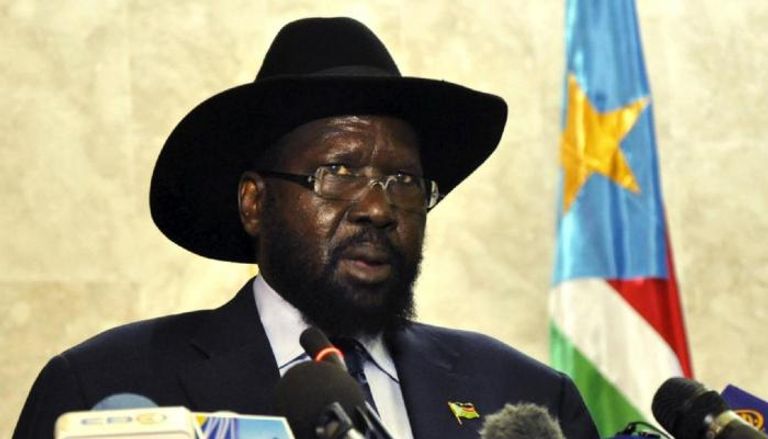
South Sudanese President Salva Kiir renewed his commitment the government By implementing the peace agreement and completing the transitional requirements, which will enhance national stability and pave the way for free and credible elections, thus supporting a peaceful political transition in South Sudan.
With his health deteriorating recently, Salva Kiir's public appearances have decreased, amid ongoing efforts to improve the situation in South Sudan. Indeed, his poor health raises the question of who will succeed him, a question that remains unanswered.
Who is Salva Kiir?
Salva Kiir Mayardit, the president of South Sudan, was born in 1951 and grew up in a Dinka cattle-herding family in Warrap State in the north-central region of South Sudan. At the age of sixteen, he joined the Anyanya movement, a South Sudanese rebel movement that was fighting Sudanese forces.
In 1983, he joined the Sudan People’s Liberation Movement/Army (SPLM/A), and quickly gained the trust of its leader and founder, John Garang de Mabior. When Garang died suddenly in a helicopter crash in July 2005, a few months after the signing of the peace agreement that ended Sudan’s second civil war, Kiir succeeded Garang as president of the Southern Sudan regional government.
The Sudan People's Liberation Movement consolidated its control
With his victory in the 2010 elections, he helped consolidate the Sudan People’s Liberation Movement’s control over the political system and the referendum on the country’s independence. He was then appointed the first president of South Sudan, with Riek Machar appointed as his deputy.
The biggest challenge Kiir faced as president was unifying and improving the efficiency of the army. Years of internal political conflict had led to the defection of some commanders, many of whom had set up separate militias to attack government forces, before rejoining the Sudan People’s Liberation Army in 2006.
Kiir rehabilitated these rogue leaders by giving them money and appointing them to higher official positions, but the Sudan People’s Liberation Army remained divided along ethnic lines, particularly between the two largest ethnic groups, the Dinka and the Nuer.
The other major challenge facing Kiir was economic development, as oil sales accounted for approximately 981 TP3T of the national budget. However, many laws passed after independence were not adhered to and enforced, including the Petroleum Administration Act (2011).
The pursuit of rent-seeking became the primary source of rampant corruption in the country at both the governmental and local levels. It was perhaps the main reason for the internal political conflicts that led to the government's decision to cut off oil pipelines to Sudan in 2012, after the Sudanese government raised oil transit fees.
The decision harmed both countries.
Within months, South Sudan experienced a sharp rise in inflation and interest rates. This led to further internal conflict, culminating in the outbreak of civil war in 2013 between government forces and the newly formed opposition Sudan People's Liberation Army/Movement (SPLA/M).
He mediated a ceasefire.
Kiir is credited with successfully brokering a ceasefire and implementing parts of the 2015 peace agreement, but in the same year, he took a fateful step by issuing a presidential decree that divided the country into 28 states. Critics see this as a Dinka takeover of power, which further divided the country and delayed the formation of a transitional national unity government agreed upon in 2018.
By early 2020, Kiir was forced to repeal the law in response to a key demand from the opposition. However, the formation of the transitional unity government faced obstacles, including threats of election violence and instability, which delayed new elections and the adoption of a permanent constitution.