South Sudan: Foundation stone laid for Murta School in Central Equatoria to train personnel with support of 100 million pounds
Ahmed Salem
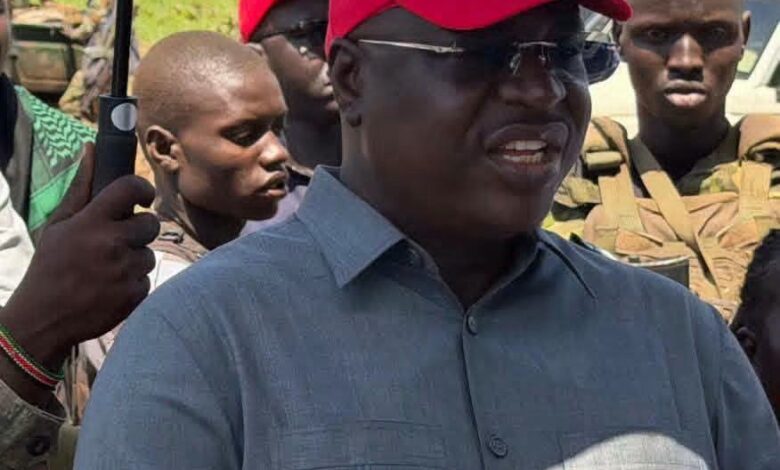
On Sunday, the Governor of Central Equatoria State in South Sudan, Emmanuel Adil Anthony, laid the foundation stone for the construction of the Murta School for Cadre Development and Moral Guidance in the Liwolo Viam area of Kajo Keji County, pledging to provide 100 million South Sudanese pounds to contribute to the launch of the project.
During the inauguration ceremony, the governor affirmed that the Murta Political Training Center will serve as a platform for qualifying and training members of the Sudan People’s Liberation Movement (SPLM), and for disseminating its political principles and values among members in Kajo Keji and throughout Central Equatoria State.
Murta represents an important historical site
Adel pointed out that Murta represents an important historical site, as it was one of the military mobilization areas for the People’s Movement forces during the liberation struggle, and contributed to preparing many cadres who played prominent roles in the movement’s journey.
He explained that laying the foundation stone represents a revival of Murta’s role as a political and educational center that contributes to enhancing political awareness and consolidating the movement’s principles at the grassroots level, stressing his government’s commitment to accelerating the implementation of the project so that citizens can benefit from it as soon as possible.
The governor also reaffirmed the popular movement's vision of bringing development to rural areas, stressing that development should not be limited to cities but should extend to villages and local communities.
For their part, local officials, traditional leaders and political figures from the region welcomed the initiative and announced their full support for the success of the project and its transformation into an effective center for training personnel and promoting political participation.
The event was attended by a number of senior government officials, members of the popular movement, local leaders and residents of Liwolo Payam who considered the project an important step towards strengthening political empowerment and building capacities at the local level.