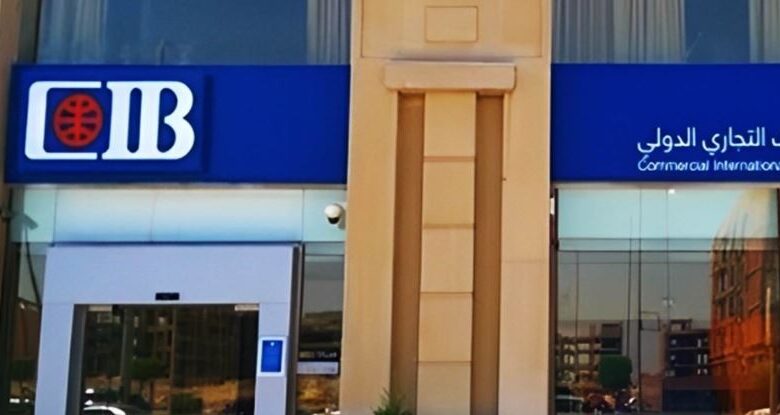
Among them CIB... The race for African banks in Kenya clashes with the dominance of local banks
Four challenges facing foreign banks include an increase in non-performing loans.
Written by Ziad Abdel Fattah:
Kenya has become a major arena of competition between African banks While seeking regional expansion, the dominance of strong local banking institutions poses significant challenges to achieving profits and increasing market share for new lenders.
Major African banks, including Commercial International Bank – Egypt (CIB), Nigeria’s Access Bank, and South Africa’s Nedbank, are seeking to expand their presence in the Kenyan market, which is a strategic gateway to East African markets, one of the fastest-growing regions on the continent, with a growth rate exceeding 5% annually.
The expansion of African banks in Kenya was driven by global giants such as Standard Chartered and Societe Generale exiting smaller markets to focus on core markets, while the growing need to invest in technology pushed deals to gain more volume.
Kenny Vehla, CEO of South Africa's Absa Bank, said the Kenyan market is very attractive to investors, following the bank's announcement that it had increased its stake in its Kenyan unit to 85% through a new acquisition offer.
This expansion comes at a time when African banks are racing to take advantage of the withdrawal of some global financial institutions, such as Standard Chartered and Societe Generale, from a number of smaller African markets, as well as banks seeking to enhance their technological capabilities and achieve economies of scale through mergers and acquisitions.
The dominance of local banks creates a challenge in Kenya

Despite these opportunities, penetrating the Kenyan market remains a challenge, given the dominance of well-established local banks such as Equity Group and KCB Group, which benefit from a broad customer base, strong regional reach, and sophisticated digital banking platforms.
CIB was aiming for faster growth
Tyrus Mwethega, CEO of Commercial International Bank of Egypt’s operations in Kenya, said the bank had been aiming for faster growth since entering the market six years ago through the acquisition of a small local bank, but stressed that performance is gradually improving as assets grow and profits rise.
The market share of Commercial International Bank of Egypt in Kenya currently does not exceed 0.3%, compared to shares ranging between 10% and 15% for major banks, while medium-sized banks hold shares ranging between 9% and 10%.
For his part, James Mwangi, CEO of Equity Group, affirmed that the bank has strong foundations to maintain its superiority, based on a base of approximately 23 million customers and capital of 350 billion Kenyan shillings.
Expansion driven by slowing growth in other markets
The interest of African banks in Kenya comes at a time when some markets, most notably South Africa, are experiencing a slowdown in growth, prompting financial institutions to seek new opportunities in faster-growing economies.
In this context, South Africa’s Nedbank agreed to acquire a majority stake in Kenya’s NCBA as part of its regional expansion strategy, while Nigeria’s Access Bank acquired Kenya National Bank from the KCB Group last year.
Analysts expect that the Kenyan authorities’ decision to raise the minimum capital requirement for banks from 1 billion shillings to 10 billion shillings by 2032 will accelerate the pace of mergers and acquisitions within the banking sector.
Kenya has strong attractions for investors, including a sophisticated financial system, freedom to repatriate profits, a large consumer market, and leadership in digital payments via the M-Pesa service, which enhances the growth opportunities for digital banking services.
Jeremy Owori, CEO of Ecobank, said that Kenya’s financial technology and payment systems sector is among the most advanced on the African continent.
4 challenges facing foreign banks
Despite the positive outlook, foreign banks still face challenges related to high public debt, rising non-performing loans, and risks associated with global economic volatility and the general elections scheduled for August 2027.
Despite these challenges, banking officials believe that the Kenyan market will remain one of the most promising banking markets in Africa, thanks to high growth rates and attractive long-term investment returns.