Ahmed Sékou Touré: Guinean independence leader and pioneer of African unity
Written by Ziad Abdel Fattah:
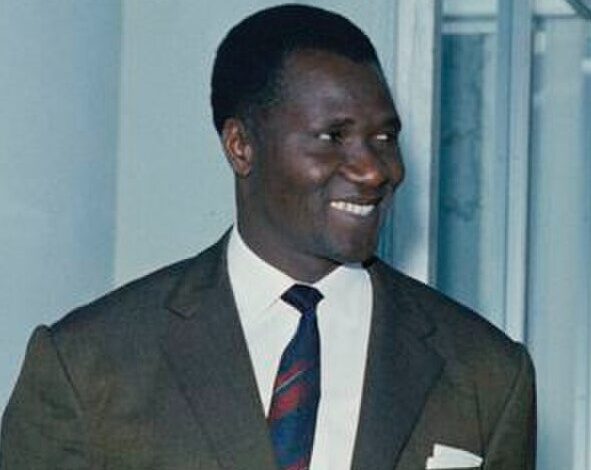
Ahmed Sékou Touré is considered one of the most prominent leaders who left a deep mark on the political history of Africa during the twentieth century. He combined multiple roles: he was a national leader who led his country to independence, a trade unionist who defended workers' rights, a political thinker who adopted a project of national liberation and African unity, as well as being the first president of the Republic of Guinea after its independence from France in 1958.
Origins and beginnings
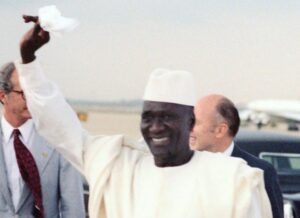
Ahmed Sékou Touré was born on January 29, 1922, in Farana, Guinea, into a Muslim family belonging to the Malinke tribe, one of the largest ethnic groups in West Africa. He was proud of his lineage, tracing it back to the historical leader Samori Touré, who led a fierce resistance against French colonialism in the late 19th century.
He received his early education at a traditional Quranic school, where he memorized the Quran and absorbed Islamic values, before moving on to French schools. However, his rebellious spirit emerged early, as he was expelled from the technical school in Conakry after participating in a student strike at the age of fifteen. This did not prevent him from continuing his education independently, mastering French and the Susu language in addition to his native Malinke, later becoming one of the most prominent orators in West Africa.
From union work to leading the national movement
Sékou Touré began his career as a postal and telegraph clerk, but his union activism quickly made him one of the most prominent labor leaders in French West Africa. He led the first successful postal workers' strike, which lasted for about 80 days, earning him widespread recognition within labor circles.
He progressed through the ranks of the union until he became the general secretary of the postal workers' union, then joined the African Democratic Rally, and contributed to the founding of the Guinean Democratic Party, which later became the main political force in the country.
He was also elected to the French National Assembly, then became mayor of Conakry, before becoming vice president of the executive council of Guinea prior to independence.
Engineer of Guinea's independence
The year 1958 marked the most significant turning point in Sékou Touré’s career, when he rejected the French project to create a “French Community” and led a popular campaign to vote ”no” in the referendum called for by French President Charles de Gaulle.
On that occasion, he uttered his famous phrase that became a symbol of liberation movements in Africa: “We prefer poverty under freedom to wealth under slavery.”
The referendum result was in favor of independence by a margin of over 95%, making Guinea the first French colony in Africa to gain its full independence, and Sekou Toure assumed the presidency of the republic on October 2, 1958.
France responded to the decision by withdrawing its staff, experts and equipment from the country, in an attempt to confuse the fledgling state. However, Guinea was able to overcome that stage with the support of a number of African and Arab countries, most notably Egypt, in addition to the Soviet Union.
An economic project based on socialism
Sekou Toure adopted an economic model based on central planning, relying on the nationalization of large sectors of the economy, especially foreign and domestic trade, and launching programs for agrarian reform and land redistribution.
He also took an important step by issuing the national currency, the “Sili,” after withdrawing from the CFA franc zone, in an attempt to strengthen economic independence.
Despite some successes in exploiting mineral resources, especially bauxite, the economy faced major challenges, which prompted Touré since the late 1970s to adopt more open policies and encourage foreign investment.
One of the most prominent theorists of African unity
Sekou Toure’s name is closely associated with the idea of African unity, as he was one of the first leaders to call for transcending the borders drawn by colonialism and building a unified African entity.
He co-founded a union that included Guinea, Ghana and Mali, and played a role in bringing together the various African political blocs, efforts that later paved the way for the creation of the Organization of African Unity in 1963, which later evolved into the African Union.
He also provided political and material support to national liberation movements in South Africa, Angola and Mozambique, and hosted Ghanaian leader Kwame Nkrumah after his overthrow, granting him the honorary position of Vice President of Guinea.
His vision of Islam and politics
Sekou Toure’s vision stemmed from the conviction that there is no contradiction between Islam and political action, considering that Islamic values represent an ethical framework for governance, while rejecting the exploitation of religion to achieve narrow political gains.
He was also one of the first supporters of the idea of creating an organization that brings together Islamic countries, an initiative that later contributed to the founding of the Organization of the Islamic Conference in 1969.
On the international level, he took a position in support of the Palestinian cause, cutting ties with Israel following the Al-Aqsa Mosque fire, and calling on a number of African countries to take the same position.
Culture and national identity
Sekou Toure believed that political liberation was incomplete without cultural liberation, so he paid great attention to national identity and African languages, and called for restoring the status of local languages as tools for knowledge and creativity, instead of continuing to rely on European languages.
He also believed that culture represents a fundamental pillar for building the nation-state, and that art and literature should reflect the aspirations and issues of the African peoples.
political legacy
Ahmed Sekou Toure remained President of Guinea until his death on March 26, 1984, after nearly 26 years in power.
Despite the ongoing controversy surrounding his political experience and the criticisms associated with it regarding internal freedoms, his status as one of the most prominent symbols of national liberation in Africa remains present, as he is seen as a leader who contributed to ending French colonialism in Guinea, and one of the most important defenders of African unity and the political and economic independence of the continent.