Can America bridge the divide between eastern and western Libya?
Written by: Ayman Ragab
US envoy Massad Boulos is intensifying consultations with key Libyan power centers to promote institutional reunification, an initiative that is generating both hope and reservations about its political viability.
The United States is intensifying its diplomatic efforts to try to bring together the views of the rival authorities in eastern and western Libya, twelve years after the country's institutions of power split into two opposing camps.
As the U.S. envoy for Arab and African affairs in the Trump administration, Pauls conducted a series of consultations with key Libyan political, military and economic leaders for nearly a year.
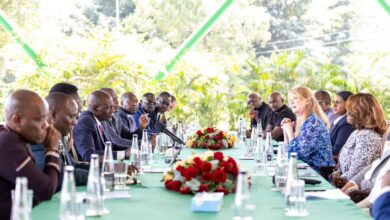
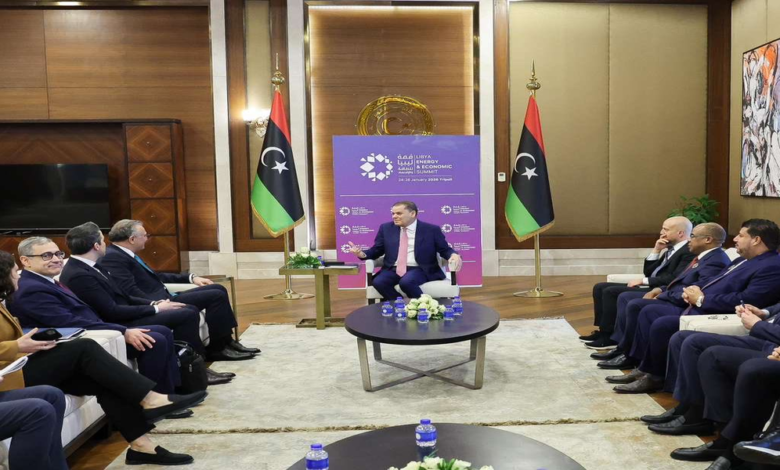
Separate meetings were held in Tripoli with Abdul Hamid Dbeibah.
Last week, he held separate meetings in Tripoli with Abdul Hamid Dbeibah, the prime minister of the UN-recognized Government of National Accord, and with Field Marshal Khalifa Haftar, who controls the east of the country.
The US initiative, presented as a step to “end the division” in Libya, aims, according to Mosaad Boulos, to facilitate dialogue between the two rival camps without imposing a predetermined solution. However, the envoy remained silent on the details of his plan, declining to comment on reports circulating in some diplomatic circles suggesting an institutional settlement under which Abdel Hamid Dbeibah would retain the position of prime minister, while Saddam Haftar, son of Field Marshal Khalifa Haftar, would assume the presidency of the Presidential Council, according to APA.
He added: “These details are left for the Libyans themselves to decide.”.
Complementing the efforts of the United Nations mission
This mediation comes at a time when Libya remains divided between two rival powers since 2014, despite numerous UN-led reconciliation attempts. In June, Khalifa Haftar’s forces publicly welcomed the ”Polis Plan,” describing it as a “realistic” initiative and ”different from its predecessors,” thus distancing themselves from the roadmap laid out that same day by three Libyan institutions, which calls for presidential and parliamentary elections by February 17, 2027.
However, Massad Boulos insists that his initiative is “100% complementary” to the efforts of the United Nations Support Mission in Libya (UNSMIL), which has yet to respond.
Beyond political considerations, Washington views achieving lasting stability in Libya as a key energy issue. In an interview with the Financial Times, Massad Boulos indicated that the United States is encouraging major American oil companies to strengthen their presence in the country.
According to him, Libyan production could double to three million barrels per day by the end of the decade, allowing the country to join the ranks of the world's top oil producers.
The U.S. State Department also highlighted several advances made since the summer of 2015, including the adoption of a unified budget – the first of its kind in more than a decade – joint military exercises under the auspices of the U.S. Africa Command (AFRICOM), and increased meetings between military officials from both sides.
However, the American approach has divided observers. Khaled al-Muntasir, a professor of international relations, believes that Washington is adopting a pragmatic approach by relying on the actors who effectively control the situation on the ground.
Major obstacles
In contrast, other analysts fear that an agreement reached between key figures in power will postpone elections again and lack popular legitimacy.
Political scientist Faraj Al-Dali believes the project will face major obstacles, while Karim Mezran of the Atlantic Council considers supporting a compromise between elites without real popular support to be a “dangerous gamble” that could reignite tensions and cause further destabilization of the country in the medium term.