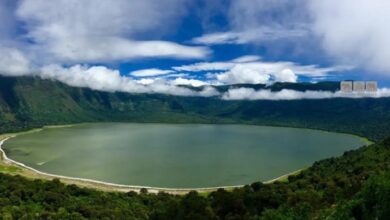
The disappearing land: A quarter of Ethiopia's territory is threatened with extinction.
A quarter of Ethiopia's land is threatened with extinction.
Written by: Ayman Ragab
Nearly a quarter of Ethiopia’s land is degraded, having lost its quality and no longer being able to grow crops, support plant life, or retain water as it once did.
The main causes are human pressures (deforestation, overuse, and poor land management) and natural factors (heavy rainfall leading to soil erosion, and climate change).
The consequences are severe and widespread. Degraded land not only reduces agricultural productivity, but is also distorted by deep gullies, and water flows very quickly over the affected areas when it rains, sweeping away valuable topsoil.
Ethiopian lands
Rainwater no longer penetrates the soil, reducing groundwater recharge (the amount of water that feeds underground aquifers when it rains), and stored carbon is released, further exacerbating climate change.
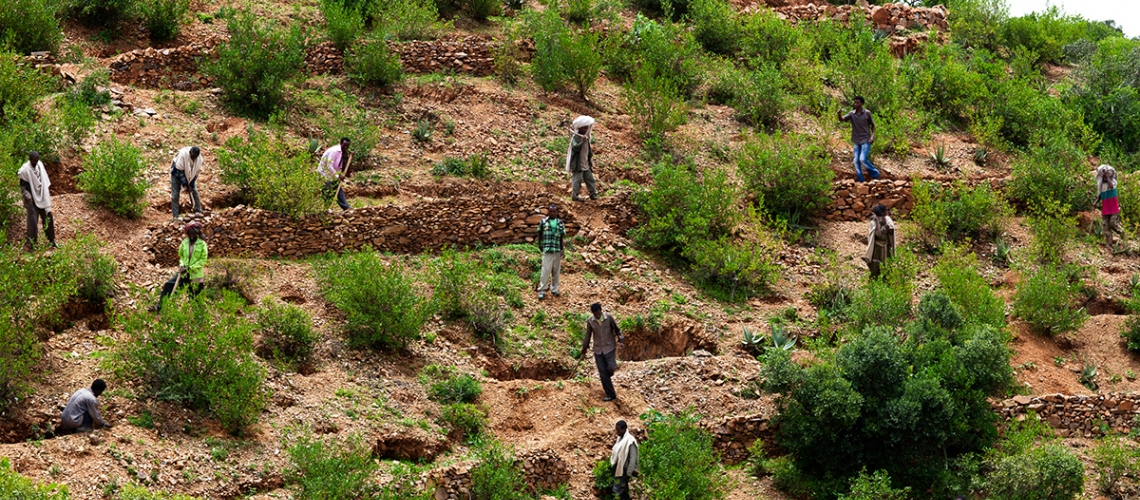
Therefore, land reclamation has become a developmental and climatic necessity at the same time.
Research has shown that protected areas play a crucial role in reducing soil erosion and restoring vegetation cover. Without animal grazing, and without humans farming or logging in these areas, the land within protected areas can naturally regenerate in about five years, which is a short period.
This in turn increases the carbon stock in the ecosystem, improves soil moisture, and enhances biodiversity.
In addition to environmental benefits, protected areas also act as useful barriers for communities in the face of drought and flooding, because they improve water availability during the dry season, reduce the speed of water flow during floods, and support the diversification of livelihoods.
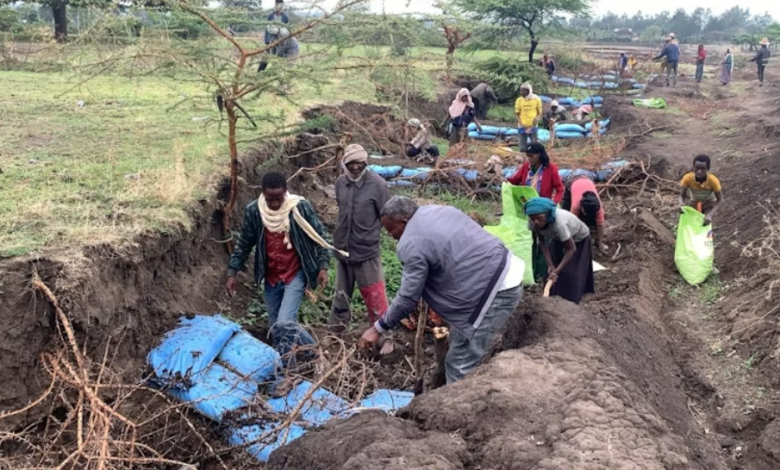
There are also effective, low-cost, locally adapted methods for filling trenches.
Simple, low-cost methods
The study showed that simple, low-cost methods are able to quickly stop the expansion of trenches, preventing the loss of large quantities of soil.
The farmers supported these measures, and the practical field trials contributed to building knowledge, confidence, and a willingness to work.
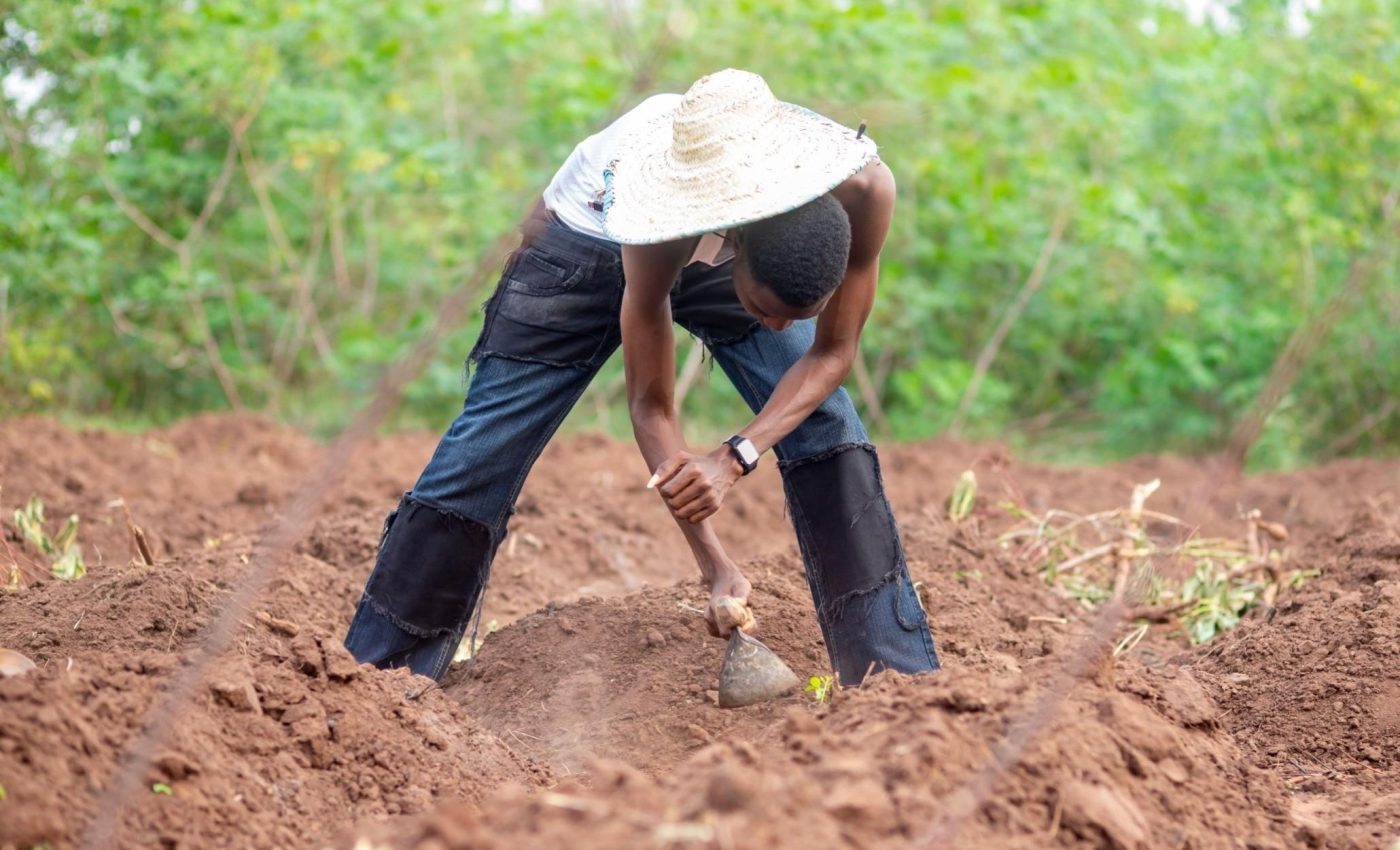
These two approaches – fencing off areas and filling in ditches – are both simple and effective. By putting this work into practice through building trust, promoting community ownership, and achieving common benefit, the residents of these areas can protect their farmland from soil erosion, reduce crop losses, grow grass or fodder for their animals, and create opportunities to search for local edible and medicinal plants.
Protected areas, when managed collectively, provide grass, fodder, firewood and non-wood products such as edible fruits and honey to the entire community.
This is a lifeline for rural Ethiopian families trying to cope with life in an increasingly uncertain climate.
Digital data
Digital data and community feedback were used to study protected restoration areas and how they affect plant recovery, soil health, erosion, water retention and local livelihoods.
The evidence was striking: creating fenced-off areas along ravines is extremely useful in erosion-prone areas – areas where soil erosion can spread rapidly and extensively if not stopped.
In Halaba, in central Ethiopia, farmers have witnessed the regeneration of native plants within protected areas, revitalizing local ecosystems.
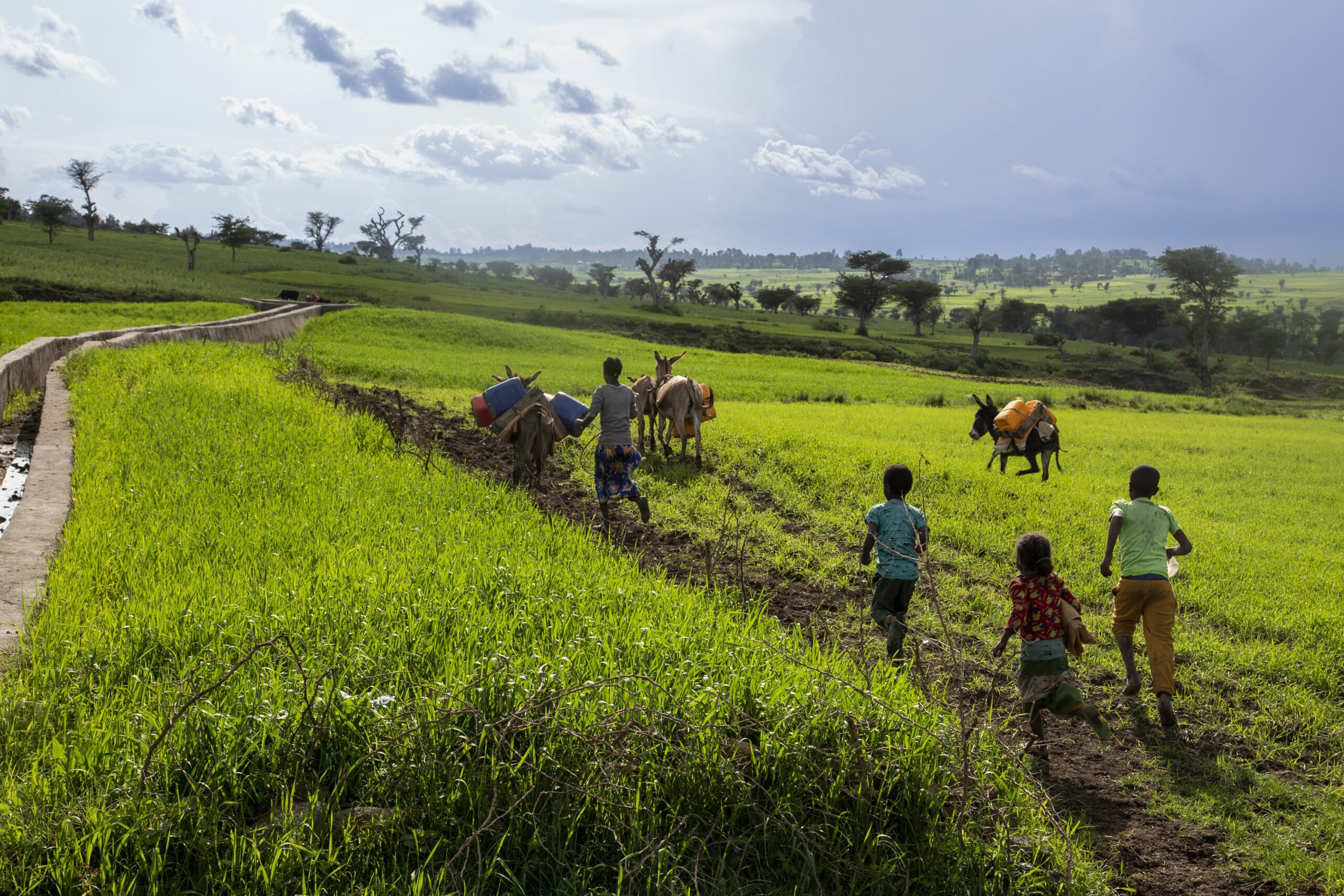
These protected areas also improved soil moisture, and when intermittent droughts and shortages of livestock feed occurred later, these protected areas helped the land to adapt.
In Tigray, northern Ethiopia, another study showed that the carbon stock in the ecosystem within protected areas had increased significantly over twenty years compared to neighboring grasslands. In an era of climate variability, these findings are not marginal, but essential.