Climate horror in Africa: Forests are turning from the lungs of the planet into a source of carbon.
Study reveals dangerous shift
Written by Omnia Hassan
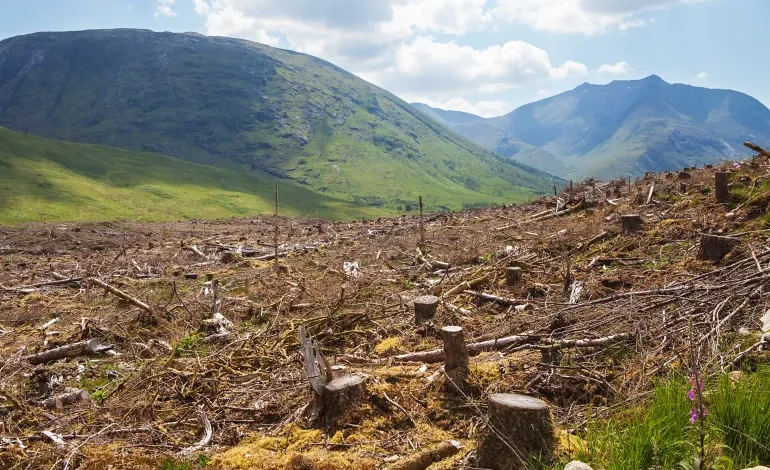
An international study published in the journal Scientific Reports revealed that forests African The continent, which has long been considered a natural reservoir for carbon dioxide, no longer plays this role as before. Instead, it has begun to release more carbon than it absorbs. This worrying shift threatens one of the most important natural lines of defense against climate change and puts the continent before an unprecedented environmental challenge.
The study was led by researchers from the University of Leicester, the University of Sheffield and the University of Edinburgh, using satellite data and machine learning techniques to monitor changes in forest cover and tree biomass over more than a decade.
From absorption to emission
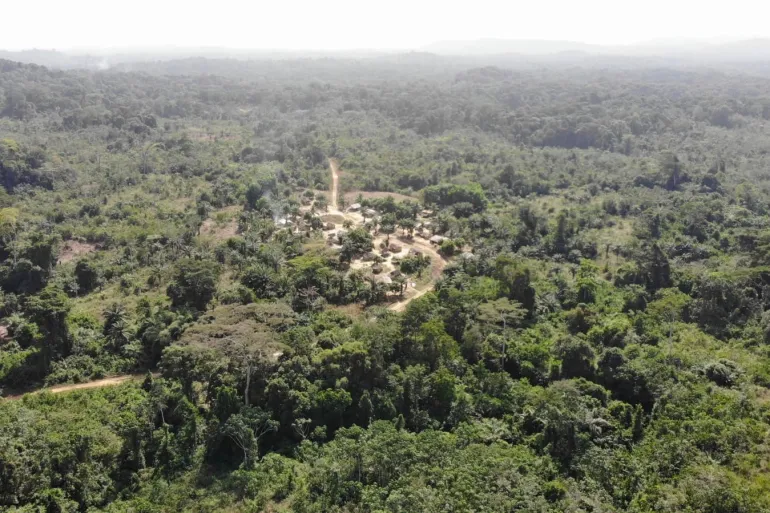
For a long time, forests contributed Africa Its savannahs remove about 20% of carbon globally through photosynthesis, especially in the tropical Congo Basin forests. Between 2007 and 2010, the continent gained about 439 million tons per year of above-ground biomass.
But the picture changed after 2010; biomass began to decline at a rate of 132 million tons per year between 2010 and 2015, and this decline continued thereafter. According to the study, Africa lost approximately 106 billion kilograms of biomass annually between 2010 and 2017, a clear indicator of the loss of carbon stocks.
Hotspots: Congo, Madagascar, and West Africa
Deforestation and forest degradation are concentrated in the Democratic Republic of Congo, Madagascar, and parts of West Africa. In 2024 alone, the Democratic Republic of Congo lost approximately 590,000 hectares of virgin forest, a record high since records began. Fires have also played an increasing role in the destruction of tropical forests.
Advanced monitoring technologies reveal the turning point
The researchers relied on satellite images and algorithmic analysis to measure above-ground biomass, a direct indicator of the amount of carbon stored in plants, and the results showed a clear turning point: forests that had been absorbing carbon were losing it at a faster rate than they were gaining it.
A global phenomenon not unique to Africa
This shift is not limited to Africa; parts of the Australian rainforest, as well as areas of the Amazon, have transformed from carbon sinks to carbon emitters due to rising temperatures, drought, and extreme weather events. Data indicates that the pristine forests of the Brazilian Amazon increased their contribution to carbon losses from 331 TP3T in the 1990s to 761 TP3T in the second decade of the 2000s.
Early warning to save the "lungs of the Earth"“
The study warns that continuing on this path could undermine global efforts to combat climate change. Protecting African forests is no longer just an environmental option, but an urgent climate necessity to maintain the planet's carbon balance.