
Has the end begun for Kais Saied? What is happening in Tunisia now?
Is Tunisia returning to the scenario of 2011? Protests mark the fifth anniversary of Kais Saied's decisions.
Written by: Badr Ahmed
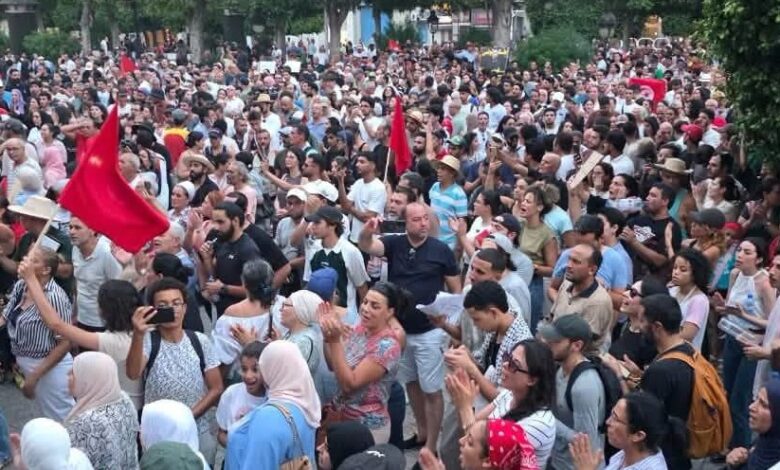
The streets of the Tunisian capital have once again become a focal point, after thousands of protesters took to the streets in demonstrations that coincided with the fifth anniversary of the exceptional measures announced by President Kais Saied on July 25, 2021, when he suspended the work of parliament and dismissed the government before reshaping the political system in a way that granted the presidency broad powers.
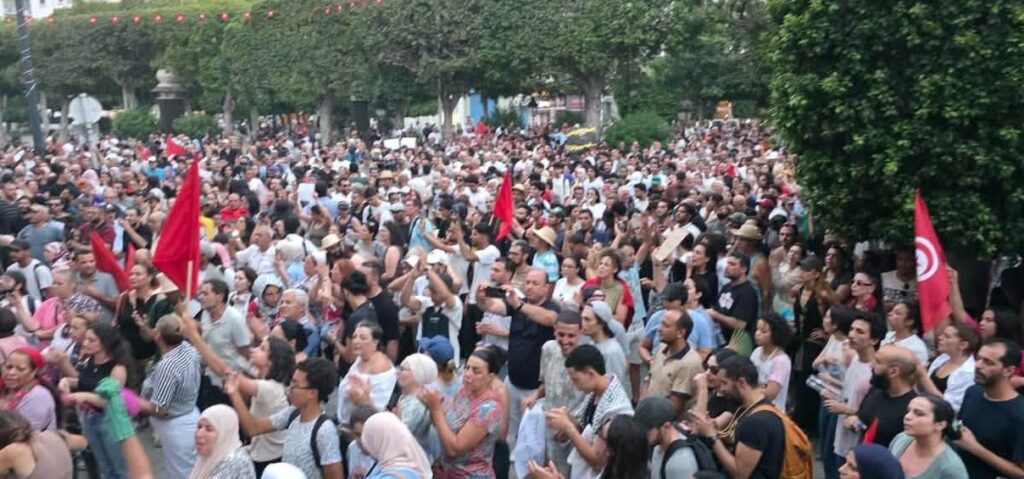
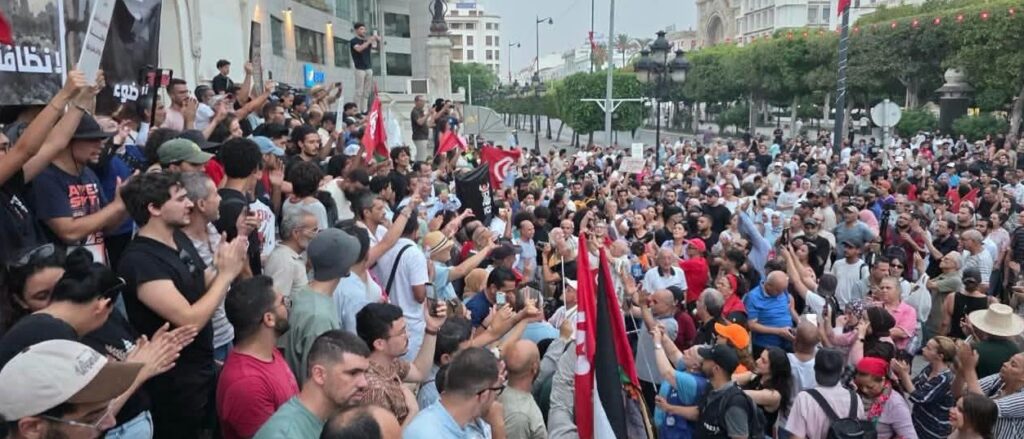
Around 2,500 protesters gathered in the center of the capital, raising angry slogans such as: "The people want the downfall of the regime," "No light, no water, imprisonment and high prices," in a scene that brought to mind the slogans of the Tunisian revolution in 2011, which toppled the late President Zine El Abidine Ben Ali and launched the Arab Spring. .
But the question that arises today is: Do these protests represent the beginning of a new revolution that could end with the overthrow of President Kais Saied?
A cost-of-living crisis before it is a political one.
Despite the strong presence of political slogans, the main motivation for the demonstrations appears to be primarily economic and related to living conditions.
The protests came amid an unprecedented heat wave accompanied by frequent power and water outages, as well as rising prices and declining purchasing power, amid a financial crisis that the country has been experiencing for years.
Criticism also intensified following reports that some hospitals were affected by power outages, while the Tunisian Organization of Young Doctors called for the provision of electric fans and ice packs to hospitals to cope with cases of heat stress, while officials in the organization spoke of deaths related to the heat wave, while the authorities did not announce an official toll.
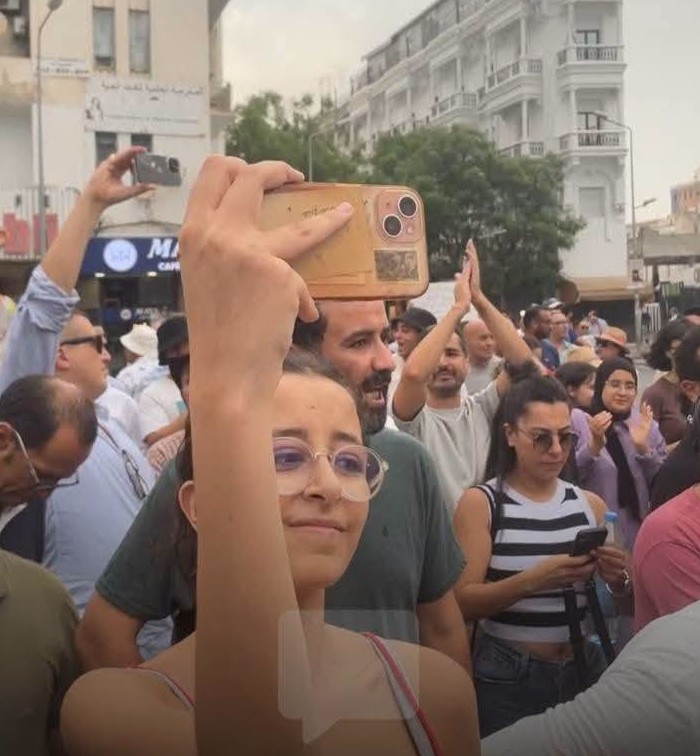
Politically, the opposition forces believe that Tunisia has been experiencing a decline in its democratic path since 2021, accusing President Kais Saied of monopolizing power and weakening constitutional institutions.
The opposition bases this on a series of measures, including dissolving the previous parliament, amending the constitution, holding legislative elections with limited powers, as well as arresting a number of politicians, journalists, lawyers and activists, which are issues that have drawn criticism from local and international human rights organizations.
In contrast, the president rejects these accusations, and constantly affirms that his measures were taken to save the state from corruption and political paralysis, and that he is leading a war against corruption to protect state institutions, considering that his opponents represent the system that Tunisians have rejected.
Will the 2011 revolution be repeated?
Despite the obvious similarity in some of the slogans, comparing what is happening today with what happened in 2011 requires a great deal of caution.
The Tunisian revolution broke out at that time after widespread protests that extended to most governorates, and were joined by unions, most notably the Tunisian General Labour Union. It also witnessed splits within state institutions, which hastened the fall of Ben Ali’s regime within weeks.
As for the current protests, despite their symbolic nature, they are still limited in terms of numbers and geographical spread, and have not yet reached the level of the comprehensive popular movement that the country witnessed fifteen years ago.
The security establishment also remains cohesive, and there are no signs of divisions within state institutions, a factor that was crucial to the success of the 2011 revolution.
What could change the landscape?
Observers believe that the future of the crisis will depend on several factors, most notably the opposition’s ability to unite its ranks, the expansion of protests to the interior cities, the position of the Tunisian General Labour Union, which has an influential history in Tunisian political life, and the government’s ability to contain the economic crisis and alleviate the pressures on living conditions.
Conversely, if the economic crises and disruptions to basic services continue and the pace of protests increases, Tunisia may enter a new phase of political escalation, but that does not necessarily mean that the country is heading towards a scenario similar to the 2011 revolution.
Between popular anger and political reality
Tunisia is undoubtedly going through one of its most sensitive periods in years. Public anger is growing due to the economic and service conditions, while the gap between the government and the opposition regarding the future of the political system is widening.
However, there are still insufficient indications to definitively conclude that the country is on the verge of a new revolution or that President Kais Saied's rule is nearing its end. The situation remains open to several scenarios, ranging from containing the protests through economic and political measures to the possibility of their escalation if the authorities fail to address the root causes of public anger.
Therefore, talk of a repeat of the 2011 scenario remains a possibility in the political debate, but it is not an inevitable outcome at the present time, as the balance of power and internal and regional conditions are very different from what they were fifteen years ago.


