“Macron inaugurates a memorial in Paris for the victims of the Rwandan genocide.
A memorial in Paris to the victims of the Rwandan genocide
Written by: Ayman Ragab
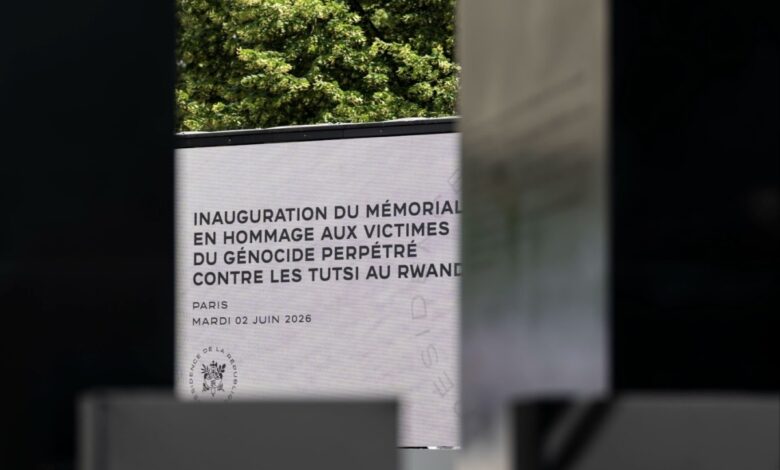
French President Emmanuel Macron inaugurated a memorial in Paris Dedicated to the victims of the 1994 Rwandan genocide, at a time when France is seeking to strengthen ties with the East African nation and continues to grapple with its role in these historic atrocities.
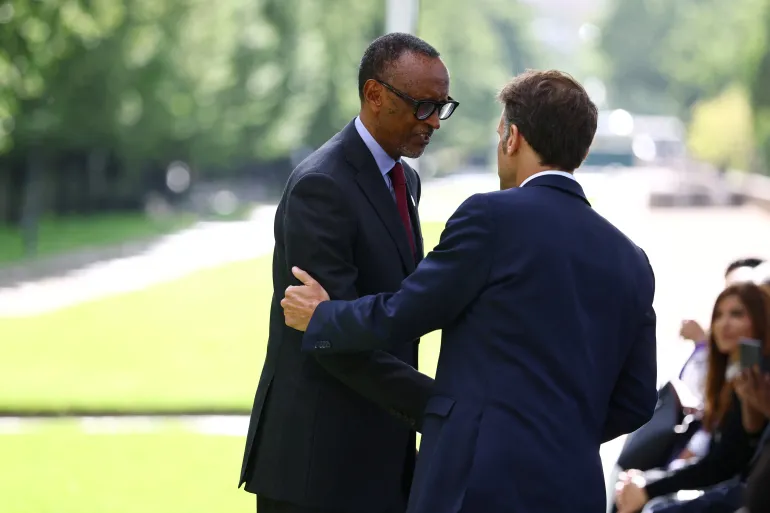
In his speech at the opening ceremony alongside his Rwandan counterpart Paul Kagame on Tuesday, Macron said the memorial represents “the culmination of a long and patient quest for truth.”.
Rwandan genocide
Macron said: “An unprecedented reconciliation has been achieved between Rwanda and France. This memorial, while an achievement, is not the end, but a milestone on a path we have begun.”.
The memorial, called “L’Archive” (The Archive), consists of two black copper plaques and bears an inscription honoring some 800,000 men, women and children, mostly Tutsis, who were killed in a massacre between April and July 1994.
The opening of the memorial comes five years after Macron traveled to Kigali and acknowledged for the first time France's failure to respond to warnings of impending massacres in Rwanda.
Macron said that Paris and its Western and African allies did not have the will to stop the genocide, although he did not offer a formal apology.
It requires real courage
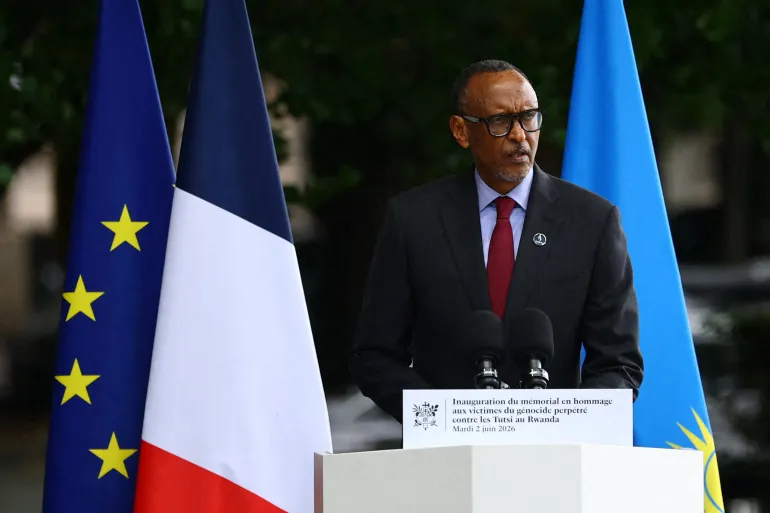
In his speech during the ceremony, Kagame praised France's efforts to shoulder its share of responsibility, and commended Macron for his courage and humanity.
Kagame, who has long accused France of “complicity,” said: “It was not only France that failed, quite the opposite.”.
“Many other countries have done so as well, but none have gone as far as France in correcting the facts and accepting its role in the tragedy.”.
Kagame said: “Facing historical responsibilities requires real courage because it generates fierce opposition from those who have a case to answer.”.
When the genocide against the Tutsi occurred in 1994, France was a longtime supporter of the Hutu-dominated government of Rwanda, leading to decades of tensions between the two countries, including the severing of diplomatic relations between 2006 and 2009.
A commission set up by Macron and led by historian Vincent Duclert concluded in 2021 that France was blind due to its colonial attitude to the events that led to the genocide, and that it bears a “grave and overwhelming” responsibility for not anticipating the massacre.
But she said there was no evidence of Paris's involvement in the killings.
Part of the general history of France
Duclert said the unveiling of the memorial was a “powerful” step.
He added: “The genocide against the Tutsis has now become an integral part of France’s public history.”.
French courts, based on the principle of universal jurisdiction to prosecute the most serious crimes committed worldwide, have convicted many Rwandans for their role in the massacre.
In May, French authorities ordered the resumption of an investigation that has lasted nearly two decades into allegations that the widow of late Rwandan President Juvenal Habyarimana, who has lived in France since 1998, was involved in the genocide.