Kofi Annan: The African diplomat who led the United Nations into the new millennium
How did Kofi Annan create a model of quiet diplomacy in international politics?
Written by: Badr Ahmed
Kofi Annan is one of the most prominent African figures who has left an influential mark on international politics and diplomacy in recent decades.
The man from Ghana succeeded in reaching the highest UN position, becoming a symbol of calm leadership, dialogue, and the peaceful settlement of conflicts.
The African diplomat who led the United Nations into the new millennium
Kofi Atta Annan was born on April 8, 1938, in Kumasi, Ghana, into a family belonging to the local elite. He received his university education in Ghana before continuing his studies in the United States and Switzerland, where he specialized in economics and international management, a background that paved the way for his work within international organizations.
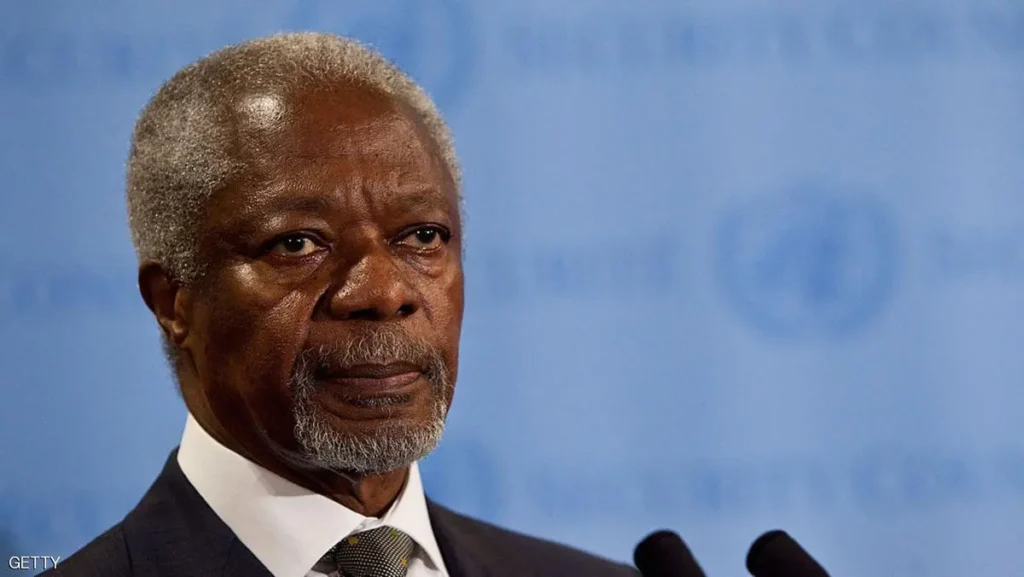
Annan began his career at the United Nations in 1962, progressing through a number of administrative and technical positions over more than three decades. During those years, he gained extensive experience in managing international crises and peacekeeping operations, making him one of the most experienced UN officials within the organization.
In 1997, he was elected Secretary-General of the United Nations, becoming the first person from sub-Saharan Africa to hold the post, having spent most of his career within the organization itself. During his two terms, which lasted until 2006, the world faced major challenges including civil wars, regional conflicts, the rise of international terrorism, and issues of development and poverty.
Kofi Annan's name is associated with the launch of several important international initiatives, most notably the Millennium Development Goals, which aimed to combat poverty and hunger and improve education and health in developing countries. He also worked to strengthen the role of the United Nations in peacekeeping and defending human rights, and consistently called for reforming international institutions to make them more capable of addressing global challenges.
In 2001, Kofi Annan and the United Nations shared the Nobel Peace Prize in recognition of their efforts to build a more peaceful and orderly world, and to establish the principles of cooperation between nations and peoples.
After leaving his post as Secretary-General, Annan continued to play a mediating role in a number of African and international crises, remaining an influential voice on issues of democracy, development, and good governance. He also participated in conflict resolution efforts on the African continent, drawing on his international standing and extensive experience.
Kofi Annan died on August 18, 2018, at the age of 80, but he remains present in the global memory as one of the most prominent diplomats in modern history, and an African icon who succeeded in conveying the voice of the continent to the highest levels of international decision-making.