Written by: Ayman Ragab
Sharp divisions over the Iran war pose a challenge to the unity of the BRICS group, yet Minister Ronald Lamola insists the group remains cohesive despite differing views among its members.
South Africa’s Minister of International Relations and Cooperation, Ronald Lamola, does not believe that the solidarity of the BRICS group has been damaged by its failure to agree on a common position on the Iranian war.
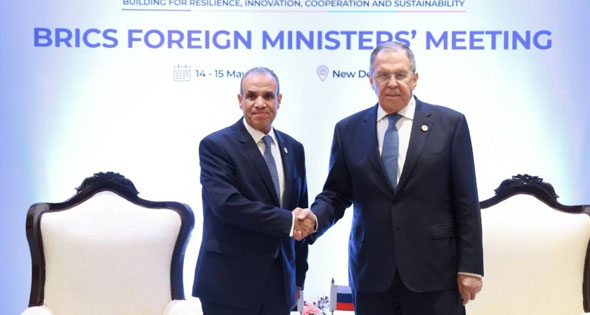
Sharp disagreements between Iran and the United Arab Emirates, both members of the BRICS group and on opposing sides in the war, prevented the group's foreign ministers from issuing a unified statement after their meeting in New Delhi on Friday. Their efforts were limited to a statement by the president, the standard diplomatic procedure when consensus cannot be reached.
BRICS disagreements
The 63-point statement issued by Subrahmanyam Jaishankar, the foreign minister of India, which chairs the BRICS group this year, instead described, in vague terms, the “differing views” of the members on the war and the blockade of the vital Strait of Hormuz by both Iran and the United States.
Iran and the United Arab Emirates clashed behind closed doors at the meeting, with Iran accusing the UAE of actively participating in the US and Israeli military attack on Iran.
Some commentators have said that sharp disagreements over the Iran war have damaged the solidarity of the BRICS group, but Lamola, speaking to the Daily Maverick, disagreed.
Discussion of most issues
“Not at all, because we agreed on almost everything… except for this issue, where the two countries concerned had clear reservations about a collective agreement.”
Lamola noted that there was almost 99% agreement on a wide range of other issues discussed at the meeting, “and only 1% disagreement, which is normal in any multilateral forum. So I don’t think that can undermine solidarity within the BRICS group.”.
But it is certainly dangerous when two members of the BRICS group are at war with each other, we wondered.