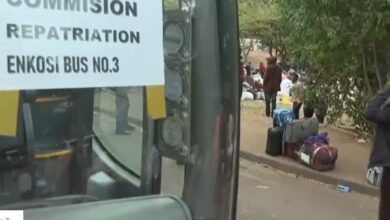
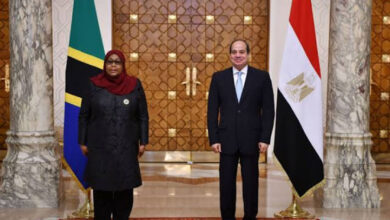
After targeting migrants, Nigeria plans to repatriate its citizens from South Africa.
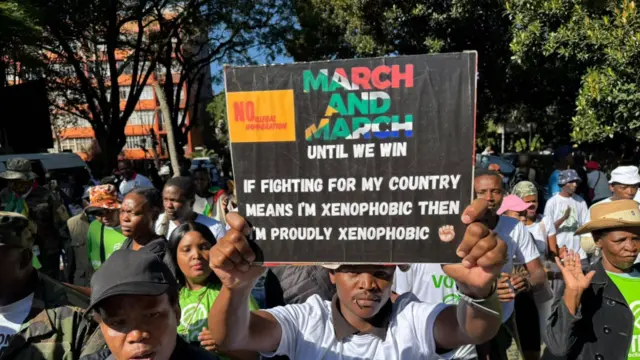
Protests against immigrants in South Africa
Written by: Ayman Ragab
Nigeria is planning to repatriate its citizens in South Africa who wish to return home voluntarily, amid growing fears that recent attacks on foreigners there could escalate.
Foreign Minister Bianca Odumejo said that 130 applicants had already registered to participate in the process, adding that the number was expected to rise.
Attacks on migrants in South Africa
The minister revealed President Paula Tinubwe’s concern about the attacks in the southern African nation, and condemned the violence against foreign nationals and the demonstrations characterized by “xenophobic rhetoric, hate speech and inflammatory anti-immigrant statements.”.

Nigeria summoned the acting High Commissioner of South Africa regarding this issue.
She said the events are affecting the existing relations between the two countries, according to a statement issued by the Ministry of Foreign Affairs. .
On Sunday, the foreign minister said: “The lives and businesses of Nigerians in South Africa should no longer be put at risk, and we are committed to working with South Africa to explore ways to put an end to this.”.
She noted the killing of two Nigerian citizens in two separate incidents involving local security personnel, stressing that her government is demanding justice.
The Nigerian president's priority is the safety of citizens.
She said: “The Nigerian president’s priority is the safety of citizens, and therefore, arrangements are currently being made to collect details of Nigerians in South Africa for voluntary repatriation flights for those seeking assistance to return home.”.
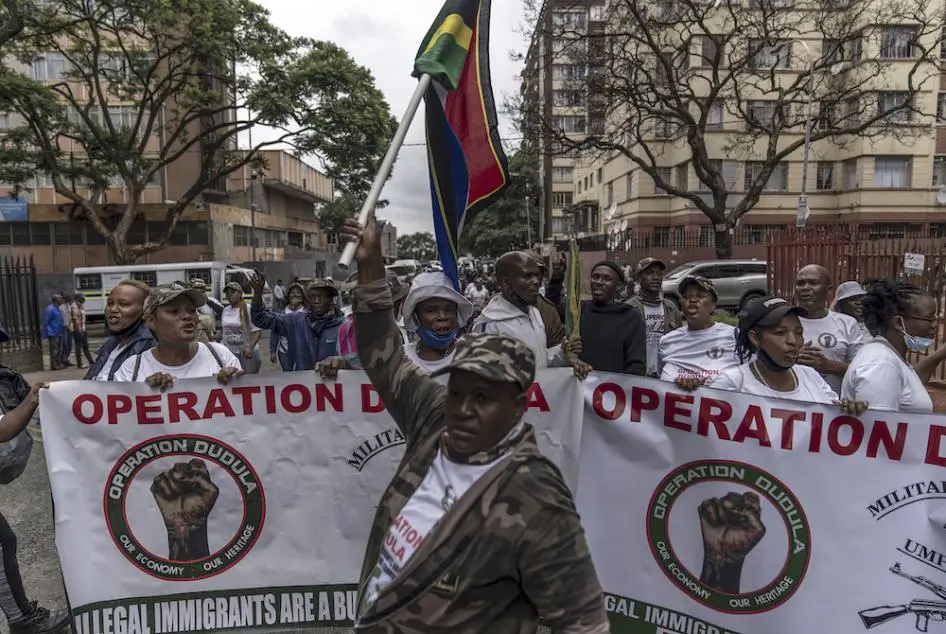
Local media reported that four Ethiopian citizens were also killed in recent weeks, while attacks have also occurred against citizens of other African countries.
Peter Odick, a Nigerian who obtained citizenship in 2006, told the BBC that there is fear among immigrants in South Africa: “Business is completely at a standstill. Most of us are closing our businesses because it is not safe to stay here.”.
a rich country
As the most industrialized country in Africa, people from other parts of the continent have long traveled to South Africa in search of work.
South African President Cyril Ramaphosa condemned the attacks, but also warned foreigners that they must respect local laws.
He used his Freedom Day speech last week – which marks the country’s first democratic elections in 1994 – to remind South Africans of the support other African nations had given in the struggle against apartheid.
But some South Africans accuse foreigners of being in the country illegally, taking jobs from locals, and being involved in crime, especially drug trafficking.
Anti-immigration groups
Anti-immigration groups are stopping people outside hospitals and schools, demanding to see their identity papers.
During a march organized by one of these groups in the capital Pretoria last week, foreign-owned businesses were urged to close in the event of violence. .
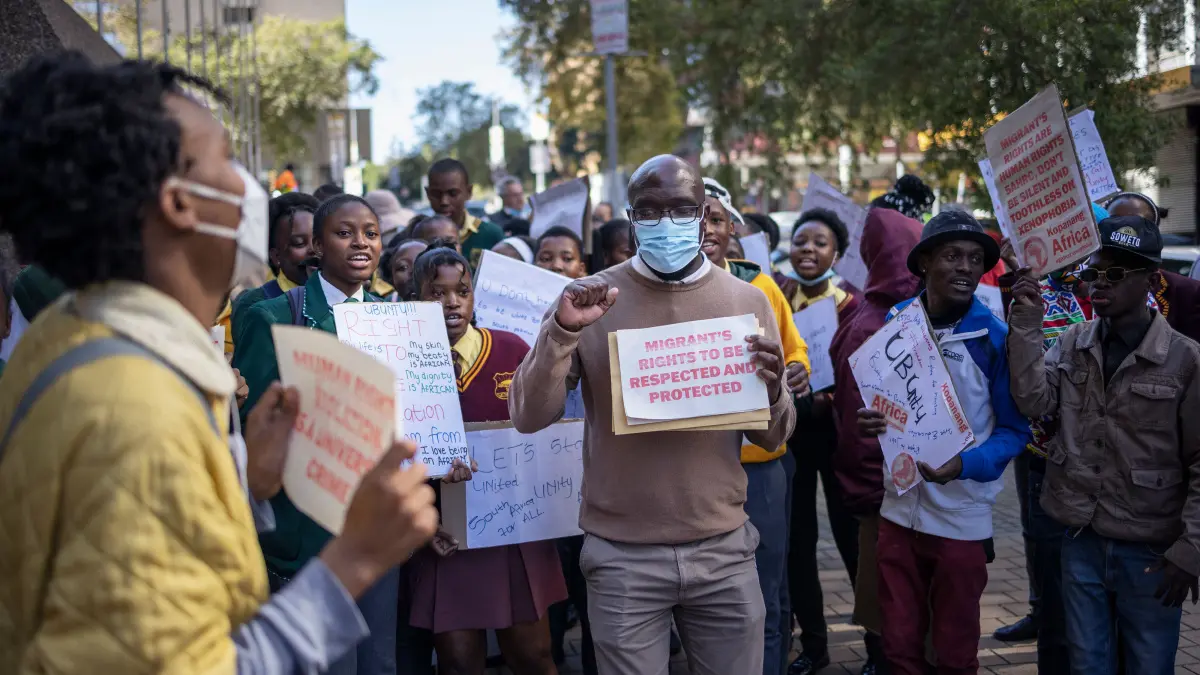
At that time, a Nigerian man said: “This is not acceptable because we are black, we are brothers… Everyone comes here just to survive.”.
A security guard, who was unable to go to work because of the protest, said: “This is not what we, as Africans, expected.”.
“This makes us feel scared – imagine if we were scared in our African continent – what if we went to Europe?” he asked.
“We must prioritize South Africans”: Anti-immigration movement blocks foreigners from accessing healthcare.
Ghanaian migrants
Last month, Ghana summoned South Africa’s top envoy after a video widely circulated showing a Ghanaian man demanding proof that he had the correct immigration papers.
Anti-immigrant sentiment escalated earlier this year after reports emerged that the head of the Nigerian community in the coastal city of Kogombo (formerly East London) had been installed in a traditional position that translates to “king”.
Some South Africans in the region saw this as an attempt to seize political power.
South Africa has about 2.4 million immigrants, which is slightly less than 4% of the population, according to official statistics.
However, it is believed that much larger numbers are present in the country informally, most of them coming from neighboring countries such as Lesotho, Zimbabwe and Mozambique, which have a history of providing migrant labor to their wealthy neighbor, and a smaller number come from Nigeria.