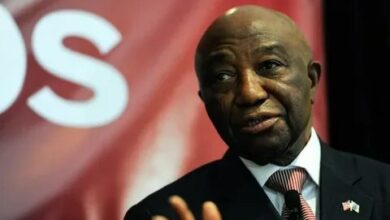
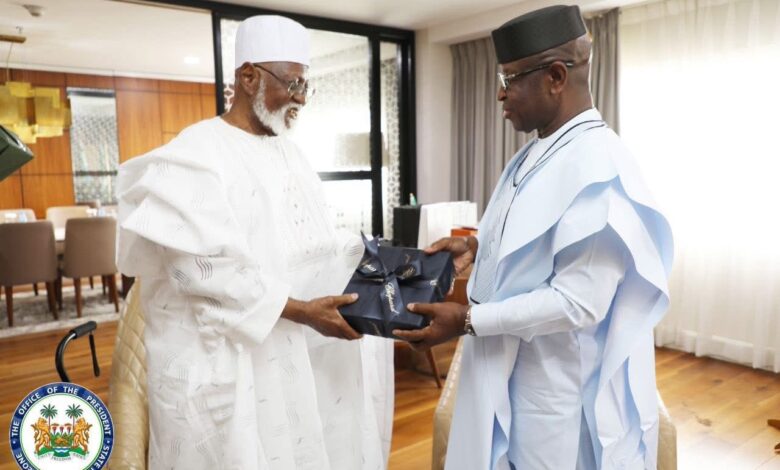
On his 84th birthday, Abdel Salam Abu Bakr receives widespread praise for his legacy in democracy and peace.
Three books documenting the career of the Nigerian statesman have been revealed.
Written by: Mohamed Ragab
Nigeria witnessed a special celebration on the occasion of the eighty-fourth anniversary of the birth of former military president and prominent statesman Abdulsalami Abubakar, which included the unveiling of three new books that highlight his eventful career in public service and his role in leading the country during one of its most important political phases.
The occasion renewed the debate about the political and national legacy left by Abubakar, whose name was associated with managing a sensitive transitional phase that contributed to Nigeria’s return to democratic rule after years of military rule, as well as his efforts to support peace and stability within the country and in the West African region.
A pivotal role in the democratic transition
Abdul-Salami Abubakar is regarded as one of the most prominent leaders who played a pivotal role in Nigeria’s democratic transition. After taking power in 1998, he led a rapid political transition that culminated in democratic elections and the handover of power to an elected civilian government in 1999.
Observers believe this move marked a significant turning point in the history of Africa's most populous nation, contributing to greater political stability and the consolidation of democratic institutions. Ibrahim Boubacar also gained widespread respect both within and outside the continent for his commitment to a peaceful transfer of power and his adherence to the pledges he made during the transitional period.
Contributions to promoting peace and regional stability
Abubakar's contributions were not limited to Nigeria; they extended to mediation and conflict resolution efforts in several West African countries. For years, he participated in regional and international initiatives aimed at fostering dialogue between conflicting parties and supporting peace processes.
He was also known for his constant calls for coexistence and national unity, emphasizing on various occasions the importance of dialogue as a means to address the political and security challenges facing African societies.
A lasting legacy and inspiration for new generations
During the celebration of his birthday, speakers praised Abu Bakr's wisdom and his continued role in providing advice and counsel on national and regional issues, and considered the three books launched to be an important documentation of his leadership legacy and the achievements he made during his long career.
The influence of Abdel Salam Abu Bakr is still present in the African political scene, where he is seen as one of the symbols of good leadership and the peaceful transfer of power.