How did Libya's archaeological treasures survive years of conflict and security breakdown?
Libyan archaeologists hid historical treasures in their homes to protect them from looting.
Written by: Badr Ahmed
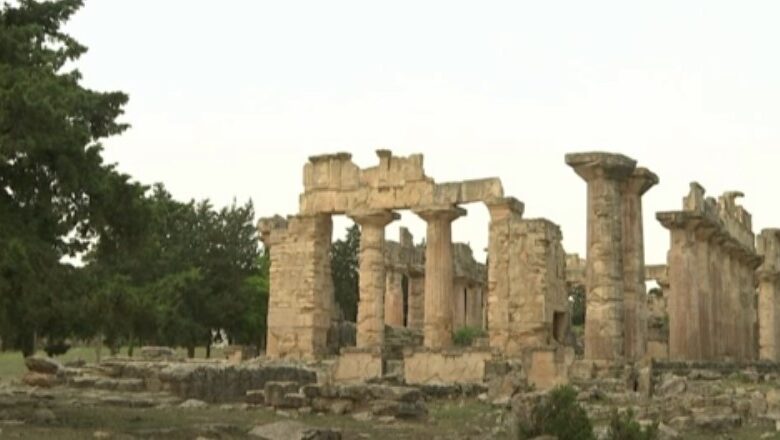
Efforts are continuing in eastern Libya to save the ancient Greek archaeological sites listed on UNESCO’s World Heritage List, most notably the cities of Cyrene and Apollonia, after years of threats ranging from security chaos to natural disasters, which have placed this unique cultural heritage before unprecedented challenges.
These archaeological sites have witnessed difficult conditions in recent years, beginning with the state of lawlessness that followed the fall of the regime of the late Libyan leader Muammar Gaddafi in 2011, passing through years of armed conflict, and ending with the damage caused by the devastating Hurricane Daniel in 2023.
Libyan archaeologists hid historical treasures
Ismail Dakhil, the supervisor of the Cyrene Museum, said that the period between 2014 and 2016 was one of the most difficult the ancient city has ever faced, due to instability and the weakness of state institutions. He added that those working in the antiquities sector were forced to take exceptional measures to protect historical artifacts, including hiding gold coins, small statues, and archival documents in their homes for fear of theft or vandalism.
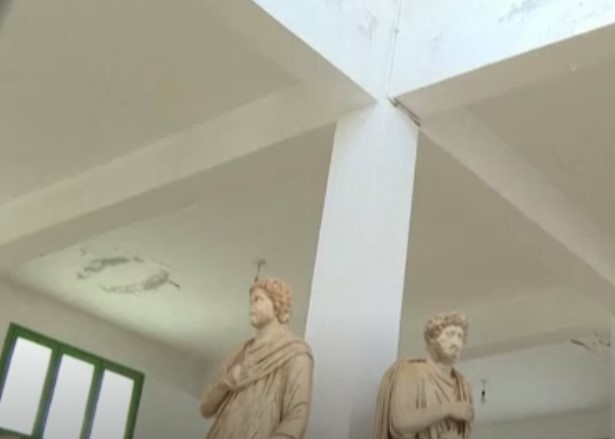
The Cyrene Museum houses thousands of rare artifacts, including historical statues dating back to the Greek and Roman civilizations, in addition to a storehouse containing more than 40,000 artifacts discovered in the region.
Cyrene was one of the most prominent cities of the ancient Hellenistic world, founded in 631 BC by Greek settlers from the island of Thera, now known as Santorini. The city flourished as a major cultural and intellectual center before earthquakes and wars led to its decline and transformation into historical ruins.
Following Cyclone Daniel, which struck eastern Libya in 2023, parts of the archaeological sites were damaged, prompting restoration teams to launch extensive rescue and rehabilitation operations. Anis Hamed Younis, who oversees the restoration work at Cyrene, explained that specialized teams spent months removing rubble and rebuilding sections of the historical passageways and walls, despite limited resources and a shortage of equipment.
Meanwhile, concerns are growing about the coastal city of Apollonia, nearly a third of which has been submerged by erosion and rising sea levels over the centuries. Archaeologists warn that the site faces increased danger following Hurricane Daniel, necessitating urgent intervention to protect its remaining features.
Experts hope that these sites will receive greater attention from the Libyan authorities, stressing that this heritage does not belong to Libya alone, but is part of the global human heritage that should be preserved for future generations.