Ebola outbreak accelerates in Congo: More than 2,000 cases reported, calls for increased health support
The rise in infections and deaths is alarming.
Written by: Mohamed Ragab
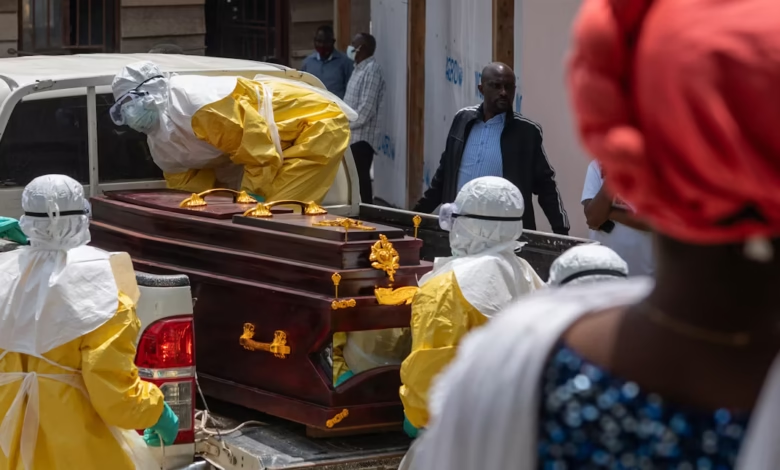
The Democratic Republic of Congo is witnessing a continuous escalation in the Ebola outbreak, after the Ministry of Health announced the registration of more than two thousand cases of the disease, including 754 deaths, in one of the largest outbreaks the country has seen in recent years.
This rapid increase reflects the scale of the challenges facing health authorities in containing the epidemic, especially with the continued transmission of the infection in a number of eastern regions.
This development comes amid growing concerns about the spread of the virus both within and outside the country, especially with infections being recorded in neighboring countries, which has prompted international health organizations to intensify their efforts to support the field response and strengthen monitoring and containment measures.
Security challenges hinder containment efforts
Response teams face significant difficulties in carrying out testing and contact tracing operations due to the unstable security situation in eastern Democratic Republic of Congo, where armed groups are active and some areas are subject to frequent acts of violence.
The waves of internal displacement have also contributed to further complicating the situation, as the overcrowding of displaced persons camps and the weakness of health services have created an environment conducive to the spread of infection, at a time when medical facilities are suffering from a lack of resources and personnel needed to deal with the increasing numbers of infected people.
Funding shortages threaten response efforts.
Despite ongoing governmental and international efforts, the fight against the epidemic still faces significant challenges due to limited funding, which affects the ability of health authorities to expand treatment centers, provide medical equipment, and increase response teams in the most affected areas.
Health experts emphasize that containing the virus requires providing additional financial resources, along with strengthening cooperation between the government and international partners, to ensure the rapid detection and isolation of infections and the provision of necessary medical care, thus limiting the spread of infection to new areas.
Concerns about regional spread of the infection
As infections continue to be recorded, concerns are growing about the spread of the pandemic to neighboring countries, especially given cross-border movement. These developments have prompted several countries to tighten health monitoring measures for arrivals from affected areas, while international organizations continue to closely monitor the situation to prevent the outbreak from becoming a regional health crisis.
Experts believe that controlling Ebola depends not only on treatment, but also requires raising community awareness, gaining the trust of local residents, intensifying awareness campaigns about prevention methods, and improving epidemiological surveillance and rapid response systems.
Health authorities affirm that containing the outbreak is still possible if sufficient resources are available and joint efforts between the government and international partners continue, ensuring that the spread of the disease is reduced and the population is protected from its health and humanitarian consequences.