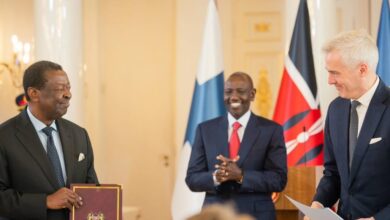
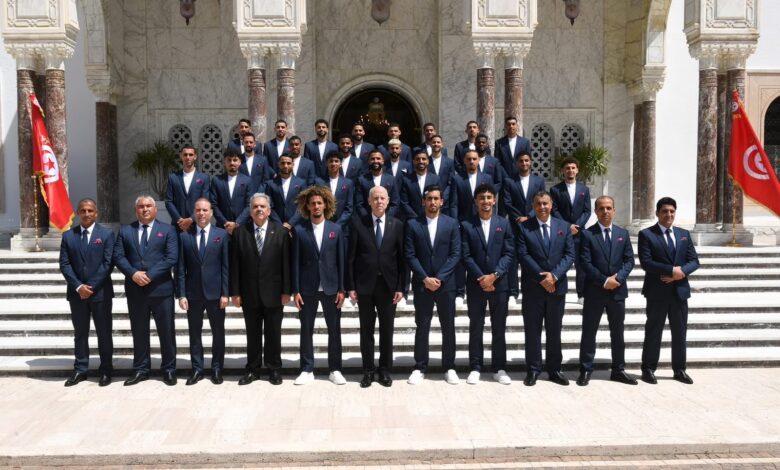
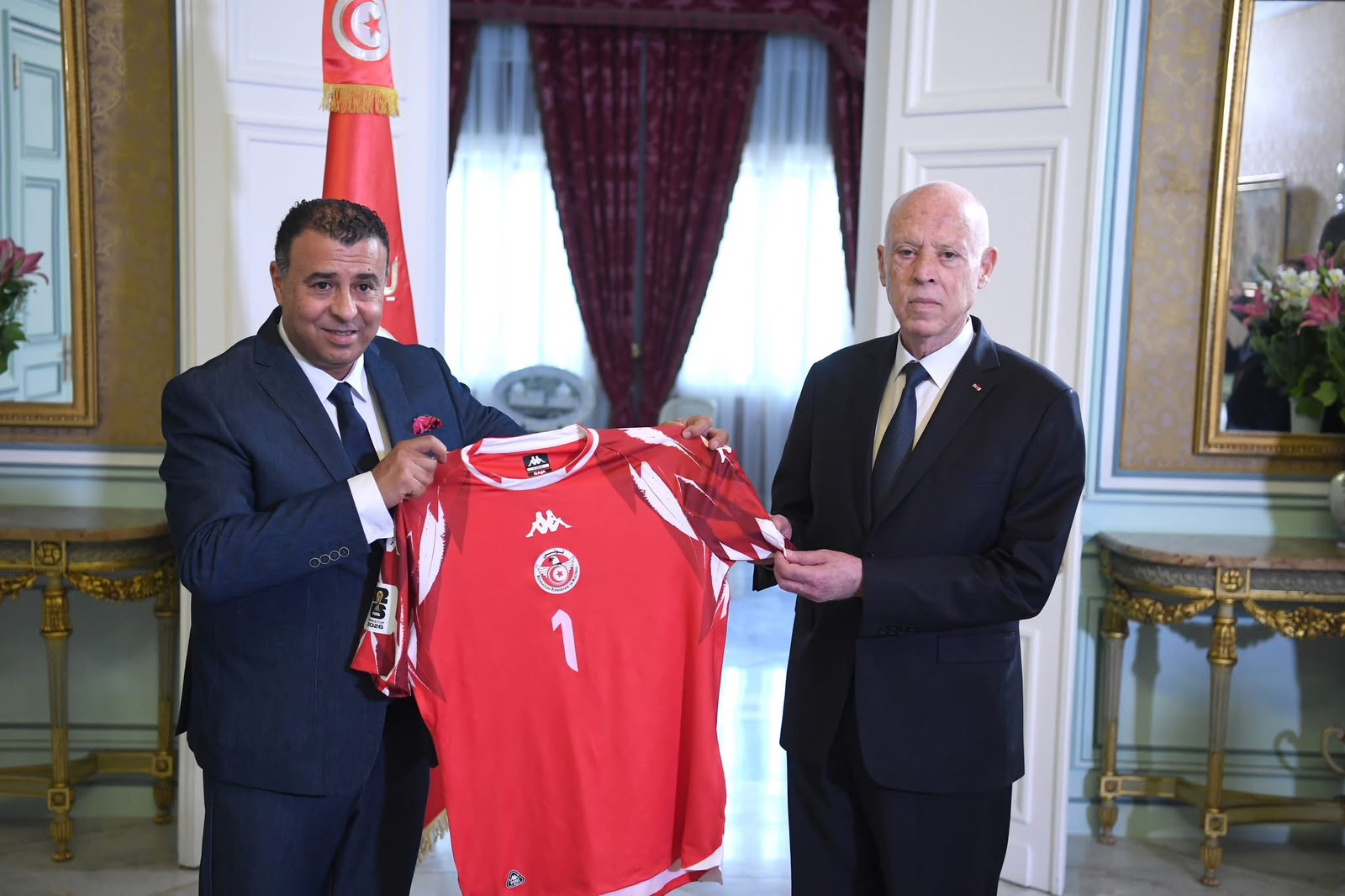
Kais Saied sends a strong message to the national team delegation before their participation in the World Cup
The era of participation for the sake of participation is over.

Africa at the 2026 World Cup: A historic participation and ambitions that go beyond the group stage
In a separate context, the African continent is entering the championship World Cup 2026 will have the largest representation in its history, after the number of seats allocated to it increased to 9 direct seats, with the possibility of the number reaching 10 teams through the global play-off, following the decision of the International Federation of Football Associations (FIFA) to expand the tournament to 48 teams.
This development is an important step that reflects the rapid growth of African football and its increasing presence on the global stage.
African national teams are making history
The African qualifiers saw the qualification of a group of the strongest teams on the continent, most notably Morocco, Egypt, Senegal, Algeria, Tunisia, Ghana, Ivory Coast, South Africa and Cape Verde, while the Democratic Republic of Congo succeeded in securing an additional place through the play-offs, raising the African presence to 10 teams in the upcoming historic edition.
This achievement is seen as evidence of the development of football infrastructure in many African countries in recent years.
Morocco leads the continent's ambitions
All eyes are on the Moroccan national team, which made history at the 2022 Qatar World Cup after becoming the first African and Arab team to reach the World Cup semi-finals.
The “Atlas Lions” hope to repeat or surpass the achievement, benefiting from a distinguished generation that includes players active in the biggest European clubs. Teams such as Senegal, Egypt and Algeria are also counting on their international experience and ability to compete with the world’s best.
A golden opportunity to change the stereotype
Increasing the number of African teams gives the continent a real opportunity to prove its technical and tactical strength, especially with the development of sports academies and the rising number of African players in major European leagues. Furthermore, broad participation may contribute to attracting more investments and sponsorships to African football.
An exceptional World Cup awaits the African continent.
As the 2026 World Cup in the United States, Canada and Mexico approaches, African fans are looking forward to seeing their national teams achieve unprecedented accomplishments. The record participation is not just a historical number, but a real opportunity to write a new chapter in the history of African football and consolidate its position among the major powers in world football.