From Ethiopia to the land of the Two Holy Mosques: Illegal immigration is a growing crisis between Saudi Arabia and Ethiopia.
The Ethiopian migrant crisis is impacting Saudi-Ethiopian relations.

Written by: Badr Ahmed
The issue of illegal immigration topped the agenda of the Saudi-Ethiopian talks, during the meeting that brought together the Ethiopian Foreign Minister and the Saudi Deputy Foreign Minister, as part of joint efforts to address one of the most sensitive issues in the Horn of Africa and the Middle East region.
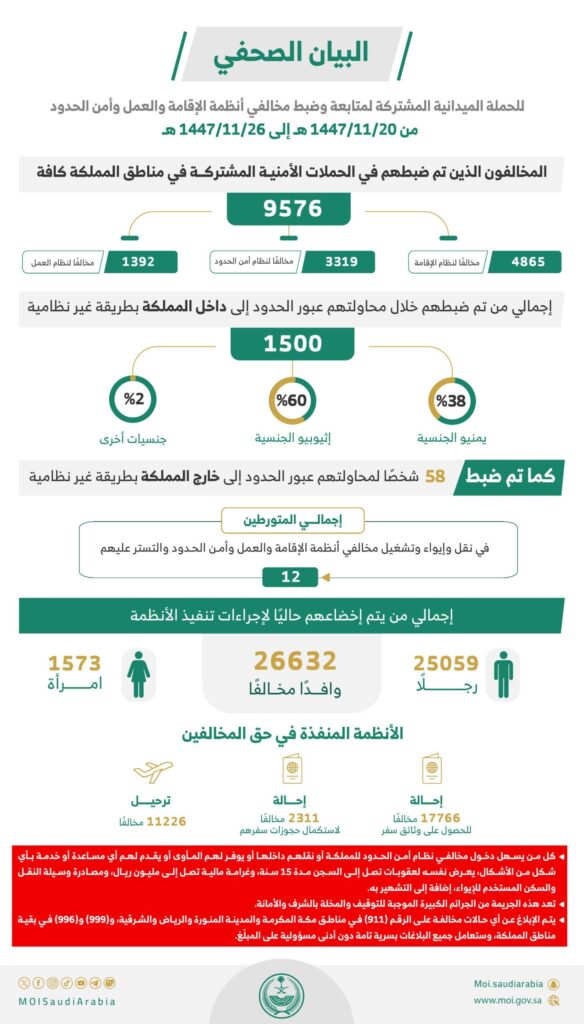
The meeting comes at a time when Saudi authorities announce, almost weekly, the arrest of hundreds of infiltrators, mostly Ethiopians, as they attempt to enter the Kingdom’s territory illegally, through smuggling networks active in migration routes extending from the Horn of Africa through Yemen to the Kingdom’s southern borders.
The Ethiopian migrant crisis is impacting Saudi-Ethiopian relations.
Just last week, the Kingdom of Saudi Arabia, represented by the Ministry of Interior, announced the arrest of 1,500 people who attempted to enter the Kingdom illegally, 601 of whom were Ethiopian nationals. This is a recurring weekly occurrence, according to the periodic data published by the Ministry.
The Saudi Ministry on its platforms.
Returning to the discussions between the two sides, the Ethiopian minister stressed the importance of protecting the interests of Ethiopian citizens working and residing in Saudi Arabia, calling for expanding legal migration opportunities and opening safer and more organized channels for Ethiopian labor, in an attempt to reduce irregular migration flows that cause recurring humanitarian and security crises.
In contrast, the Saudi side affirmed the Kingdom’s commitment to its historical relations with Ethiopia, while stressing the importance of regulating labor migration and ensuring the arrival of foreign workers through official legal frameworks, in a way that achieves security and stability and preserves workers’ rights.
Saudi Arabia is one of the most prominent destinations for Ethiopian migrants seeking job opportunities, but legal restrictions and high rates of poverty and unemployment in some Ethiopian regions drive thousands annually to take illegal migration routes, despite the associated security and humanitarian risks.
International reports indicate that human trafficking networks are exploiting the difficult economic conditions in the Horn of Africa to recruit migrants and send them on perilous journeys across the Red Sea and Yemen, where many face arrest, deportation, or fall victim to violence and exploitation.
Riyadh and Addis Ababa face a test of irregular migration
Observers believe that raising the issue of migration during the recent meeting reflects a growing awareness on both sides that the crisis is no longer just a labor issue, but has turned into a complex security, humanitarian and regional issue, requiring broader coordination to combat smuggling, develop legal migration mechanisms and improve the economic conditions that drive Ethiopian youth to risk their lives in search of job opportunities abroad.
The meeting also reflects Riyadh and Addis Ababa's keenness to contain the repercussions of the phenomenon, especially in light of the increasing security challenges on the Kingdom's southern borders, and the continued unrest in some parts of the Horn of Africa, which fuels waves of irregular migration towards the Gulf.