Written by: Shaaban Bilal
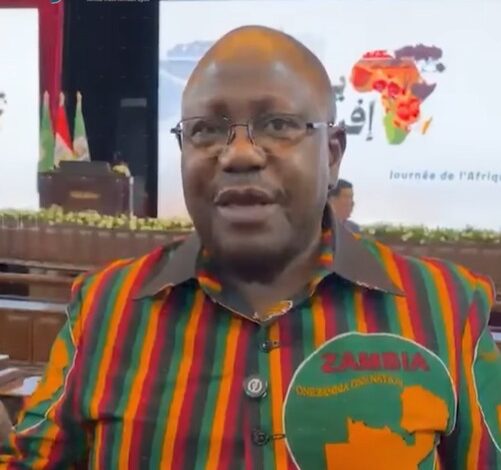
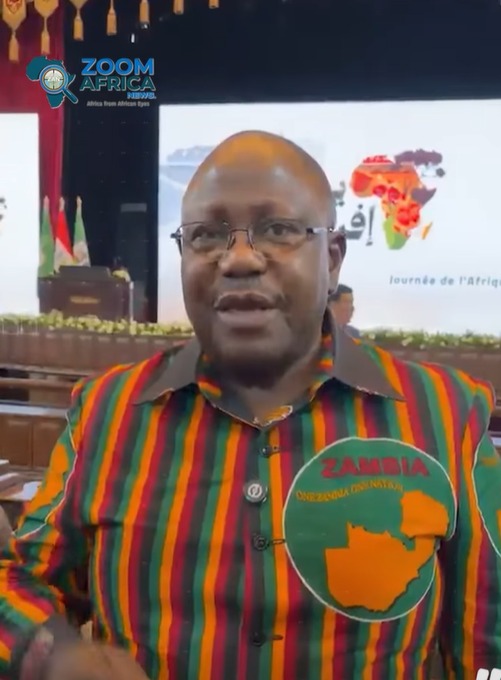
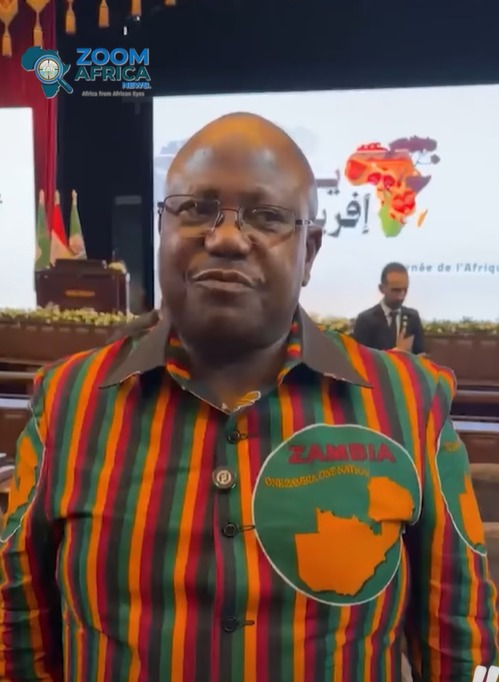
Major General Topole Mulambo Lubaya, Ambassador of the Republic of Zambia to Cairo, praised the leading role of the Arab Republic of Egypt in promoting African unity, describing the celebration as “Africa Day”Cairo University described the event as a “wonderful and special day” that brought together the African continent in the heart of the Egyptian capital.
Reviving the spirit of 1963
In exclusive statements to “Zoom Africa News”, Ambassador Lubaya said: “Egypt’s initiative to bring us together today is an exceptional step that allows us to exchange experiences and recall the long journey since the establishment of the Organization of African Unity in 1963,” noting that the continent is now reaping the fruits of that dream set by the founding fathers decades ago.
Commitment to unity and common destiny
The Zambian ambassador affirmed that the African continent is moving steadily towards integration, adding: “We are very happy that we are moving together as one bloc, and our goal is that no one is left behind in the African journey. We have picked up the torch of the dream from our early founders and we are committed to turning it into a tangible reality.”.
A message for the future
Major General Topole Mulambo Lubaya concluded his remarks with an optimistic vision, directing a message to all African peoples and countries on the necessity of solidarity and collective action, saying: “My message today is clear: Let us move together and strongly to ensure the realization of the common African dream,” expressing his appreciation to Egypt for this platform that strengthens the ties between the sons of the one continent.
The Ministries of Foreign Affairs and Higher Education are organizing an Africa Day celebration at Cairo University.
The Ministry of Foreign Affairs, International Cooperation and Egyptians Abroad, in cooperation with the Ministry of Higher Education and Scientific Research, organized a celebration on the occasion of Africa Day at the headquarters of Cairo University, in the presence of Dr. Badr Abdel-Aty, Minister of Foreign Affairs, International Cooperation and Egyptians Abroad, Dr. Abdel-Aziz Qansouh, Minister of Higher Education and Scientific Research, Dr. Mohamed Sami Abdel-Sadek, President of Cairo University, and a high-level participation that included African and foreign ambassadors accredited to Egypt, a number of public figures, thought leaders, academics and media figures, in addition to the participation of the Minister of Foreign Affairs of the Union of the Comoros, and the Vice President of the National Assembly of Senegal as guests of honor.
The celebration began with a recorded speech by President Abdel Fattah al-Sisi, in which he stressed that the African continent stands today on the threshold of a new stage of construction and development, based on its enormous potential and rich resources, and before that, on the will of its peoples and their firm determination to maximize the benefit from their wealth. He emphasized that Egypt will remain an active partner in supporting the development and construction process in sister African countries through the exchange of experiences, the implementation of projects, and openness to cooperation with various international partners, within a framework of mutual respect and common interests, in order to achieve the priorities of the peoples and countries of the continent.
The celebration included a recorded speech by the Chairperson of the African Union Commission, as well as the screening of a documentary about Egyptian-African relations and their development and momentum in various political, economic and developmental fields, in addition to a film about the role of Cairo University in supporting and strengthening relations with African countries, hosting African students and supporting education pathways and capacity building.