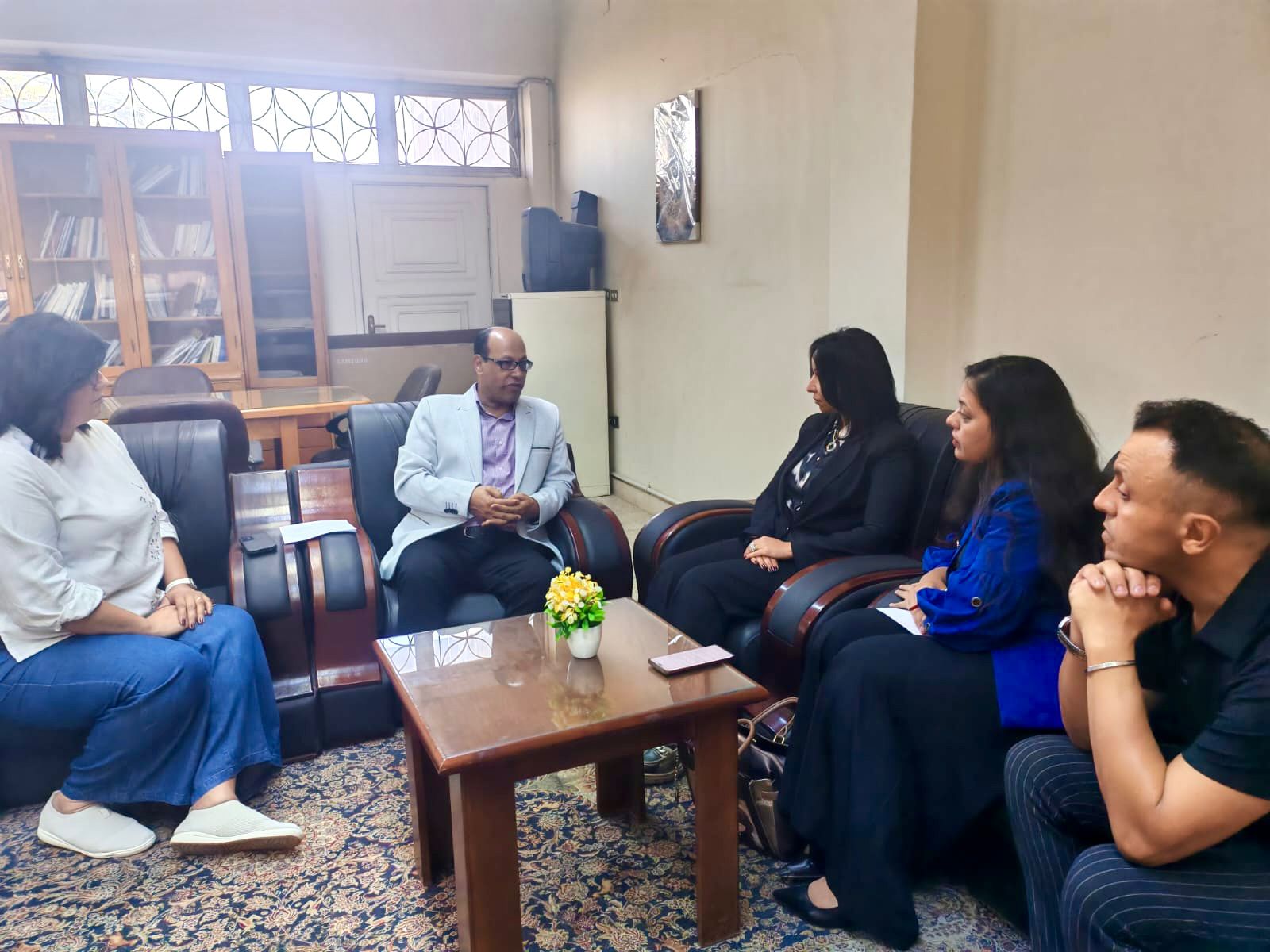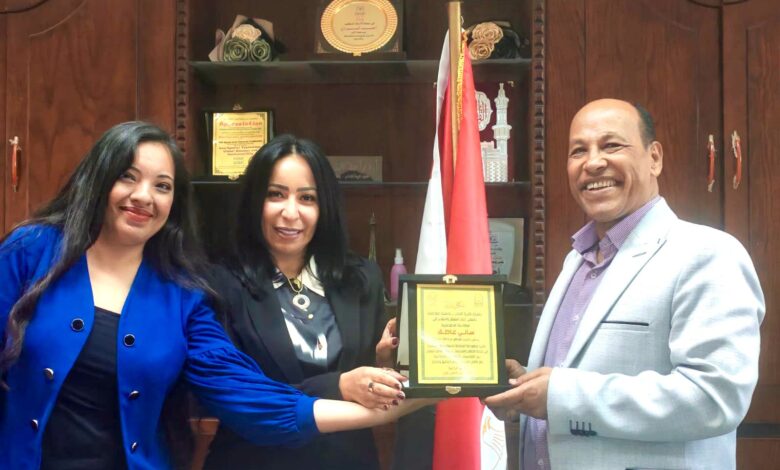
Dr. Ahmed Al-Rawi, Dean of the Faculty of Arts at the Capital University, honored journalist Sally Atef, editor-in-chief of Zoom Africa, during her reception at the college to announce the joint cooperation to launch the “Know Your Continent” initiative.
The meeting was attended by Professor Dr. Mohamed El-Tounsi, Vice Dean for Education and Student Affairs; Professor Dr. Wafaa El-Beih, Director of the Quality Assurance Unit; Professor Dr. Mahga Mostafa, Deputy Director of the Unit; Dr. Ingy Lotfy, Assistant Professor in the Department of Media and Coordinator of the ”Know Your Continent” Initiative; and Dr. Mohamed Abdel Moneim, Coordinator of the “Awareness is Life” Initiative.”
This cooperation comes within the framework of the Capital University’s keenness to expand the horizons of international cooperation and enhance the competitive skills of its students, in a way that contributes to preparing cadres capable of keeping pace with the requirements of the regional and international labor market.
The meeting witnessed an agreement on the main features of the initiative, which includes academic cooperation aimed at strengthening external partnerships, activating Francophone and African tracks within the college, relying on English and French as two main tracks in translation, in addition to implementing joint training and employment programs.
The initiative also includes a number of specialized activities aimed at preparing students and graduates for the job market, most notably:
Participating in job fairs to connect students with institutions and companies.
Opening direct communication channels and organizing regular meetings with international experts and academics to develop curricula and exchange experiences.
Implementing training programs in cooperation with embassies, covering international work mechanisms, protocol, and diplomatic ceremonies, in addition to receiving training opportunities coming from abroad.
Launching an introductory series aimed at raising awareness of the African continent and its cultures.
Organizing student and cultural competitions, including a competition on African linguistic identity and how to write the word “Africa” in French.
This initiative reflects the strategic vision of the Faculty of Arts at the Capital University to prepare internationally qualified human resources who possess knowledge of the issues of their regional and continental environment, and who have the necessary linguistic and professional skills to keep pace with the requirements of the global labor market.