Democratic Republic of the Congo: Ebola cases rise to 1,502 amid ongoing outbreak
Health authorities announce a rise in infections and deaths
Written by: Mohamed Ragab
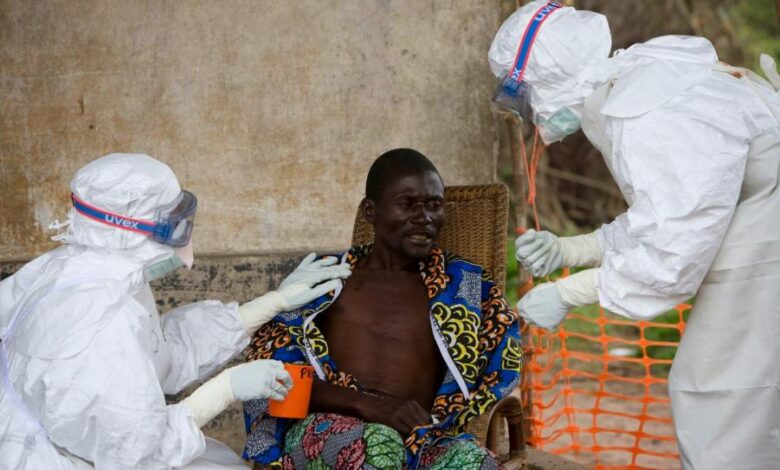
Health authorities in the Democratic Republic of Congo announced that the number of confirmed Ebola cases has risen to 1502, including 473 deaths, in the latest toll reflecting the continued spread of the epidemic in the eastern regions of the country, despite intensified containment and health response efforts.
The outbreak is mainly concentrated in the provinces of Ituri, North Kivu, and South Kivu, where health response teams continue diagnosis, treatment, and contact tracing to limit transmission.
Continuing efforts to contain the Ebola epidemic throughout the country
The Congolese government, in cooperation with the World Health Organization and its international partners, continues to strengthen response measures by expanding treatment center capacities, increasing laboratory testing, and accelerating contact tracing and community awareness efforts in an attempt to curb the spread of the virus.
Recently, the first clinical trial to evaluate personalized treatments for the Zaire ebolavirus strain, the strain responsible for the current outbreak, was launched. Experts hope this step will contribute to improving treatment outcomes for infected individuals and reducing mortality rates.
Security challenges hinder rapid response to disease outbreaks
Despite intensive health efforts, epidemic control teams continue to face significant challenges, most notably the lack of security in some affected areas, the difficulty of accessing local communities, and attacks that have previously targeted Ebola treatment centers and health workers, which have affected the speed of response and containment operations.
Health experts warn that the continuation of armed conflicts and displacement in eastern Congo may increase the risk of contagion and complicate outbreak control efforts.
Calls to strengthen international support against Ebola
Congolese authorities and their international partners have called for sustained financial and technical support to combat the epidemic, emphasizing that controlling Ebola requires providing necessary resources for treatment, strengthening health surveillance systems, and protecting frontline medical personnel.
According to reports, the coming weeks will be crucial in determining the course of the outbreak, especially as new infections continue to be recorded, at a time when experts hope that new therapeutic trials will contribute to limiting the effects of one of the most dangerous Ebola waves the country has witnessed in recent years.