After 65 suspected deaths... what do we know about the deadly Ebola virus?
Ebola under the microscope: How is it transmitted and what are its most prominent symptoms?
Written by: Mohammed Omran
He returned virus Ebola is raising concerns again in the African continent, after health authorities in the Democratic Republic of Congo announced a new outbreak of the disease, resulting in dozens of suspected deaths in a short period.
What do we know about the deadly Ebola virus?
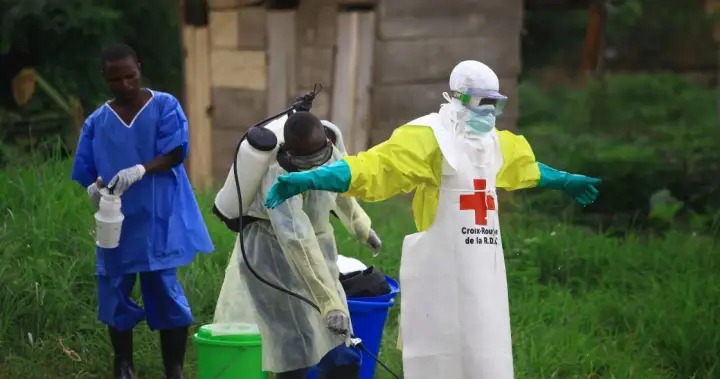
Ebola virus disease is a serious and often fatal illness endemic to the vast tropical forests of Congo, and is spread by direct contact with the body fluids of infected people, contaminated materials, or people who have died from the disease, according to the Africa Centres for Disease Control and Prevention.
This development brings to mind one of the most serious health crises the world has witnessed in recent years, amid concerns about the rapid spread of the virus and the high death rate associated with it.
Amid urgent moves by health response teams and international warnings of a widening infection, attention is turning to Congo to monitor developments and measures taken to contain the disease before it turns into a new regional threat.

Africa’s main public health agency announced on Friday that an Ebola outbreak has been confirmed in Ituri province of the Democratic Republic of Congo, with 65 deaths out of 246 suspected cases so far.
The Africa Centres for Disease Control and Prevention announced in a statement that it will hold an urgent meeting with Congo, Uganda, South Sudan and global partners to strengthen cross-border surveillance, preparedness and response efforts.
Reports indicate that deaths and suspected cases were recorded mainly in the Mongualo and Ruambara health districts, with four deaths among laboratory-confirmed cases. Suspected cases were also reported in Bunia, the provincial capital.
Ebola under the microscope: How is it transmitted and what are its most prominent symptoms?
The agency said preliminary results indicate the presence of a non-Zairean strain of the virus, with the genetic sequencing process continuing to further define its characteristics.

Jean-Jacques Muyembe, the Congolese virologist who co-discovered the Ebola virus and heads the National Institute of Biomedical Research in Kinshasa, told Reuters that all but one of the previous outbreaks in Congo were caused by the Zaire strain.
He said identifying a different strain would further complicate the response, as current treatments and vaccines were developed against the Zaire strain.
The agency added that the Africa Centres for Disease Control and Prevention is concerned about the risk of further spread of the disease due to the urban context of Bunia and Rwambara, as well as the “intense population movement” and mobility associated with mining in the affected areas, which are located near Uganda and South Sudan.
”Given the large population movements between affected areas and neighboring countries, rapid regional coordination is essential,” said Jean Kassia, Director-General of the Africa Centres for Disease Control and Prevention, in the statement.

The World Health Organization (WHO) confirmed the positive results of the first samples on Thursday and sent a team to Ituri to help with the investigation, but samples collected in the field initially tested negative, WHO Director-General Tedros Adhanom Ghebreyesus told a news conference on Friday.
A laboratory in Kinshasa confirmed positive cases on Thursday, bringing the total number of confirmed positive cases to 13, Tedros said.
He said the World Health Organization had allocated $500,000 from its emergency fund to support the response, including surveillance, contact tracing, laboratory testing and clinical care.
This new outbreak is developing amid a worsening security crisis in Ituri, where clashes between rival militia groups have killed dozens of civilians in recent weeks.
The violence has exacerbated an already dire humanitarian situation, causing health facilities to become overcrowded or unable to function in parts of the province, Doctors Without Borders reported earlier this month. The medical charity warned of catastrophic health conditions in displacement camps, increasing the risk of disease outbreaks.
This is the 17th outbreak in Congo since the Ebola virus was first discovered there in 1976. The last outbreak in the country, in Kasai province, was declared over on December 1st after three months. Of the 64 cases, 45 people died and 19 recovered.