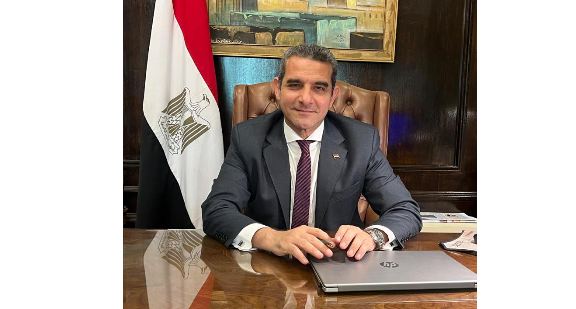
Egypt's ambassador to Djibouti told Zoom Africa News: "Our relations are entering an unprecedented phase... a partnership that is expanding and prospects for cooperation are limitless."
Egypt and Djibouti enjoy historical and strategic relations that extend over decades, as Egypt was one of the first countries to establish diplomatic relations and open an embassy in Djibouti after its independence in 1977.
Since then, Egypt has continued to support Djibouti at various political, economic and developmental levels, and has contributed to state-building efforts and strengthening the capabilities of its national institutions, based on its belief in the importance of Djibouti’s stability and its pivotal role in the Horn of Africa region.
Egypt also affirms its support for the development process taking place in Djibouti under the leadership of His Excellency President Ismail Omar Guelleh, in whom the Djiboutian people renewed their confidence by electing him for a new presidential term during the elections held last April.
In this context, the “Zoom Africa News” website conducted an interview with Ambassador Abdel Rahman Raafat, the Ambassador of the Arab Republic of Egypt to Djibouti, during which he revealed many important aspects related to the relations between the two countries, as he stressed that there are broad and untapped prospects for joint cooperation, especially in the sectors of ports, free zones and energy, particularly renewable energy.
He also stressed Egypt’s keenness to provide diverse educational opportunities for brothers in Djibouti, through scholarships offered by Egyptian public and private universities, as well as scholarships provided by Al-Azhar Al-Sharif.
Here is the text of the dialogue:
How do you assess the level of relations between Egypt and Djibouti at the present stage? And what are the most prominent files of joint cooperation?
Egyptian-Djiboutian relations are currently experiencing their most advanced phase in history, driven by a shared vision and strong political will on the part of both countries' leaderships to enhance cooperation and transform it into practical partnerships that serve the interests of both brotherly nations. This momentum is accompanied by ongoing political consultations and close coordination on various regional and international issues, reflecting the level of trust and understanding that characterizes relations between Cairo and Djibouti.
Cooperation is not limited to a specific area but extends to various political, economic, developmental, and social sectors. In addition to cooperation in health, education, and capacity building, the two countries are witnessing tangible progress in ports, free zones, logistics, energy, transportation, trade, and investment, with a growing interest in opening new avenues for cooperation in sustainable development.
We believe that the next phase holds greater opportunities to deepen this partnership, through the implementation of more joint projects, encouraging the private sector, enhancing logistical and trade connectivity, and taking advantage of the comparative advantages that the two countries possess, in order to achieve development and prosperity and bring direct benefits to the Egyptian and Djiboutian people.
How have the exchange of official visits impacted the development of bilateral relations?
The frequent meetings between President Abdel Fattah al-Sisi and his brother, His Excellency President Ismail Omar Guelleh, have constituted a real turning point in the course of Egyptian-Djiboutian relations, as they have moved bilateral cooperation from the stage of traditional coordination to the stage of strategic partnership based on a shared vision and clear work programs.
President Sisi’s visit to Djibouti in April 2025 confirmed this trend, as it laid the foundations for a new phase of cooperation, which was translated through the joint presidential statement that set a practical framework for expanding cooperation in a large number of sectors, with a focus on moving from political understandings to the actual implementation of joint projects.
This momentum was not limited to the summit level, but extended to various institutions of the two countries, through an unprecedented exchange of ministerial and technical visits, including the visit of the Deputy Prime Minister for Industrial Development and Minister of Transport to Djibouti, and the participation of the Prime Minister in the inauguration ceremony of His Excellency President Ismail Omar Guelleh, as well as the continuous visits made by a number of senior Djiboutian officials to Egypt.
The continued preparations for new high-level visits in the coming period confirm that relations between the two countries are based on an active institutional mechanism for dialogue and follow-up, which ensures the maintenance of the current pace of cooperation and opens the way for launching new initiatives and projects that enhance common interests and support development in both countries.
What are the most prominent sectors that you see as providing promising opportunities to enhance economic and investment cooperation between Egypt and Djibouti? And what opportunities are available to Egyptian investors in the Djiboutian market?
There are still broad and untapped prospects for cooperation between the two countries, particularly in the sectors of ports, free zones, and energy, especially renewable energy, given Djibouti’s strategic location and natural resources that qualify it to be an important regional center in these areas.
Promising opportunities also emerge in the areas of marine fishing and aquaculture, as well as the tourism sector, which is one of the priority sectors in Djibouti’s Vision 2035, due to its great potential to achieve economic and developmental returns, and to contribute to creating job opportunities and promoting sustainable development.
Based on this, we see that the Djiboutian market provides real opportunities for Egyptian companies and investors in many sectors, including logistics and free zones, port development, renewable energy, tourism, the retail sector, marine fishing and aquaculture, in addition to infrastructure and services projects, which opens the way for establishing successful investment partnerships that achieve mutual benefit for both countries.
Are there any existing Egyptian economic or investment projects in Djibouti?
Indeed, economic relations between Egypt and Djibouti have moved from the stage of understandings to the stage of implementation, as work is underway on a number of Egyptian investment projects, within the framework of agreements and memoranda of understanding signed between the two sides, which include the development of projects in the ports sector, the establishment of a logistics zone, and the implementation of energy projects, reflecting the mutual trust and promising potential of the Djiboutian market.
This partnership has resulted in the implementation of several economic and development projects, most notably the official opening of Bank Misr Djibouti and the completion of the solar power plant in Omar Jaja village. This project was funded by the Egyptian Agency of Partnership for Development, the development arm of the Ministry of Foreign Affairs, and implemented by the Arab Organization for Industrialization. It represents a distinguished model of Egyptian-Djiboutian cooperation and embodies Egypt's commitment to supporting sustainable development efforts in Djibouti by providing practical and sustainable development solutions that contribute to improving services and enhancing economic and social development.
How can trade between the two countries be strengthened?
I believe that trade relations between Egypt and Djibouti have significant potential for growth, and that what has been achieved so far represents a good start upon which to build in the coming years. Djibouti's strategic geographic location, as a key gateway to the Horn of Africa, complements Egypt's industrial, productive, and logistical capabilities, creating real opportunities to expand trade and investment between the two countries.
Egyptian products enjoy significant competitive advantages, whether in terms of quality, variety, or proximity and speed of access to the Djiboutian market, which enables them to efficiently meet the needs of the Djiboutian consumer, and at the same time provides greater opportunities to increase the volume and diversification of Egyptian exports.
To achieve a qualitative leap in economic relations, it is crucial to continue developing maritime, air, and logistical links between the two countries, enhance direct communication between the business communities, and encourage partnerships between the private sectors of both sides, while leveraging the advantages offered by the COMESA agreement and other regional frameworks. I am confident that these steps will contribute to transforming the potential and resources of both countries into tangible projects and investments that add value to the Egyptian and Djiboutian economies and support sustainable development efforts in both nations.
What role does Djibouti's strategic location play in supporting economic cooperation with Egypt?
We believe that combining Djibouti’s strategic location with Egyptian expertise and capabilities opens up broad prospects for sustainable investment partnerships that achieve mutual benefit, and contribute to supporting economic development efforts, creating job opportunities, and enhancing economic integration between the two countries.
How do you view the importance of Egyptian-Djiboutian coordination on regional issues and the security of shipping lanes and the Red Sea?
Egypt views coordination and cooperation with Djibouti as a strategic imperative dictated by shared interests and the responsibility both countries bear in maintaining the security and stability of the Red Sea and the Horn of Africa. Djibouti's unique strategic location at the Bab el-Mandeb Strait grants it exceptional importance in the Red Sea security equation, as the southern entrance to the Suez Canal effectively begins on Djiboutian shores. Therefore, Egyptian-Djiboutian coordination in this area is not a choice, but a strategic necessity dictated by national security considerations and the shared interests of both countries, as well as their joint responsibility for maintaining the security and stability of one of the most vital international waterways. From this perspective, both countries are committed to continuing regular political consultations and coordination at the highest levels on various regional and international issues of mutual concern.
Egypt and Djibouti also share common visions regarding the fundamental principles governing international relations, foremost among them adherence to international law, respect for the sovereignty and territorial integrity of states, and non-interference in their internal affairs. Both countries attach particular importance to ensuring the security and freedom of navigation in the Red Sea and the Bab el-Mandeb Strait, as these are vital arteries for global trade and international supply chains, contributing to the stability of the global economy and ensuring the smooth flow of international commerce.
Egypt and Djibouti share a conviction that achieving sustainable security and stability is not limited to security aspects alone, but is closely linked to achieving development, enhancing regional economic integration, and expanding areas of cooperation based on mutual interests. From this perspective, Egypt supports various frameworks for regional cooperation based on transparency, full respect for international law, and the principles of good neighborliness, thereby contributing to consolidating security and stability and creating a conducive environment for development and prosperity for the peoples of the region.
What role do Egyptian scholarships play in supporting relations with the people of Djibouti, and how do Egyptian educational and cultural institutions contribute to strengthening those relations?
Cooperation in the fields of education and human resource development occupies a prominent place among the priorities of the Egyptian-Djiboutian partnership, based on a firm conviction that true development begins with the human being before anything else.
Therefore, Egypt is keen to provide diverse educational opportunities for our brothers in Djibouti, through scholarships offered by Egyptian public and private universities, as well as scholarships provided by Al-Azhar Al-Sharif, which enjoy a distinguished position among Djiboutian students.
In the same context, Egypt launched the “Study in Egypt” initiative to be an integrated platform that allows students from different countries, including Djibouti, to learn about Egyptian academic programs and universities, and to complete the application procedures electronically with ease, thus expanding opportunities to enroll in university education and postgraduate studies in various disciplines.
One of the things that fills me with greatest pride is that I regularly meet in Djibouti with officials, experts, and national talents who have had study or training experiences in Egypt. This confirms that relations between countries are not measured solely by the size of projects or agreements, but also by the human capital built—capable of possessing knowledge and experience, and believing in the value of cooperation and openness. Developing human beings remains the cornerstone of building societies, an investment whose impact extends beyond the present to shape the future of generations to come.
Studying or training in another country not only enhances academic achievement but also provides a rich human and cultural experience, contributing to deeper understanding and the formation of long-lasting personal and professional relationships. Therefore, we consider educational exchange and capacity building to be among the most important bridges of rapprochement between Egypt and Djibouti, and a fundamental element in consolidating the long-term strategic partnership between the two countries.
Is there a growing interest among young people in Djibouti in learning Arabic or studying in Egypt?
Undoubtedly, Arabic is not merely a spoken language in Djibouti; it represents a fundamental pillar of its national, religious, and cultural identity. Djibouti takes pride in its Arab heritage alongside its African identity. Therefore, learning Arabic is receiving increasing attention at both the official and popular levels.
In this context, I am pleased to announce the imminent opening of the Arabic Language Teaching Center in Djibouti, located at the Institute of Moderation. Al-Azhar will be sending a select group of its specialized professors to teach at the center. This project fulfills the agreement reached by the leaders of both countries in the joint presidential statement issued following President Abdel Fattah al-Sisi's visit to Djibouti in April 2015, and it embodies the commitment of Egypt and Djibouti to strengthening cultural and educational cooperation and consolidating the values of moderation and enlightened thought.
We view this center as more than just an educational institution; it is a cultural bridge connecting our two brotherly nations and a new beacon for strengthening the position of the Arabic language in Djiboutian society. We hope it will contribute to preparing generations more connected to their language and culture, supporting the educational process and capacity building, and deepening human and cultural ties between our two countries. We believe that investing in language and culture is an investment in people, and that building people is the foundation upon which societies are built and through which friendship and cooperation between nations are strengthened.
It is impossible to discuss Arabic language education in Djibouti without mentioning the high esteem in which Al-Azhar University is held by the government and people of Djibouti, as a global beacon of moderation and centrism, and a prestigious scholarly and religious authority. For decades, it has contributed to the development of generations of Djiboutian scholars and professionals, making it one of the most important bridges of cultural and human communication, and a major pillar of the Egyptian presence in Djibouti.
Regarding studying in Egypt, we are witnessing a growing interest among Djiboutian youth in enrolling in Egyptian universities, given their prestigious academic standing and diverse range of specializations. We always welcome Djiboutian students, as we believe that years of study not only provide students with knowledge and experience, but also offer them a rich human and cultural experience that contributes to building bridges of understanding and rapprochement between our two peoples. In my view, every Djiboutian student who graduates from Egypt returns not only with an academic degree, but also with a human and cultural experience that makes them a bridge for communication and an ambassador for the fraternal relations between our two countries.
How would you describe the situation of the Egyptian community in Djibouti? What are the most prominent challenges they face?
The Egyptian state, under the leadership of the Ministry of Foreign Affairs, International Cooperation, and Egyptians Abroad, places great importance on its citizens abroad, and this issue is a top priority in its diplomatic efforts. This attention has witnessed significant momentum recently, both through the direct oversight of Minister Dr. Badr Abdel-Aty and through continuous directives to improve services and care provided to citizens wherever they may be.
At the embassy in Djibouti, we are keen to translate this approach into practical reality through continuous communication with members of the community, maintaining direct communication channels with them, opening the embassy doors to them, providing emergency numbers, and completing consular transactions as quickly as possible in accordance with the regulations, while always ensuring that our performance is in accordance with the spirit of the law, and that every citizen feels that the embassy is his home and support abroad.
As for the Egyptian community in Djibouti, while not large in number, it is significant in its contributions. Egyptians are present in vital and diverse sectors, from medicine, engineering, education, and accounting to hospitality and services, in addition to the Al-Azhar mission, which undertakes an important academic, religious, and cultural mission. Therefore, despite the community's limited size, its presence in Djiboutian society is palpable, and its contributions are appreciated and respected. We are proud of the honorable image they project of Egypt through their commitment, competence, and high moral character.
Of course, the life of any community abroad is not without some challenges related to the nature of residence, work and administrative procedures, but we are keen to deal with them first and foremost, in coordination with the Djiboutian authorities, whose cooperation with us we greatly appreciate, in order to ensure the preservation of the interests of the community members and to provide them with the necessary support in various circumstances.
What has most caught your attention since you took up your duties in Djibouti? And how would you describe the nature of Djiboutian society?
I can honestly say that my first year in Djibouti was an enriching experience, both professionally and personally. Although diplomatic work involves a lot of travel, there are places that leave a special mark on the soul, and Djibouti was one of those places for me.
What first struck me was the people of Djibouti. From the very first days, I sensed their simplicity, their genuine feelings, their warm welcome, and their sincere smiles that preceded their words. These small details are what create the biggest impression. Therefore, I never felt like a stranger; I felt at home among family and friends.
I discovered a country with diverse nature and quiet beauty that perhaps many do not know about, but it is worth discovering.
One of the things I greatly appreciate about Djiboutian society is its ability to coexist, respect diversity, and be open to different cultures, in addition to this beautiful harmony between Arabic, French, and national languages in daily life, which reflects a distinctive cultural and human richness.
In conclusion, I believe the most valuable thing I gained from my first year in Djibouti wasn't just my professional achievements, but also the genuine human connections I forged with the people of this generous country. Positions come and go, but fond memories and sincere affection endure. I am confident that Djibouti will always hold a special place in my heart, and I hope that Egypt will always remain in the hearts of our brothers and sisters in Djibouti.
How do you see the future of Egyptian-Djiboutian relations in the coming years?
I am very optimistic about the future of our relations. What has been achieved in recent years is a significant accomplishment, but in my view, it is merely the beginning of a promising path with far greater potential. Relations between our two countries are currently experiencing unprecedented momentum, based on a strong political will on the part of both countries' leaderships and a shared vision that recognizes Egypt and Djibouti as natural partners, and that vast opportunities still await transformation into tangible projects and achievements.
For our part, the Embassy, in close coordination with various Egyptian state institutions, continues to work on translating this political will into practical steps and initiatives that serve the interests of both countries and peoples. We are also encouraged by the warm welcome and genuine engagement we have witnessed from our brothers in Djibouti, both at the official and popular levels, which provides a positive and supportive environment for developing cooperation in various fields.
I believe the next phase will not simply be an extension of what has been achieved, but will witness a qualitative leap in bilateral relations through more joint projects, more new initiatives, and, most importantly, more unconventional ideas that leverage the significant complementary strengths of both countries. The deeper we delve into joint work, the more we will discover new areas of cooperation that were not previously considered, whether in the economy, investment, education, health, energy, logistics, or capacity building.
In conclusion, I believe that Egyptian-Djiboutian relations are more than just diplomatic ties between two states; they are a bond of brotherhood, trust, and genuine partnership between two peoples united by history, geography, and shared interests. Therefore, I am confident that the full potential of these relations is yet to be realized, and that the coming years will witness this political momentum translated into further practical steps, impactful initiatives, and tangible achievements, fulfilling the aspirations of both countries' leadership and bringing benefit and prosperity to our two brotherly nations.