Gnawa Festival in Morocco: One of the most wonderful and profound music festivals in the world (Photos)
Follow-ups – Ayman Ragab
The city of Essaouira is the spiritual capital of Gnawa music, and for lovers of this musical style, which is characterized by its captivating rhythms, the Gnawa and World Music Festival is an annual event that cannot be missed. In this year's edition, which took place from June 25 to 27, these inspiring spiritual atmospheres were experienced.
The Gnaoua and World Music Festival is considered the largest gathering of Gnaoua musicians, having invited the world to discover and engage with this Moroccan heritage through musical collaboration since 1998. Each year, the rhythms of master Gnaoua musicians meet diverse global musical styles, including jazz, blues, rock, reggae, and traditional music, creating an unprecedented musical fusion that connects the cultures of the African, South American, Asian, and European diaspora.
The reason for naming Gnawa music
The name Gnawa music comes from an ethnic group that settled in Morocco after being brought from West Africa and Sudan. This music blends African, Arab-Islamic, and Berber elements. Gnawa traditions are based on oral tradition; they have no written history and are revived and passed down through generations in every musical performance.
Gnawa music is typically performed during "Lilat," spiritual rituals where participants gather seeking physical or spiritual healing. Attendees interact with singers and dancers under the guidance of the "Maalem," who leads the chants and celebratory songs. During these rituals, some participants may experience ecstatic states, believed by some to be in contact with spirits (jinn), according to the beliefs associated with this tradition.
Despite its specific cultural roots, Gnawa music is characterized by its high ability to blend with various musical styles, as the metallic rhythm of the castanets and the strings of the guembri instrument give it a special character that makes it cross-fertilizable with multiple musical genres around the world.
On the first day of the festival, at 6 pm, the atmosphere began to buzz with the start of the musical performances within the program.
Welcoming the participating teams as they pass through the old city
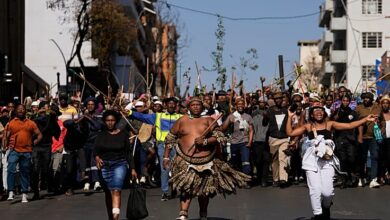
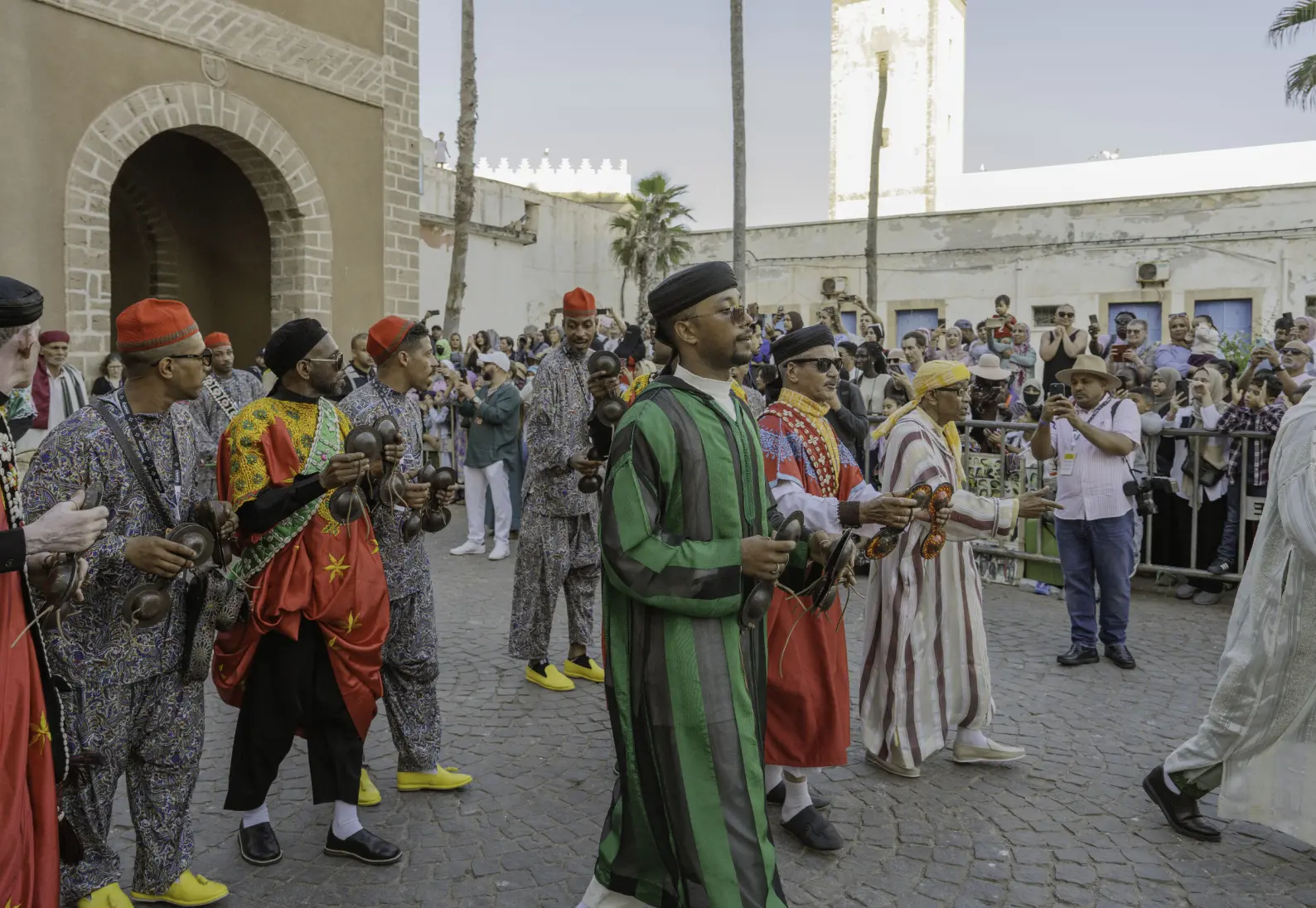
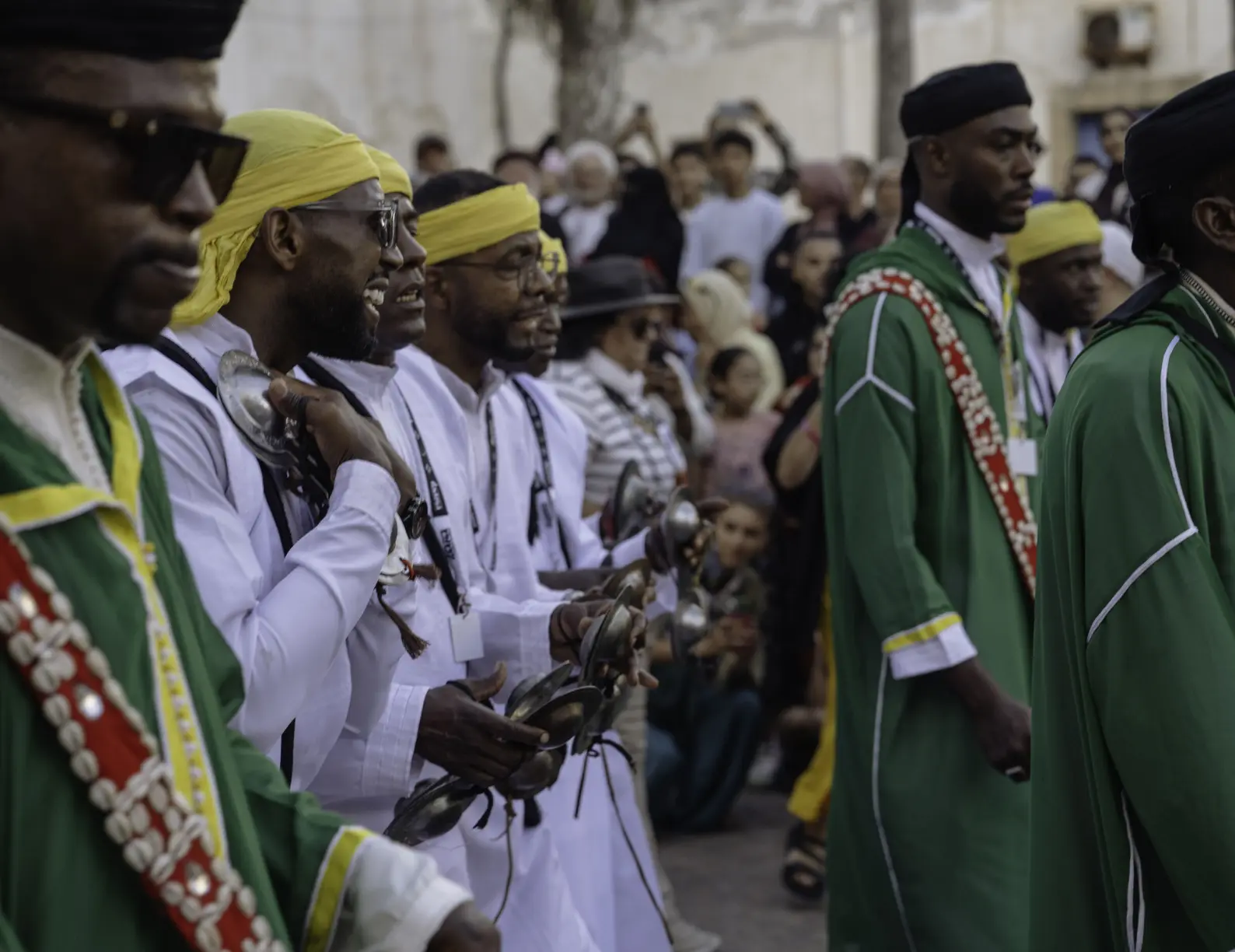
During the opening procession, residents of Essaouira gathered to welcome the participating groups as they passed through the old city, in a festive atmosphere that reflected the cultural character of the festival. Gnawa groups appeared in brightly colored costumes, bearing symbolic meanings rooted in the beliefs of this heritage, while musicians played their instruments and drums amidst group dances in the city streets, forming synchronized circles of movement.
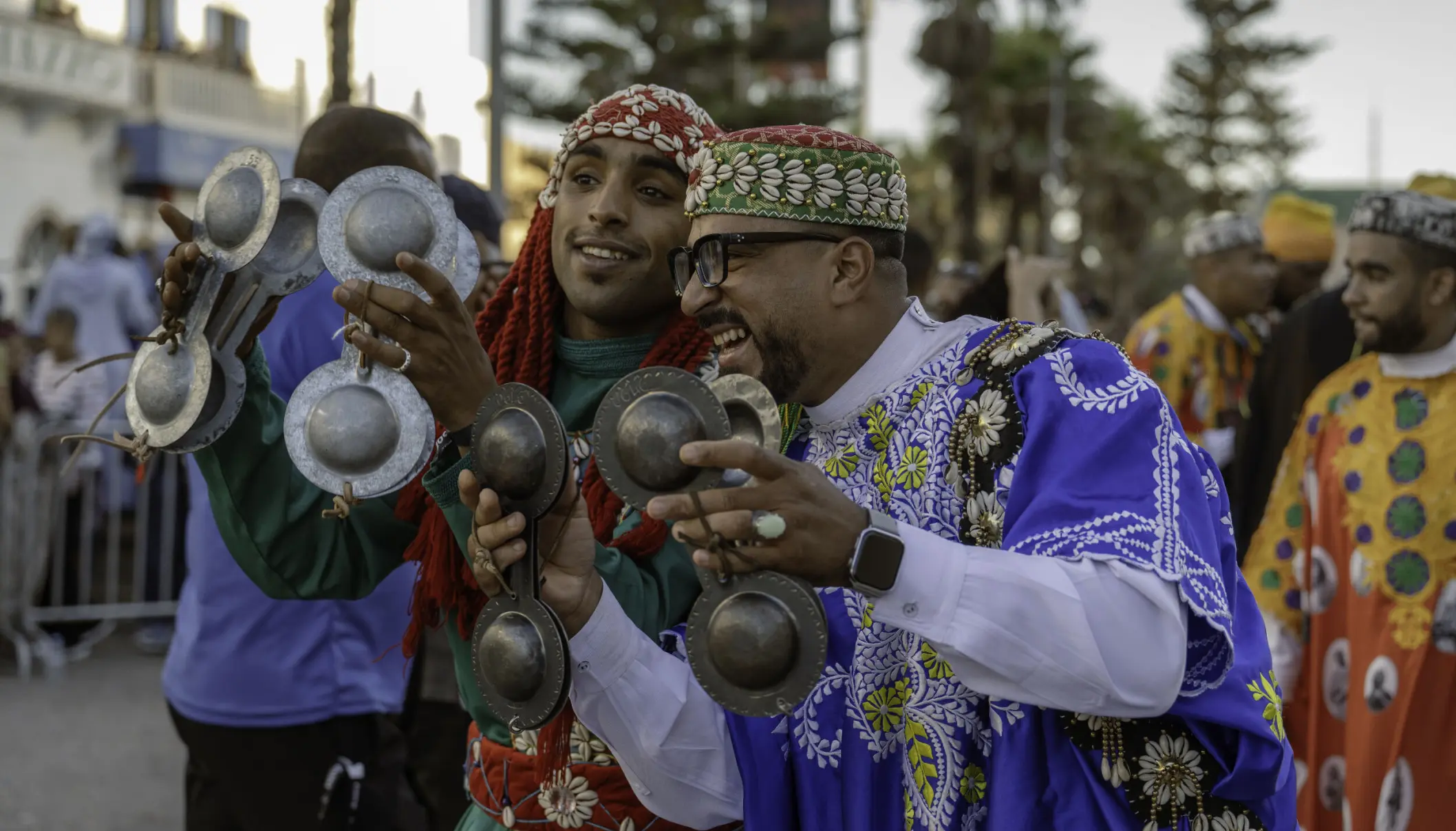
As the bands passed by, the participants interacted with the audience, smiling and waving towards the cameras without stopping their playing or disrupting their rhythm, in a scene that reflects the lively and inherited character of Gnawa music, which brings together different generations, where children walk side by side with the elderly, with a female presence appearing from time to time within the performances.
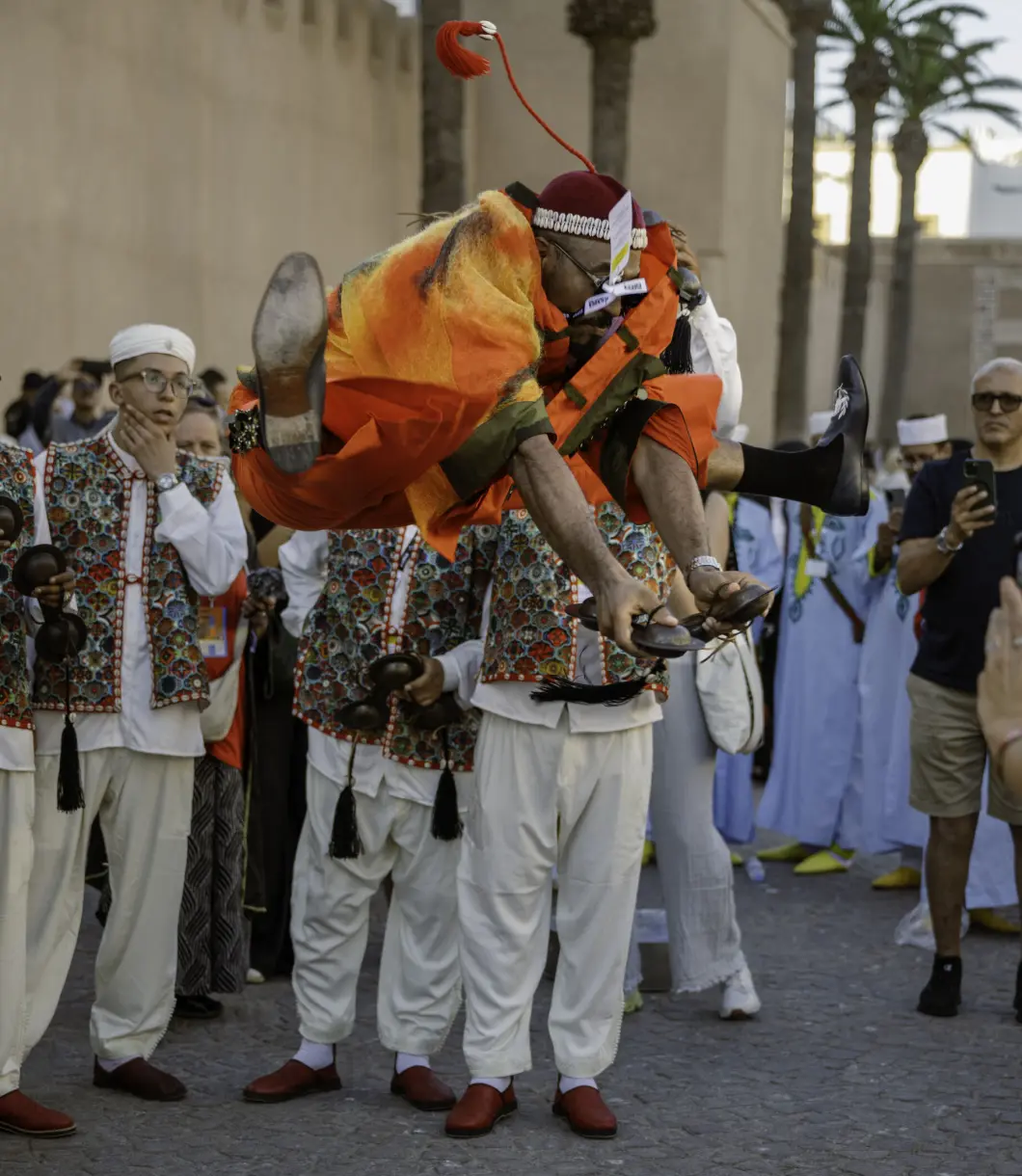
At 8:30 p.m., a procession of men in colorful traditional costumes marched through one of the city streets, playing the qraqeb (a type of castanet), while onlookers took photos and cheered from the sides of the road. This performance was part of a gathering of Gnawa musicians from across Morocco.
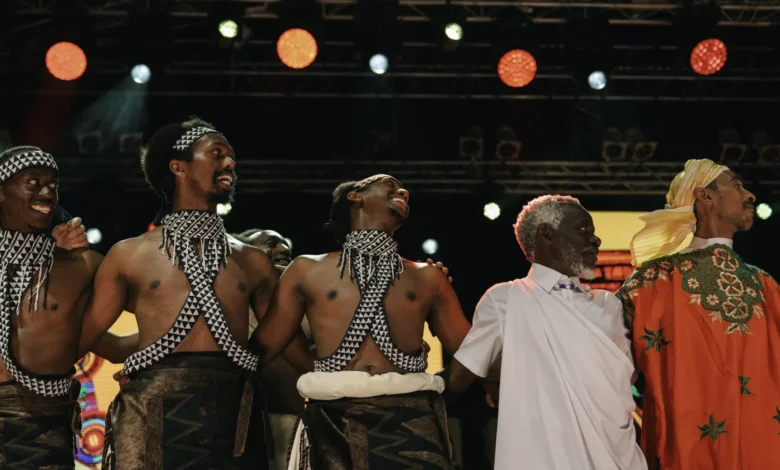
The festival opened with a free concert on the main stage in Moulay Hassan Square, overlooking the Atlantic Ocean, where Moroccan guembri player Mehdi Nassouli and his accompanying band performed musical shows that blended influences from Rwanda, India and France.
An atmosphere of cultural and linguistic diversity
The “E Bohoro” group participated with a performance of traditional Rwandan war dance, while Sylvain Barre presented pieces on wind instruments, before the Moroccan singer Sarah Moulayblad performed an enthusiastic show that received a great response from the audience, followed by the Indian musician Ganavia performing a group of Indian religious chants, in an opening show that is the first in a series of shows that extend over three days.
At 10:00 PM, the square was filled with a vibrant mix of cultures and languages, as communities and visitors mingled in a large, festive scene. Some Moroccan women sat quietly on simple benches, observing the atmosphere, while young people enjoyed the musical performances. The conversations among the attendees reflected the extent of this cultural diversity, with varying impressions of the festival's festive nature.
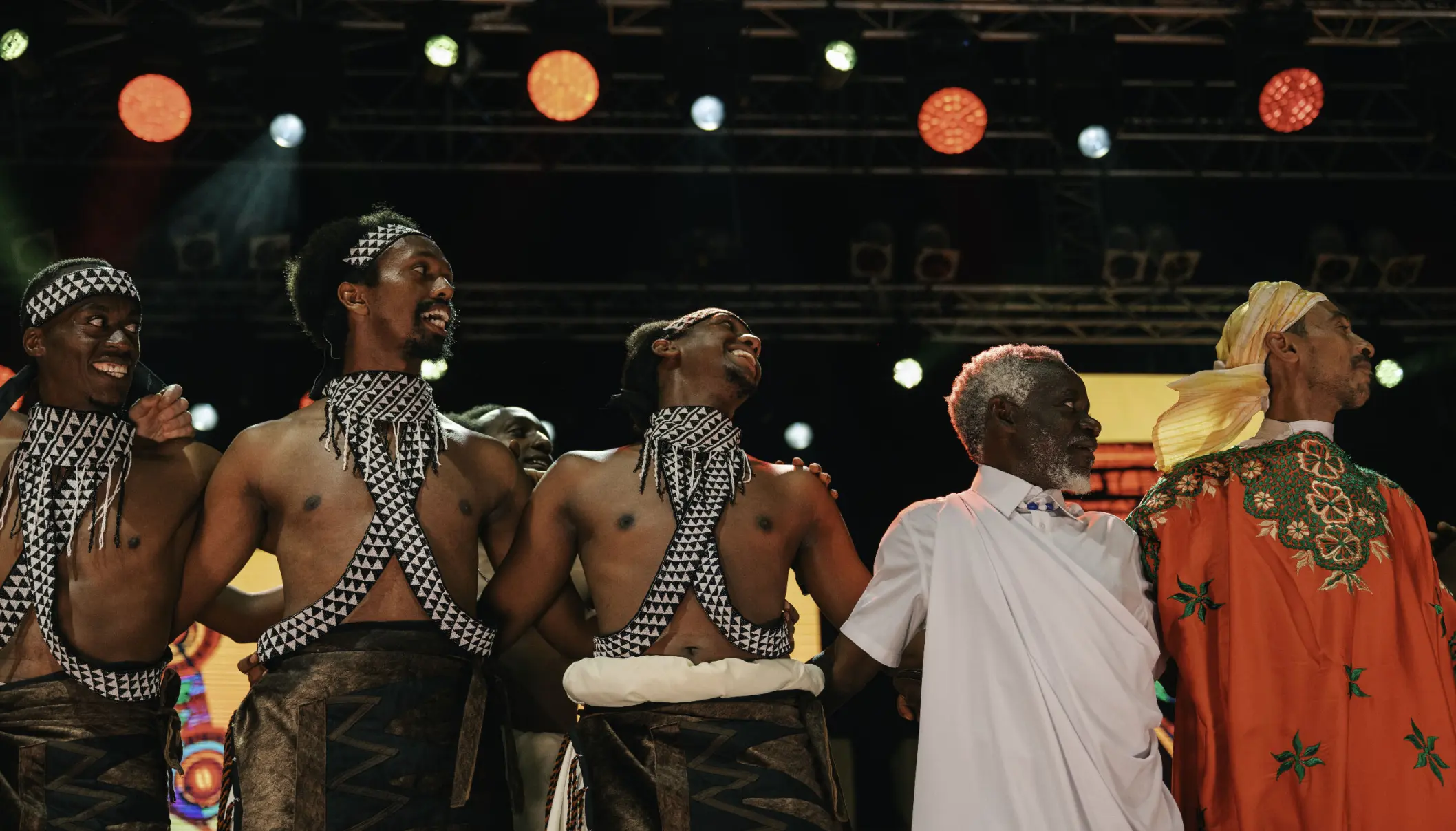
Tourists from all over the world flocked to the city of Essaouira to attend the diverse musical performances as part of the Gnaoua and World Music Festival, in a scene that reflects the growing international character of this annual event.
At 11:00 PM, Ethiopian singer Salamnesh Zemene and her band Badum delivered a captivating musical performance. Zemene hails from a long line of Asamerians, the guardians and revivers of a rich musical heritage in Ethiopia, which shares some similarities with Moroccan Gnawa music. Also performing was Mohammed Montari, a rising star of the new generation, whose work blends traditional music with contemporary styles.
On the second day of the festival, at 4:00 PM, one of the festival's founders and organizers, Nila Tazi, met at the historic Bab Marrakech fortress, where she reviewed the festival's evolution since its inception. Tazi stated that a significant transformation had occurred between the period before and after the festival, explaining that Gnawa music was previously marginalized and not featured on stages or television screens, but rather practiced in the streets and homes.
Tazi added that when planning the festival in the mid-1990s, the international musicians who were invited showed immediate interest in participating in concerts that blended different musical styles. Financial aspects were not an obstacle for them, but the main motivation was to have a unique musical experience within the world of Gnawa, which contributed to the rapid spread of the festival idea.
The festival is gradually developing into a global event.
She noted that this international attention encouraged the gradual development of the festival into a global event encompassing major concerts, human rights forums, cultural initiatives, and music training programs in partnership with international organizations. She also contributed to efforts to inscribe Gnawa music on UNESCO's Representative List of the Intangible Cultural Heritage of Humanity, considering this recognition the beginning of a longer journey to protect and promote this heritage globally.
At 8:30 PM, the rooftop of the Bab Marrakech tower was transformed into an open-air musical space, where Asmaa Hamzaoui, daughter of Maalem Rachid Hamzaoui and the first female “Maalem” in this art form, presented a remarkable musical performance. This marked a departure from a tradition that had been dominated by men for decades. Hamzaoui successfully broke this monopoly through her powerful stage presence and deep voice, which resonated strongly with the audience.
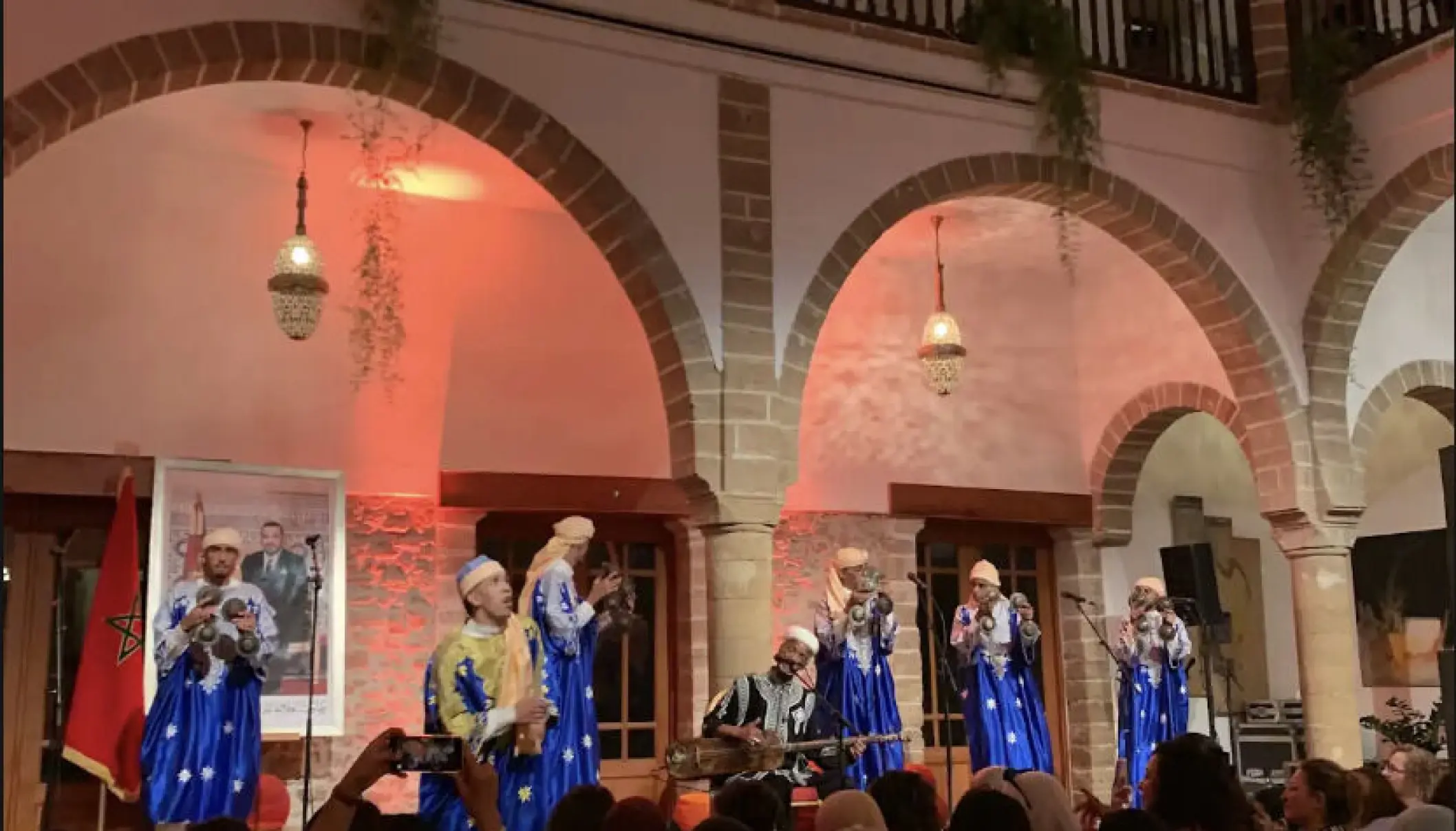
At 11 pm, the Dar Souiri Cultural Center, a historic riad dating back to 1907, witnessed one of the festival's highlights, as Maalem Aziz Soudani and his six-member band presented a musical performance based on the rhythms of the qraqeb and the performance of the guembri, amidst great interaction from the audience.
Afterwards, another group led by teacher Najib Sudani presented a more lively performance, characterized by a fast pace that prompted the audience to participate and dance, as the performance went beyond the limits of traditional viewing to become a collective interactive experience, in which the musical performance was mixed with the spiritual dimensions associated with songs and remembrances.
Before midnight, the third group, led by teacher Abdelkader Amelil, concluded the series of performances, succeeding in reigniting the evening's atmosphere and prompting the audience to dance, in an atmosphere that extended until late into the night.
On the third day, at 4 pm, the “Talking Tree” sessions began on the roof of the French Institute. This is a series of dialogues that brings together international teachers and musicians, where teacher Abdel Salam Alikane, one of the founders of the festival and its artistic director, participated in discussions about the development of this heritage.
Alikan said that the main goal of the festival is to expand the reach of Gnawa music, noting that what is currently being presented does not exceed 50 to 70% of this rich heritage, and that work is still ongoing to protect and develop it.
He added that Gnawa music is able to adapt to different musical styles around the world, considering it a “universal language” that can interact with any other musical culture.
In response to concerns about preserving the authenticity of this art, he stressed that the true traditions are still preserved within homes and families, despite the global openness that the festival is witnessing.
The events concluded with artistic performances that brought together Lebanese artist Yasmine Hamdan and a number of Gnawa musicians, in a musical collaboration that reflected the participatory nature that characterizes the festival.
Bab Marrakech Tower
At 7 pm, Lebanese artist Yasmine Hamdan, a leading figure in alternative music, delivered a powerful concert at the Bab Marrakech Tower, to the delight of the audience. Accompanied by a three-piece band, Hamdan's electronic music created a captivating soundscape that seamlessly blended with her vocals.
During the concert, Hamdan performed a Palestinian song and another dedicated to Beirut, deeply moving many in the audience. In keeping with the festival's spirit of interaction and musical experimentation, she invited three young Gnawa musicians to the stage, where they presented a collaborative performance blending the rhythms of the qraqeb (metal castanets) with the music of an electronic band, creating a musical experience that transcended genres.
At 11 p.m., the event shifted to a more spiritual and emotional atmosphere away from the main stages, winding through narrow alleyways towards the Zawiya of Sidi Bilal, a modest 18th-century building featuring a courtyard decorated with yellow and red tiles. This site is the only permanent shrine for the Gnawa in Morocco and is named after Bilal ibn Rabah, the first muezzin in Islam and one of the first followers of the Prophet Muhammad after his conversion.
In this setting, Maalem Nour Eddine Medoula and his band performed a musical show seated on cushions on the floor, a departure from the traditional performances where the performers stand behind microphones. The band members wore red trousers, blue robes, and fezzes adorned with tassels, while the audience responded to the rhythms with dancing, clapping, and complete immersion in the musical atmosphere.
States of euphoria and physical interaction with music
The atmosphere witnessed remarkable moments of immersion, as some attendees entered states of euphoria and physical interaction with the music, while the performance continued amidst increasing audience participation, before one of the segments concluded with a direct physical interaction from one of the performers with one of the participants to bring her back to consciousness after a state of intense emotional immersion.
Late into the night, Maalem Mukhtar Gania and his band continued their musical performances, with the evening stretching well past 1:00 AM. As the rhythms intensified, the audience's fatigue mingled with a profound immersion in the music, with some leaning against the walls for brief respite before resuming their engagement with the dance and the beat.
By the end of the night, an atmosphere of gratitude, tranquility, and joy prevailed among the attendees, concluding a musical experience that lasted for many hours and reflected the profound spiritual and emotional character of the Gnaoua and World Music Festival. (Source: OkayAfrica)