Egypt is leading the dialogue on African health sovereignty and the localization of medical care.
Africa Health Conference 2026: Calls to strengthen health integration and achieve pharmaceutical independence
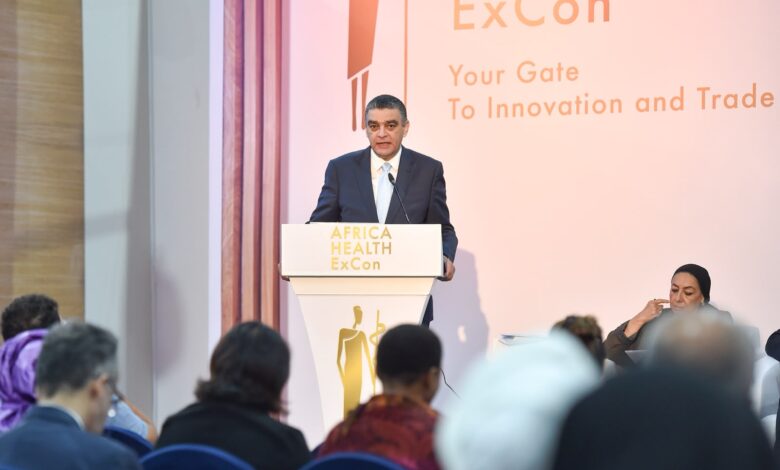
Written by: Badr Ahmed
The first day of the Africa Health ExCon 2026 medical exhibition and conference saw a focus on African health sovereignty and the importance of cooperation in the health sector to maximize the benefit for healthcare recipients.
The fifth edition of the Africa Health ExCon 2026 exhibition and conference will be held under the patronage of President Abdel Fattah El-Sisi, President of the Republic, under the slogan “Health Sovereignty in Africa: Leadership, Resilience and Self-Reliance,” in cooperation with the Africa Centres for Disease Control and Prevention (Africa CDC), to confirm Egypt’s position as a leading regional hub in supporting and developing the healthcare system in the continent, and enhancing health integration efforts among African countries.
This high-level international event brings together an elite group of African health ministers and medical sector leaders, along with attracting more than 400 local, regional and global companies, and an expected attendance of more than 45,000 visitors, including experts and decision-makers from around the world, to participate in more than 21 extensive dialogue and specialized sessions, and intensive technical workshops aimed at translating health challenges into tangible investment and development opportunities.
The second day’s activities were opened by Dr. Khaled Abdel Ghaffar, Minister of Health and Population, who reviewed the Egyptian state’s strategy in building a flexible and expandable health system, stressing that Egypt has succeeded in laying strong foundations for the health care sector based on three strategic pillars that ensure the sustainability of services and facing future challenges: local production, comprehensive health coverage, and strengthening joint health cooperation with African countries to achieve regional health security.
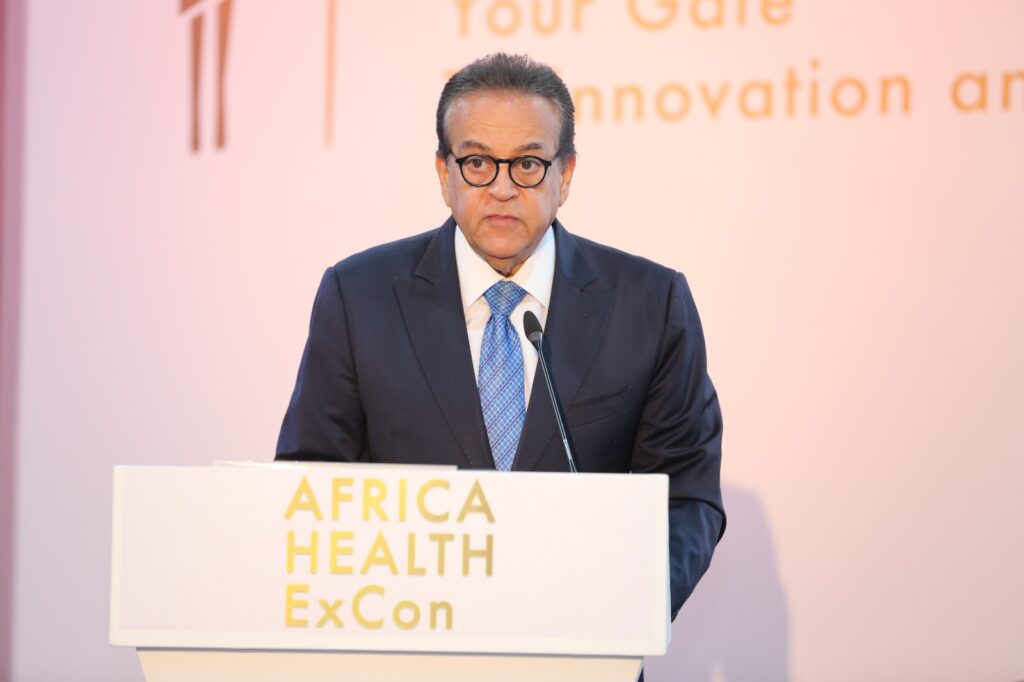
During the session on achieving African health sovereignty, Abdel Ghaffar revealed the advanced steps that Egypt is taking to strengthen the integrated system of medical measures, which includes four basic stages: research and development, regulatory and supervisory compliance through unifying and facilitating medical procedures and legislation, local manufacturing, and a strategic stockpile to secure a strong reserve of medicines, vaccines and supplies to confront any health crises or emergencies.
In another context, the minister participated in a session organized by the Arab Hospitals Federation entitled “Health Tourism: An Opportunity That Countries Cannot Miss,” to discuss strategic mechanisms to enhance countries’ leadership in the medical and therapeutic tourism sector.
The conference hosted a high-level session attended by Lebanese Minister of Public Health Rakan Nasser El-Din, Chairman of the Egyptian Authority for Unified Procurement, Supply and Logistics Hisham Stet, and Executive Director of the Arab Hospitals Federation Alice Yammine Bouez.
During his speech at the session, Dr. Khaled Abdel Ghaffar, Minister of Health and Population, said that health tourism represents one of the promising industries capable of achieving significant added value to national economies.
Abdel Ghaffar added that Egypt views medical tourism as an integrated system that is not limited to providing treatment for incoming patients, but extends to include an integrated human and tourism experience that combines high-quality healthcare with unique tourism and cultural assets.
Abdel Ghaffar added that the Arab region and the African continent have exceptional opportunities to enhance their position on the global health tourism map, given their qualified medical professionals, advanced health institutions, distinguished geographical locations, as well as the civilizational and cultural heritage that gives the visitor an integrated experience that goes beyond the limits of traditional treatment.
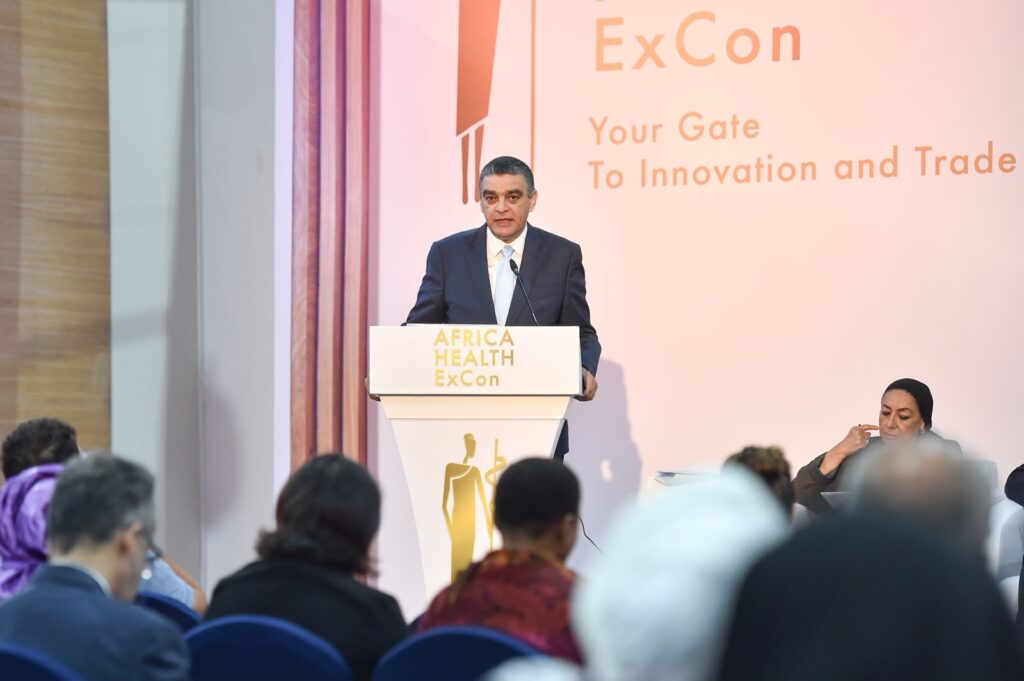
He explained that Egypt has a long history of receiving patients from various Gulf countries, Africa and Asia, but in recent years the country has moved from relying on individual initiatives and direct relationships between patients and service providers to organized institutional work, which ensures enhancing the competitiveness of the sector and increasing international confidence in Egyptian health services.
The minister pointed out that the government has taken an important step in this direction by establishing the National Council for Health Tourism by a decision of the Prime Minister, chaired by the Minister of Health and Population and with the membership of various ministries and concerned bodies, with the aim of coordinating national efforts and putting in place the necessary regulatory and governance frameworks to develop the sector and maximize its contribution to the national economy.
He added that the council is currently working on implementing a comprehensive national strategy for health tourism that extends for ten years, which aims to enhance Egypt’s competitiveness as a regional and global destination for treatment and recovery, increase the number of arrivals, support economic revenues, in addition to benefiting from the diverse tourism assets that include beach, heritage, historical and wellness tourism.
Abdel Ghaffar stressed that Egypt possesses a great wealth of natural healing destinations that qualify it to be a regional center in this field, noting that the success of the health tourism industry is linked to basic elements that include the quality of medical services, the efficiency of human resources, accreditation and governance, and the availability of international standards that give patients confidence in obtaining safe and distinguished health care.
The minister revealed that the official launch of the national health tourism platform will take place within a few weeks, explaining that it will be the official digital gateway for marketing Egyptian health services globally, and providing an integrated experience for patients from the moment they search for the service until the end of their treatment journey and their return to their countries.
For his part, Lebanese Health Minister Rakan Nasser El-Din said that Lebanon has a long-standing medical and humanitarian heritage that qualifies it to play a pivotal role in the health tourism sector in the region, despite the crises, wars and exceptional challenges it has faced in recent years that have affected various sectors, most notably the health sector.
Nasser El-Din stressed that Egyptian-Lebanese relations represent a model of historical Arab cooperation based on civilizational, cultural and human ties that extend over thousands of years, praising the Egyptian role in supporting Lebanon in the various stages and challenges that the region has witnessed.
He added that Egypt has always been a partner and supporter of Lebanon, appreciating its efforts in promoting Arab cooperation and building bridges of integration between Arab, African and Asian countries, based on its belief in the importance of joint action to confront common challenges and achieve sustainable development.
He pointed out that Lebanon has gained a leading position over the decades as the hospital of the Middle East, not because of the size of its resources or material capabilities, but thanks to the human competencies that formed the cornerstone of the success of its health system, noting that Lebanese doctors and nurses have left distinguished marks in major health institutions around the world and have contributed to consolidating Lebanon’s medical reputation regionally and internationally.
Nasser al-Din said that Lebanon has faced a series of unprecedented crises over the past seven years, including the economic collapse, the repercussions of the Corona pandemic, the Beirut port explosion, the decline in financial resources for the health sector, as well as the repercussions of successive wars, but health institutions and their workers have continued to perform their humanitarian mission despite all the circumstances.
He added that Lebanese hospitals have proven during various crises their commitment to their medical and humanitarian mission, as they continued to receive patients and provide health care despite the financial and economic challenges, based on their belief that serving humanity transcends any other considerations.
He stressed that health tourism is not only an economic opportunity, but also a means to enhance communication between peoples, exchange experiences and highlight the scientific, cultural and medical capabilities that the region possesses, noting that the real challenge lies in re-employing this historical legacy within a modern vision that makes the health sector a platform for regional cooperation, and places the human being at the heart of health and development policies.
Nasser Eddine emphasized that Lebanon has proven throughout its history that crises may test the strength of nations but do not break the will of their people. He stressed that hospitals are not merely buildings and equipment, but rather integrated systems of intellect, expertise, and human values. He affirmed that Lebanon, with its distinguished human resources and capabilities, will remain an active partner in building a more equitable, humane, and sustainable healthcare future, in cooperation with Egypt and other sister Arab nations.
At the end of the session, the Arab Hospitals Federation honored the Egyptian and Lebanese Ministers of Health and Dr. Hisham Steit, Head of the Unified Procurement Authority.
African health sovereignty
The session addressed a comprehensive political and practical roadmap, with participants emphasizing that health security is an indispensable pillar of national security in the African continent.
They pointed out that Africa has entered a new era that requires a strategic shift from dependency to independence, and from mere consumption to the localization of industries, while integrating scattered national initiatives into the crucible of comprehensive African integration.
The discussions focused on translating continental frameworks – such as Agenda 2063 and Agenda Lusaka – into resilient and independent health systems, capable of supporting local manufacturing, building strong human resources, and establishing smart infrastructure.
The session was opened by Dr. Khaled Abdel Ghaffar, Minister of Health and Population, with the participation of Dr. Atef El-Adawy, former Minister of Health and Population, Dr. Adham Ismail, Director of Programs at the Regional Office for the Eastern Mediterranean of the World Health Organization, Engineer Ibrahim Mahlab, former Prime Minister of Egypt, Tolbert Guillet-Nyenswah, Director of the Center for Public Health Emergency Management, Ambassador Mohamed Abu Bakr Saleh, Deputy Minister of Foreign Affairs, International Cooperation and Egyptian Expatriates Affairs for African Affairs, and Dr. Ghada Wali, former Minister of Social Solidarity.
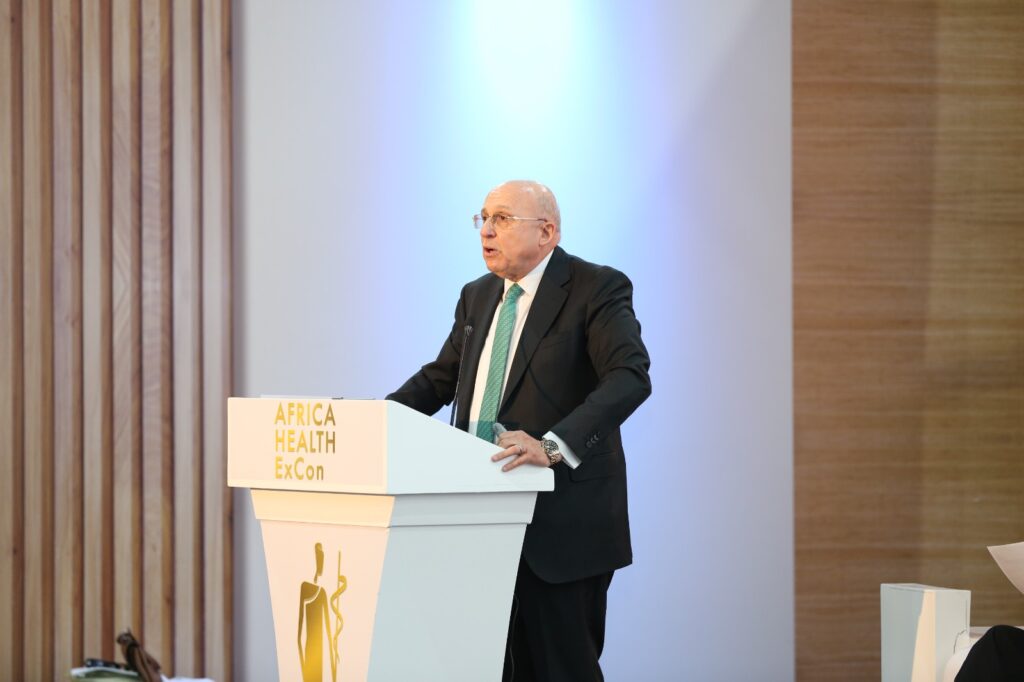
Sigma Import and Export Company, the agent of the Swiss company Senova, signed a cooperation agreement with the Egyptian Authority for Unified Procurement, Medical Supply and Management of Medical Technology (UPA) in Egypt to provide hearing devices to patients in Egypt and the African continent.
The agreement was signed by Engineer Antoine Ramzi, Chairman of the Board of Directors of Sigma Import and Export Company, agent of the Swiss company Senova, and from the Unified Procurement Authority, Dr. Mary Gamal, Head of the Central Administration at the Authority.
Antoine Ramzi said that the initiative to provide hearing aids contributed to patients regaining their hearing functions.
Launch of the MediQ app
During the day's events, the Unified Procurement Authority announced the launch of its MediQ application, which includes several features, most notably electronic inventory management, warehouse disbursement and consumption management, and medical asset management. The application functions both online and offline.
The authority aims to facilitate daily warehouse management operations to make them more accurate, in addition to facilitating access to the system via mobile phone.
Technology integration
A session entitled “Integrating Technology for Patient-Centric Healing Outcomes” was held, moderated by Dr. Ahmed Hassan Salem, with the participation of Dr. Ahmed Ibrahim Al-Awad, Dr. Mohamed Badr, Dr. Mohamed Ahmed Al-Awad, Dr. Radwa Elias, and Dr. Wael Omran.
The session discussed the growing role of medical technology and digital solutions in developing the healthcare system and improving patient outcomes, with a focus on placing the patient at the heart of the healthcare delivery process. Speakers emphasized that the challenges facing the healthcare sector, most notably the shortage of medical and nursing staff and the increased global demand for healthcare services following the COVID-19 pandemic, necessitate the expanded use of modern technologies to enhance the efficiency of healthcare and reduce pressure on hospitals and service providers.
Gennvax Biologics
Gennvax Biologics organized a session entitled From Egypt to Africa: Enabling the Future of Healthcare Localization, with the attendance of Adam El-Dabaa, CEO of Gennvax, Dr. Nibal Dahaba, General Manager of Gennvax, Steve Biddulph, Quality Manager at Gennvax, Dr. Ronald Comber, Project Management Manager at Gennvax, Dr. Neama Saeed Abed, WHO Representative in Egypt, Major General Dr. Osama Sobhi, Head of the Military Medical Council, Dr. Gamal Hosny, Professor in the Department of Orthopedics at the Faculty of Medicine, Benha University, Dr. Rady Hammad, Head of the Preventive Medicine and Public Health Sector at the Ministry of Health and Population, and Dr. Abebe Genito Bay, an official at the Local Manufacturing Coordinator Platform for African Health Coordination.
The attendees discussed the importance of localizing healthcare and enhancing health security in Africa through the sustainable manufacturing of vaccines and medicines, by relying on flexible and sustainable manufacturing systems capable of producing vaccines, medicines and other essential health products to meet the growing healthcare needs of the continent.
Clinical research and treatments for liver diseases
An extensive working session reviewed raising the hopes of liver patients in Africa, under the title Accelerating Hope for Liver Disease Patients in Africa: Early Access, Unmet Needs and Barriers to Clinical Research. .
The session addressed ways to facilitate and reduce restrictions on early access to modern medical treatments and innovations, in addition to an extensive discussion on the obstacles to clinical research and how to overcome them to develop the treatment system.
The session was moderated by Dr. Yasmine Nagaty, representing the Middle East Association of Professional Practitioners (MEAPP). The event opened with introductory remarks, followed by a specialized lecture delivered by Dr. Assem El-Baghdadi, Professor at the Centre for Pharmaceutical Medicine Research at King's College London, UK. A panel discussion then ensued, chaired by Dr. Assem El-Baghdadi and Professor Dr. Manal El-Sayed, President of the African Association for the Study of the Liver (AAS) and Professor at Ain Shams University. Panelists included Dr. Fatima Obeid from Ain Shams University, Dr. George Maher from the MARC Center in Egypt, Dr. Elvis Timvak, Senior Research Fellow at the Africa Centres for Disease Control and Prevention (Africa CDC), Senator Professor Dr. Sherif Wadie from Ain Shams University, and Dr. Wendy Spearman, Vice President of the African Association for the Study of the Liver (AAS) and Professor at the University of Cape Town, South Africa.
Made in Egypt
A session entitled “Made in Egypt: From Pharmaceutical Policies to Production and Export” was held, which discussed ways to promote the localization of the pharmaceutical industry in Africa, the role of regulatory policies in supporting investment and local manufacturing, developing production and regulatory capabilities, and promoting integration among African countries in the areas of technology transfer, capacity building and exchange of experiences. The session reviewed efforts to modernize government and private pharmaceutical companies, raise the efficiency of production lines and expand pharmaceutical portfolios to meet the needs of local and African markets, which contributes to enhancing pharmaceutical security, achieving self-sufficiency and supporting Egyptian pharmaceutical exports to regional and international markets.
The session was moderated by Dr. Nourhan El-Manzlawy, Head of the Central Administration for Technical Support and Market Monitoring and Director of the Decision Support and Monitoring Unit at the Egyptian Drug Authority.
The session was attended by Dr. Tamer El-Husseini, Vice President of the Egyptian Drug Authority; Dr. Gamal El-Leithy, Head of the Pharmaceutical Industry Chamber at the Federation of Egyptian Industries and Chairman of the Board of Directors of Future Pharmaceutical Industries; Dr. El-Sayed Kamal, CEO of Utopia Pharmaceutical Industries; Dr. Ashraf El-Khouly, Chairman of the Holding Company for Pharmaceuticals; and Dr. Janet Byarwhanga, Senior Program Officer and AHSMI Program Leader at the African Development Agency (AUDA-NEPAD).
Robotic surgeries in the urinary system
The participants in the session discussed the assessment and treatment of lower urinary tract symptoms (LUTS) after vaporization and thulium laser ablation of the prostate, and they also touched on robotic surgery in urological tumors.
The session was chaired by Professor Sherif Murad, Professor of Urology and Andrology at Ain Shams University Faculty of Medicine, Head of the Unit of Urological and Gynecological Disorders and Urodynamics, and President of the International and Arab Society for Urinary Control. Participating in the session were Professor Zhang Kal from Peking University, Professor Ahmed Morsi, Professor of Urology at Kasr El Aini Faculty of Medicine, and Professor Hassan Abu El Enein, Consultant Urological Oncologist and President of the Egyptian Society of Urological Surgeons.
Dr. Haitham Nasser, Professor of Interventional Radiology at Ain Shams University, also gave a video lecture on mastering local treatment for prostate cancer and striving to achieve the best results.
The future of personal health and longevity
A scientific session sponsored by HVD Life Sciences, entitled From Cells to Genomes: The Future of Personalized Health and Longevity, discussed the role of advanced biotechnologies, genomic testing, and stem cell applications in shaping personalized healthcare and developing medical services.
The session included a review of several topics, including real-world clinical applications of stem cells in Egypt, the transformative power of genomic testing in modern healthcare, and decoding the athlete through nutritional genomics and fitness genes in the era of precision medicine.
Present at the session were Mohamed Gamal, Senior Business Development Officer at CellSafe Stem Cell Bank, Dr. Reham Abdel Halim, Professor of Clinical Pathology at the Faculty of Medicine, Alexandria University, and Ahmed Moheb El-Ahd, Director of HVD Egypt.
Egyptian Genome Database
A number of experts and specialists in internal medicine, diabetes and endocrinology stressed the need to establish a specialized database in genomics and bioinformatics to support research and clinical applications related to diabetes.
The session was attended by Dr. Enas Shaltout, Professor of Internal Medicine and Diabetes at Kasr El Aini, Dr. Iman Sharif, Consultant of Internal Medicine and Endocrinology at Suez Canal University, Dr. Hisham Magd El Din Selim, Professor of General Internal Medicine and Diabetes at Cairo University, Dr. Fouad Saad El Din, Professor of Vascular Surgery at Cairo University, Dr. Maha Youssef, Assistant Professor of Internal Medicine, Diabetes and Endocrinology at Cairo University, and Dr. Mick Komoenda from Glendale Hospital.
The session discussed the role of nutrition and local dietary patterns in preventing chronic diseases, with speakers emphasizing that integrating local and indigenous crops into national health strategies is not only a step towards enhancing food security, but also a proactive medical intervention to reduce rates of diabetes and obesity.