Measles returns to Africa: A disease threatening millions of children
Declining vaccination rates and widespread conflicts are bringing measles back to the forefront of danger in Africa.
Written by: Mohammed Omran
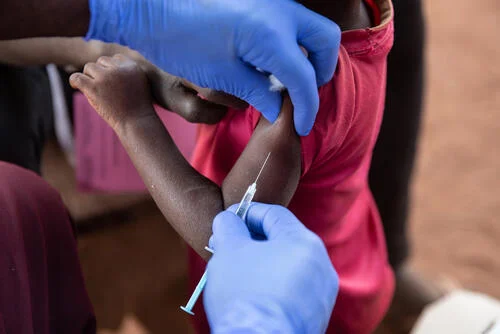
even though Measles While it is one of the diseases that can be easily prevented through vaccines, it has returned to pose a global health threat, especially in Africa, with the number of infections and deaths rising alarmingly as a result of declining vaccination rates, widening immunization gaps, and the impact of armed conflicts and humanitarian crises on health services.
Measles is back in Africa... Why is this preventable disease threatening millions of children again?
Data from the World Health Organization and the US Centers for Disease Control and Prevention showed that the world recorded more than 10 million cases of measles and 107,500 deaths, mostly among young children, at a time when vaccination rates continue to decline despite the availability of highly effective vaccines that reach 97% after receiving the two recommended doses. More than 22 million children around the world did not receive the first dose of the vaccine during 2023, which led to an expansion of the danger and a return of the disease outbreak.
highly contagious virus
The World Health Organization confirms that measles is one of the most contagious viral diseases, as it spreads rapidly through the respiratory system. Its symptoms begin with fever, runny nose, red eyes, and skin rash. However, its complications can be more serious, as they may lead to pneumonia, encephalitis, blindness, and even death, especially among children under five, pregnant women, and people with weakened immune systems.
Decline in vaccination is behind the crisis
Health experts believe the main reason for the measles resurgence is low immunization rates. Community protection requires vaccinating at least 951,000 children, but coverage remains below this threshold in many countries, allowing the virus to return and spread rapidly once even a single case appears.
Rebecca Casey, head of measles and rubella at Gavi, the Vaccine Alliance, said that vaccination gaps expose millions of children to a preventable disease, but at the same time increase the likelihood of outbreaks and strain on health systems. She noted that African countries, despite the challenges, succeeded in raising vaccination coverage by 21 TP3T to 701 TP3T during 2023, but this percentage is still below the level required to achieve community immunity.
Africa facing challenges
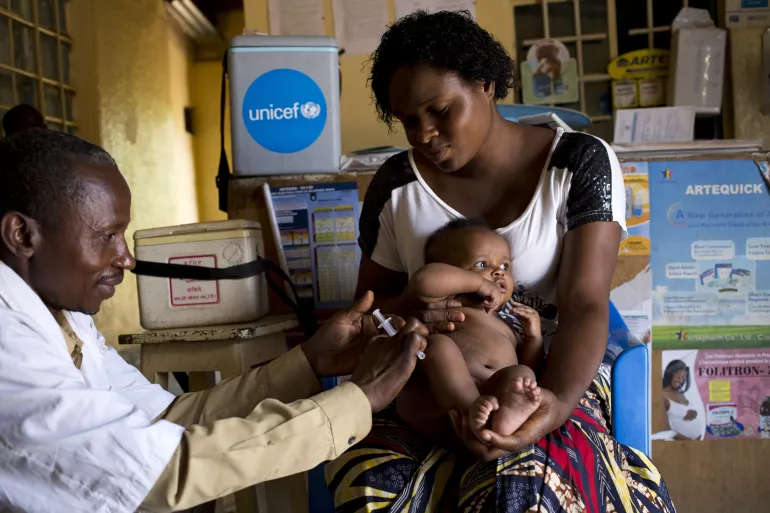
Despite relative improvement in some African countries, the continent still faces significant challenges in delivering vaccines to remote and rural areas, as well as areas affected by armed conflict, where it is difficult to reach children and implement routine immunization programs.
That is why Gavi and its partners are working to develop innovative solutions, including the use of new technologies to deliver vaccines, and launching programs targeting children who have not received any vaccine doses, especially in the Sahel and Horn of Africa, with investments exceeding $100 million to reach the most disadvantaged groups.
Conflicts hinder vaccination campaigns
Conflict zones are among the areas most vulnerable to measles outbreaks, as about a quarter of the world’s population lives in fragile or conflict-affected areas, and more than 70% of epidemics occur in these areas, according to the World Health Organization.
Gavi, in cooperation with governments and humanitarian organizations, is carrying out vaccination campaigns in conflict zones, including Sudan. It has also allocated $20 million to support vaccination campaigns in the Gaza Strip, the West Bank and Palestinian refugee camps in Lebanon, in addition to more than $11 million to support the response to a measles outbreak in six low-income countries during 2024.
Misinformation increases the risk
The reasons for the decline in vaccination are not limited to the weakness of health services, but also extend to the spread of misinformation about vaccines, which has led to increased hesitation in receiving them.
The Director-General of the World Health Organization confirmed that the measles vaccine has saved more lives than any other vaccine over the past five decades, stressing the need to invest in immunization programs and ensure that vaccines reach all children, while Gavi works with ministries of health, UNICEF, the World Health Organization and local community leaders to promote confidence in vaccines and counter rumors.
Effects of the Coronavirus Pandemic
The COVID-19 pandemic also contributed to a decline in immunization programs around the world, after many vaccination campaigns were halted and health monitoring rates decreased, which led to widening immunity gaps and an increase in the number of unvaccinated children.
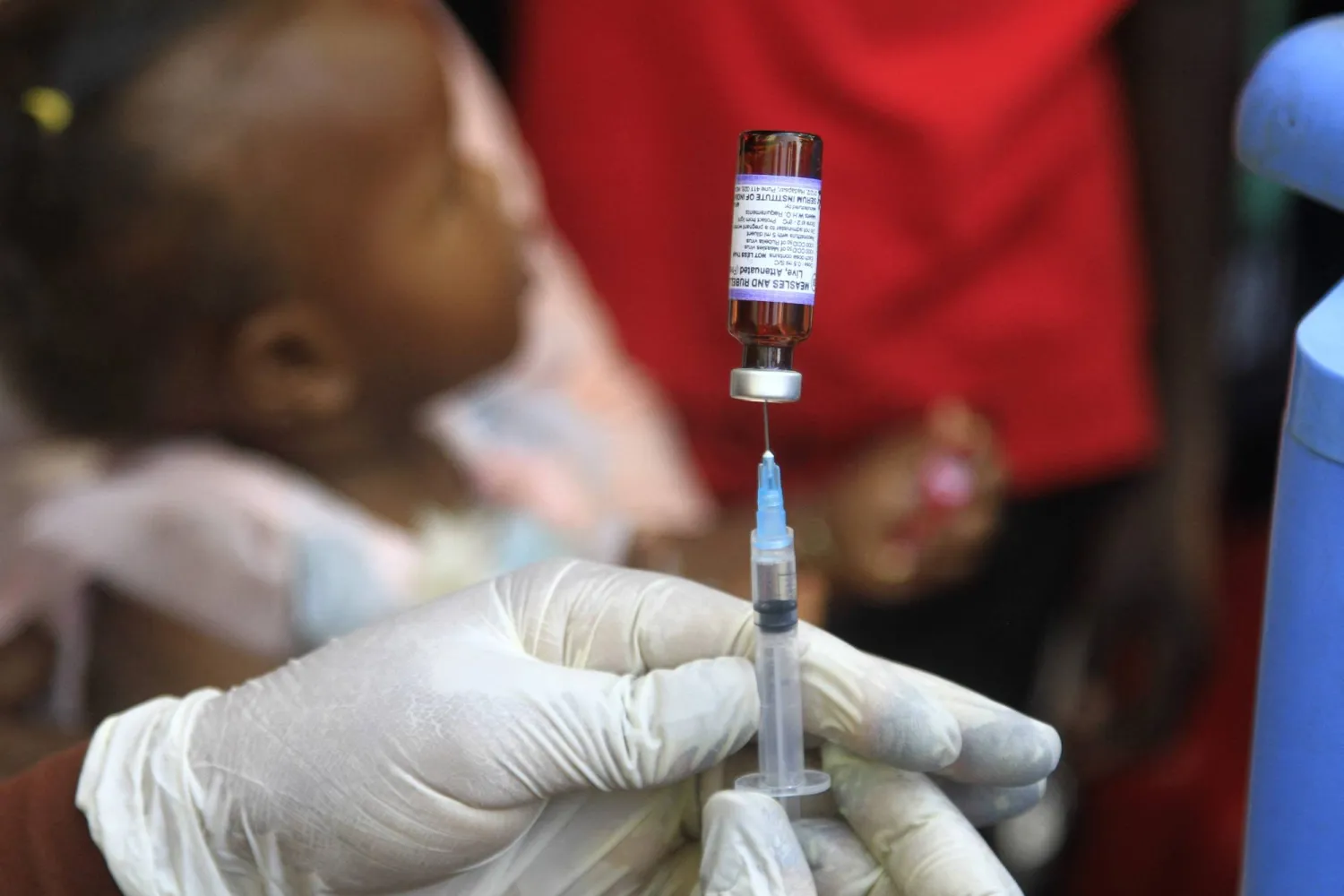
By 2023, 831 TP3T children had received the first dose of the measles vaccine, while only 741 TP3T had received both doses, proportions that are still lower than pre-pandemic levels, prompting Gavi to implement programs to make up for missed vaccinations and strengthen national immunization systems.
Hundreds of millions invested to combat the disease
Gavi continues its investments in combating measles, with total spending during the period 2021-2025 amounting to approximately $604 million to support the purchase of vaccines, the implementation of vaccination campaigns, and rapid response to disease outbreaks. During the period 2026-2030, it aims to expand protection and access to more children in remote and fragile areas, while developing new means of delivering vaccines and ensuring the continuity of immunization programs.
International organizations emphasize that eradicating measles does not require the discovery of a new treatment, but depends primarily on raising vaccination rates, closing immunity gaps, and reaching children in remote and conflict-affected areas, given that vaccines remain the most effective means of saving lives and preventing the return of one of the most dangerous preventable diseases.