El Niño losses threaten African economies with $20 billion
Serious economic and humanitarian repercussions of the anticipated phenomenon
Written by Ziad Abdel Fattah:
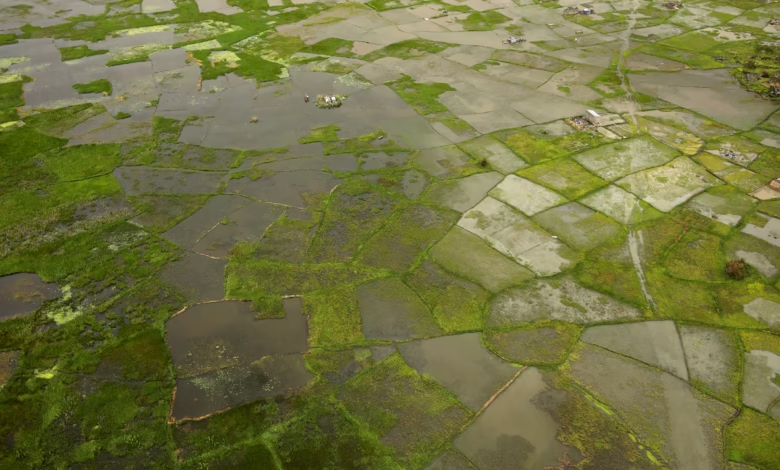
Bank warned African development He pointed to the serious economic and humanitarian repercussions of the expected El Niño phenomenon, noting that the continent could suffer losses ranging between $10 and $20 billion, amid expectations of a wave of drought, floods and storms that are among the most severe ever.
Anthony Nyong, director of the climate change and green growth department at the bank, told Reuters that the anticipated «super El Niño» phenomenon could lead to a decline in the GDP of the most affected countries by between 1% and 2%, equivalent to total losses of up to $20 billion, warning of the possibility of mass migration from the disaster-stricken areas.
The effects of climate change are worsening
The estimates come at a time of growing concern about the worsening effects of climate change, with meteorologists predicting that El Niño will become one of the strongest climate phenomena on record, as Pacific Ocean temperatures continue to rise to record levels.
Nyong pointed out that the repercussions of the phenomenon will not be limited to the agricultural sector or food security, but will extend to public finances and the banking sector, as a result of the potential damage to infrastructure and the increased debt burden on countries that are already suffering from financial pressures.
Despite previous forecasts by the African Development Bank that the continent’s economy would grow by 4.2% this year, rising to 4.4% in 2027, these estimates could come under significant pressure if the effects of El Niño worsen.
He explained that the continent is already suffering from the repercussions of the previous phenomenon during 2023-2024, which caused severe drought in southern Africa and devastating floods in its east, leading to a decline in crops and a significant rise in food prices.
The bank estimated farmers' losses at about $330 million this year, with expectations that the fishing sector will also be affected by rising sea temperatures and increased storms.
Climate finance trap
In this context, Nyong warned against governments falling into what he called the «climate finance trap,» where countries are forced to redirect allocations from vital sectors such as health and education to cope with disasters, in light of the lack of international funding allocated for adaptation.
He stressed that Africa will need to double its climate change adaptation funding to about $100 billion annually, compared to about $50 billion in previous estimates, noting that current international funding is still far from meeting these needs.
The African Development Bank is expected to launch a high-level seminar in September to assess the impact of El Niño on its current and future investments, while also exploring the restructuring of some projects to support affected countries, in cooperation with international financing institutions such as the Green Climate Fund and climate investment funds.
Nyong noted that countries such as Sudan, South Sudan, the Democratic Republic of Congo, Somalia, Mali, Burundi and Nigeria could face severe impacts, with maize prices – one of the continent’s most important food commodities – expected to double, increasing living pressures and boosting the likelihood of displacement.
He concluded by emphasizing the importance of investing in proactive adaptation measures, saying: «Building resilience is far less costly than dealing with the aftermath of disasters.».