It shares 98% of DNA with humans... Extinction threatens the bonobo.
The bonobo monkey faces the risk of extinction.
Written by: Badr Ahmed
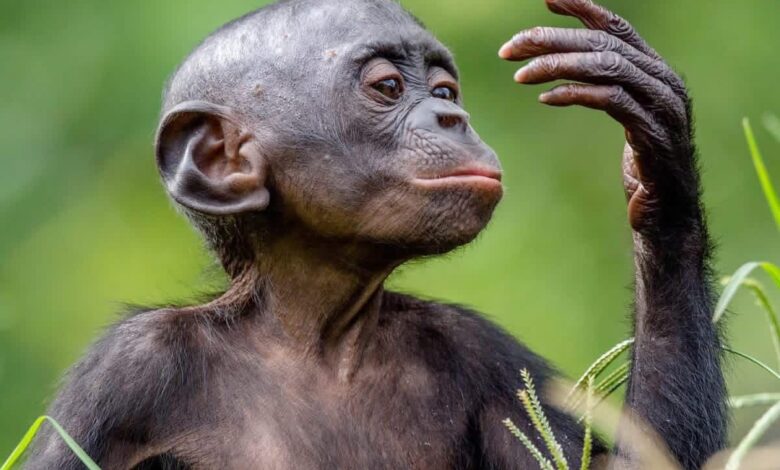
Deep in the dense rainforests of the Democratic Republic of Congo lives one of the most fascinating creatures on Earth, the bonobo, one of humankind’s closest and most mysterious relatives.
Despite its great scientific importance, this animal is still less well known than its cousins, the chimpanzees.
The bonobo, scientifically known as Pan paniscus, lives exclusively in the areas south of the Congo River, within one of the world’s richest natural environments in terms of biodiversity.
This animal shares approximately 98.7% of DNA with humans, making it one of the closest living organisms to humans genetically.
But genetic similarity is not the only thing that attracts the attention of scientists.
Humans' closest relatives face extinction in Congo
The bonobo has earned the title of the peaceful primate because of its unique social lifestyle. Unlike many other monkey species that rely on violence and conflict to resolve disputes, bonobos tend to use cooperation and social closeness to maintain stability within the group.
Bonobos are also characterized by being female-led societies, which is relatively rare in the animal world. Females play a pivotal role in decision-making and regulating social relations within the group, which has contributed to creating a calmer and more cohesive environment compared to some other primate species.
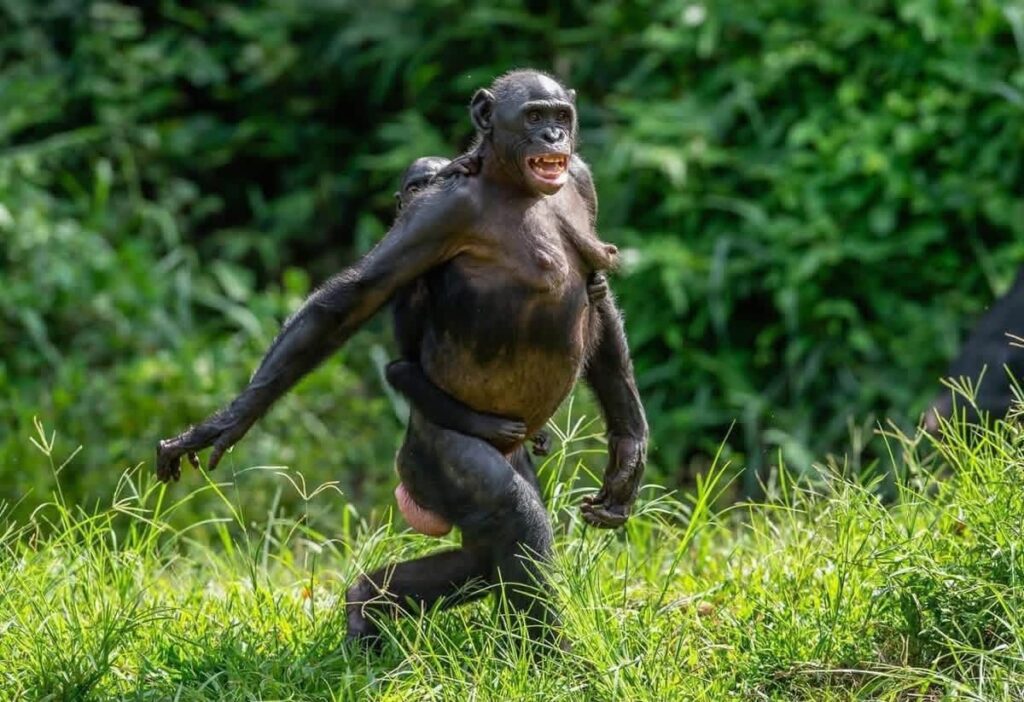
Researchers point out that bonobos have high levels of empathy and cooperative behavior, showing a willingness to help members of their group and share resources with them—qualities that have prompted many scientists to study this species to understand the origins of social behavior in humans.
Despite these exceptional characteristics, the bonobo faces increasing threats to its survival. Deforestation, poaching, and armed conflicts in some parts of the Democratic Republic of Congo have led to a significant decline in its numbers.
It is estimated that the number of bonobos remaining in the wild is only between 15,000 and 20,000.
Environmental experts emphasize that protecting bonobos not only means preserving a rare animal species, but also represents an important step in protecting one of Africa’s unique natural treasures, and preserving an important part of the shared evolutionary history between humans and their closest relatives in the animal kingdom.