Between debt and development: Can Africa overcome its recurring financial crises?
Can the IMF help Africa break the cycle of debt?

Written by: Badr Ahmed
As the Paris Club celebrates its anniversary, many African countries find themselves once again facing increasing pressure from debt burdens, despite decades of relief, restructuring and support programs provided by international financial institutions, most notably the International Monetary Fund.
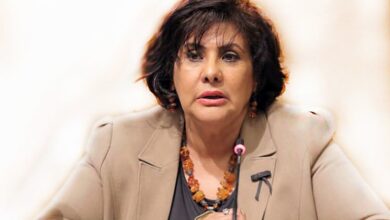
In an interview with Business Africa, Zain Zidan, the new director of the Africa Department at the International Monetary Fund, discussed the reasons for the continent's persistent debt crises and possible ways to achieve more sustainable economic growth.
Africa between the pressures of borrowing and the challenges of sustainable development
Zidane explained that the African landscape is more complex than simply a repetition of cycles of financial failure, noting that a number of African countries have already managed to improve their economic conditions and break the traditional cycle of debt.
He added that the programs supported by the International Monetary Fund played an important role in this path, but since 2000 the continent has faced a series of successive global shocks, including the Corona pandemic, armed conflicts, and rising interest rates globally, which have directly affected the financial conditions of countries and increased the fragility of their debt.
The international official stressed that addressing the debt crisis requires taking responsibility from all parties, explaining that external factors have contributed significantly to the exacerbation of public debt, but African governments are also required to strengthen fiscal policies and implement structural reforms that support economic growth and increase the ability to cope with crises.
He also called on the international community to provide low-cost financing to support the continent's development needs.
In a related context, the business sector in Nigeria is witnessing an increasing trend towards using digital stablecoins as a means to combat inflation and reduce the costs of cross-border financial transfers.
These currencies are characterized by their value being linked to major currencies such as the US dollar, giving companies a more stable means of preserving value and making payments compared to traditional banking channels.
In South Africa, the wine industry continues to generate annual revenues estimated at around three billion dollars, while small producers are succeeding in breaking the market monopoly.
By growing grapes in limited urban spaces and bypassing traditional middlemen, small winemakers are proving that local identity and innovation can be a successful alternative to huge capital investments.