France and Africa: Will soft power succeed in restoring influence?
Challenges to French influence in Africa
Written by: Hussein Ahmed
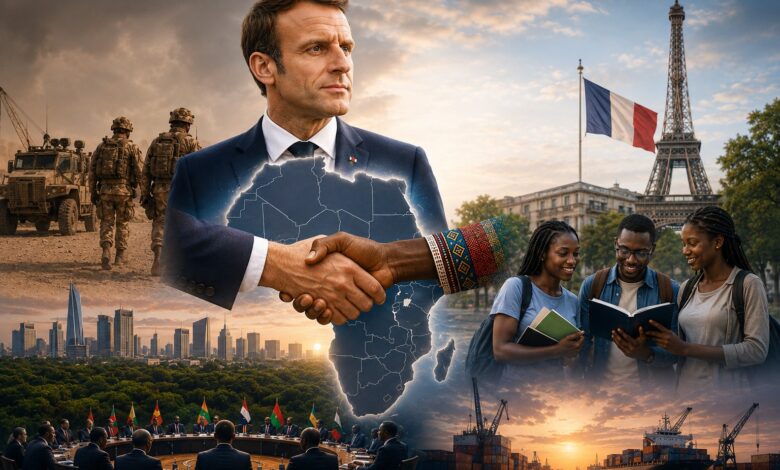
French President Emmanuel Macron is seeking Macron To reformulate the relationship between France and Africa, through a new strategy based on reducing the traditional colonial legacy and strengthening the tools of soft power, at a time when international competition for influence within the African continent is increasing.
Macron's efforts are currently focused on his participation in the upcoming Franco-African summit in the Kenyan capital, Nairobi, with the participation of African leaders and economic and regional institutions from across the continent.
French influence in Africa: between military withdrawal and the rise of soft power
Since arriving at the Élysée Palace in 2017, Macron has tried to present himself as a president with a different vision for French-African relations, based on a balanced partnership rather than the political and military hegemony that has historically been associated with French influence on the continent, especially in French-speaking West and Central African countries.
Macron has previously acknowledged on several occasions what he described as the mistakes of the colonial era, calling for a new chapter with African nations based on mutual respect and economic and cultural cooperation. He has also sought to restructure the French military presence on the continent, emphasizing that Paris no longer wishes to exert its influence through direct military force.
However, the rapid political and security developments in the Sahel region posed a major challenge to the new French policy, as countries such as Mali, Niger and Burkina Faso witnessed successive military coups, accompanied by rising waves of popular anger against the French presence, and accusations against Paris of failing to combat terrorism and interfering in the internal affairs of African countries.
The decline in its military presence is pushing France to strengthen its cultural and economic influence in Africa.
French influence suffered successive setbacks after Paris was forced to withdraw its forces from Mali, and later from Niger, following the termination of defense cooperation with the new military authorities there.
France's popularity has also declined in a number of African countries in favor of rival international powers, most notably Russia and China, which have expanded their presence through economic investments, military cooperation and infrastructure projects.
Faced with this decline, Paris has turned to strengthening its soft power tools to maintain its presence on the continent. The French language is a key tool, as Africa has the largest concentration of French speakers in the world.
Meanwhile, France relies on educational and cultural institutions, such as French institutes and scholarship programs, to promote its cultural influence among young African generations.
France is also working to expand its economic partnerships with African countries, particularly in the areas of energy, infrastructure, technology and digital transformation, in addition to supporting entrepreneurs and startups.
In addition, Paris is also counting on cooperation on climate, food security and sustainable development issues, which are of increasing priority to African governments.
The upcoming Franco-African summit in Nairobi comes amid these major transformations, as Paris seeks to restore the confidence of its African partners and reposition itself in a rapidly changing regional landscape.
The summit is expected to focus on issues of investment, development, security and climate change, along with the future of political and economic relations between France and the African continent.
Observers believe that Macron’s success in rebuilding French influence in Africa will largely depend on Paris’s ability to move from political rhetoric to practical partnerships that achieve mutual interests, at a time when the African continent has become an open arena for international competition between major powers.