Obi is challenging Tinubu for the Nigerian presidency.
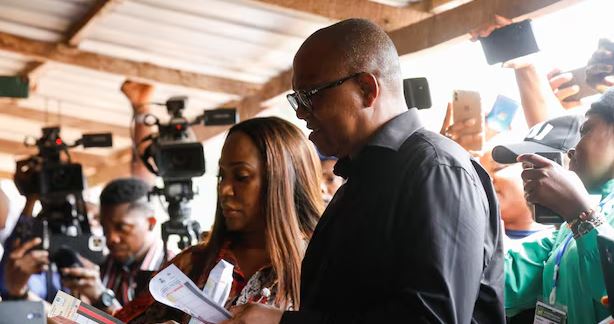
Written by Ziad Abdel Fattah:
The Nigerian politician said Peter Obie He will run again for the presidency of Nigeria next January, after being nominated by his current party, the Nigerian Democratic Congress, to contest the 2027 presidential election, setting up a contest between current President Bola Tinbo and a divided opposition, which has failed to unite behind a single presidential candidate.
Nigeria's security and economic conditions need radical change.
Obi intends to run again for president in the 2027 elections because he believes that the security and economic situation in Nigeria still needs radical change. He is also betting on the continuation of the popular support he gained during the 2023 elections, especially among young people and the “Opidates” movement that supports him. In his recent candidacy announcement, he stressed that addressing insecurity and improving living conditions will be among the priorities of his campaign.
Obi's acceptance – who came in third in the last election after mobilizing young voters – has undermined the hopes of some opposition supporters for his return to the coalition.
In recent times, the Labour Party in Nigeria has witnessed internal conflicts, leadership crises, and legal disputes over the management of the party and its political future. This has led to sharp divisions that prompted Obi to leave the party and then engage in new opposition alliances before later obtaining the nomination to run in the presidential race.
According to Reuters, Obi is entering the 2027 elections betting on capitalizing on popular discontent over rising living costs and security challenges, while the Nigerian opposition faces a major challenge in splitting its votes among several prominent candidates, as happened in the 2023 elections.
This paves the way for a repeat of the 2023 contest, which will likely test whether popular anger over rising living costs and insecurity can translate into votes against Tinobo, or whether anti-government voices will once again be scattered and divided.
Nigeria faces overlapping security crises that extend far beyond the jihadist insurgency in the northeast, where Boko Haram and the Islamic State West Africa Province have been fighting for more than 15 years.
In the northwest, heavily armed gangs known locally as bandits carry out mass kidnappings for ransom and raids on villages and schools, while the north-central states have also seen frequent violence related to conflicts over land and grazing routes.
Voters will also focus on the economic reforms undertaken by Tinubu, including the elimination of fuel and electricity subsidies and the lifting of currency controls, which have attracted investors even as Nigerians watch their incomes and savings erode.
The rise in global oil prices linked to the Iranian conflict has increased the pressure, with Nigeria experiencing some of the steepest fuel price increases among major African economies.
Tinopo defended his reforms on Friday, saying they had helped stabilize the country and restored investor confidence, despite the pressure on families.